Dexter Gordon – A Swingin’ Affair (Blue Note BLP 4133)

front-cover

Discographical Details

Artist: Dexter Gordon.
Title: A Swingin’ Affair.
Label and Catalogue Number: Blue Note BLP 4133.
Personnel: Dexter Gordon (tenor sax); Sonny Clark (piano); Butch Warren (bass); Billy Higgins (drums).
Side 1: Soy Califa; Don’t Explain; You Stepped Out of a Dream.
Side 2: The Backbone; Until the Real Thing Comes Along; McSplivens.
Recording Date: 29 August 1962 at the Rudy Van Gelder Studio, Englewood Cliffs, New Jersey, USA.

On The Record

Selection: Soy Califa.

Ah, Long Tall Dexter! Few jazz musicians can have had such long and colourful careers as this man – not to mention as many comebacks. A Swingin’ Affair dates from the years when Gordon had struck up a cordial, even playful, relationship with Alfred Lion and Frank Wolff of Blue Note records for one such comeback period. During this time, Gordon was mainly living and performing in Europe and made periodic trips to New York where Lion and Wolff would team him up with carefully selected sidemen to record enough material for a couple of LPs at a time.

In this case, all the tracks for Go! and A Swingin’ Affair were cut on two dates (27 and 29 August 1962) with the same group. The former is widely considered to be the zenith of Gordon’s recording career but there’s barely a cigarette paper between the two records in my book. In my wilder moments of fanciful imagination I think of Gordon as the Omar Sharif of the tenor saxophone – handsome, self-assured, laconic and a captivating raconteur on his instrument. Regardless of the tempo, Gordon was always sure-footed and knew what he wanted to get across to the listener.

Gordon sets Side 1 in motion with a verile vocalisation at the outset of Soy Califa which then keeps up a relentless samba from start to finish courtesy of Higgins’ stick work. Even that avowed non-lover of jazz, Mrs. K, was moved to sway round the room during this number. The quartet doesn’t falter with an immediate change of mood for the ballad Don’t Explain – so much so that it’s a surprise to know that the running order of the LP does not follow that of the session. Soy Califa is marked as Take 15 of the session while Don’t Explain was noted as Take 22 (the last successful take of the date). Like all great exponents of the ballad, Gordon ensured he knew the lyrics so that not only could he interpret them musically but he could practically sing the song directly to you through his horn. Side 1 closes with a jaunty latin interpretation of You Stepped Out of a Dream.

Bass player Warren’s The Backbone gets Side 2 off to a terrific start with some figures that are hard to shake. Next we’re treated to another Gordon balled master class with Until the Real Thing Comes Along and matters are brought to a close as the pace swings up for McSplivens which Gordon humorously named for his pet dog.

Aside from the ease and mastery shown by the whole quartet across all six tunes, I’m struck by (what I assume to be Lion’s) sure hand with programming the running order for the record. The session log shows the three up tempo numbers being committed to tape first, followed by a change down through You Stepped Out of a Dream to completion with the two ballads. Yet Lion’s deft touch mixes up the chronology so that the listener is kept engaged with dietary variety throughout the record.

Although the session was recorded in 1962, A Swingin’ Affair was not released until August 1964. In a letter to Wolff that month, Gordon wrote of the LP: “Overjoyed! That’s the word – overjoyed for our latest release – ‘Swingin’ Affair’. It’s a very happy sounding album and I think it’s going to sell very well.” Tragically, by this date, Sonny Clark had been dead for over a year, victim of illness related to his drug habit.

The acquisition of this record marks a slight departure for me and can best be described as a private purchase. Some time ago, I won an eBay auction for a record and, during some ensuing correspondence, I asked the seller if he had any more interesting records that were likely to come up for auction soon. This led to the surprising and welcome query about whether I was looking for anything in particular. Without getting into too much detail, we soon struck a deal for A Swingin’ Affair and a short while later the package arrived safely except for one small problem: right cover, wrong record – a very nice copy of Jackie McLean’s Destination Out – nice but wrong! I’m inclined to the view that most people are fundamentally honest, so I put this down as a simple oversight and contacted the seller to enquire about steps to put things right.

The seller’s explanation of the mix-up would give away that kind gentleman’s identity so it suffices to say here that he handled the matter more than satisfactorily and all’s well that ends well. In fact, so well that I have made subsequent purchases from this well-connected individual and I hope to continue our cordial mutually beneficial relationship in future.

As a little bonus, here’s a YouTube video of Gordon leading another great quartet live in Denmark in 1967 and opening with Soy Califa

Between The Lines

rear-cover

In that same letter of August 1964, Gordon also referred to the liner notes thus, “B. Long’s liner notes are something special, too.” The B. Long in question being Barbara Long, a jazz singer who recorded a couple of sessions for the Savoy label in 1961 with the estimable Booker Ervin among the sidemen on both dates. So Long was no stranger to powerful tenor saxophone exponents and the art of the ballad which made her a sympathetic choice to pen these notes.

In an era when both jazz and jazz journalism were male dominated arenas, it’s rare and refreshing to read a female perspective. Long shows herself not only knowledgeable about jazz and jazz journalists but also displays literary panache of her own. A significant portion of Long’s essay is given over to her own youthful reaction to witnessing Gordon live in performance before she gets down to the more routine business of discussing the performances on the record.

I’m amused by Long’s account of a friend’s reaction on hearing Soy Califa for the first time: “A friend, with no knowledge about jazz and a fatalistic attitude about ever understanding it, ran into the room, put the needle back, and said, ‘I can finally see what it’s all about.'” – a reaction not entirely dissimilar to that of the aforementioned Mrs K!

For Collectors Only

labels

Both sides are non-DG and are embellished with blue and white New York labels and bear the “VAN GELDER” machine stamp and a Plastylite “P”. Side 1 additionally has “BLP-4133 A” hand etched in the deadwax while Side 2 has the corresponding “BLP-4133 B” deadwax hand etching. Appropriately, this heavyweight measured 174g at the weigh-in and is in excellent condition apart from a few clicks and pops on the quieter numbers.

The cover is a Reid Miles special. The luscious lamination of this sharp cornered beauty protects the deep reds and oranges of a typical Wolff session photograph with Miles’ typography placed artfully around the serpentine curves of Gordon’s saxophone. The rear cover isn’t so pristine and bears writing and stamps that tell us of its purchase and ownership history. It’s all part of the charm of the genuine article: from Mr. Morris Fletcher of Los Angeles, California, USA to me in the United Kingdom in more or less 50 years. Such is the journey of a well-loved Blue Note mono first pressing.

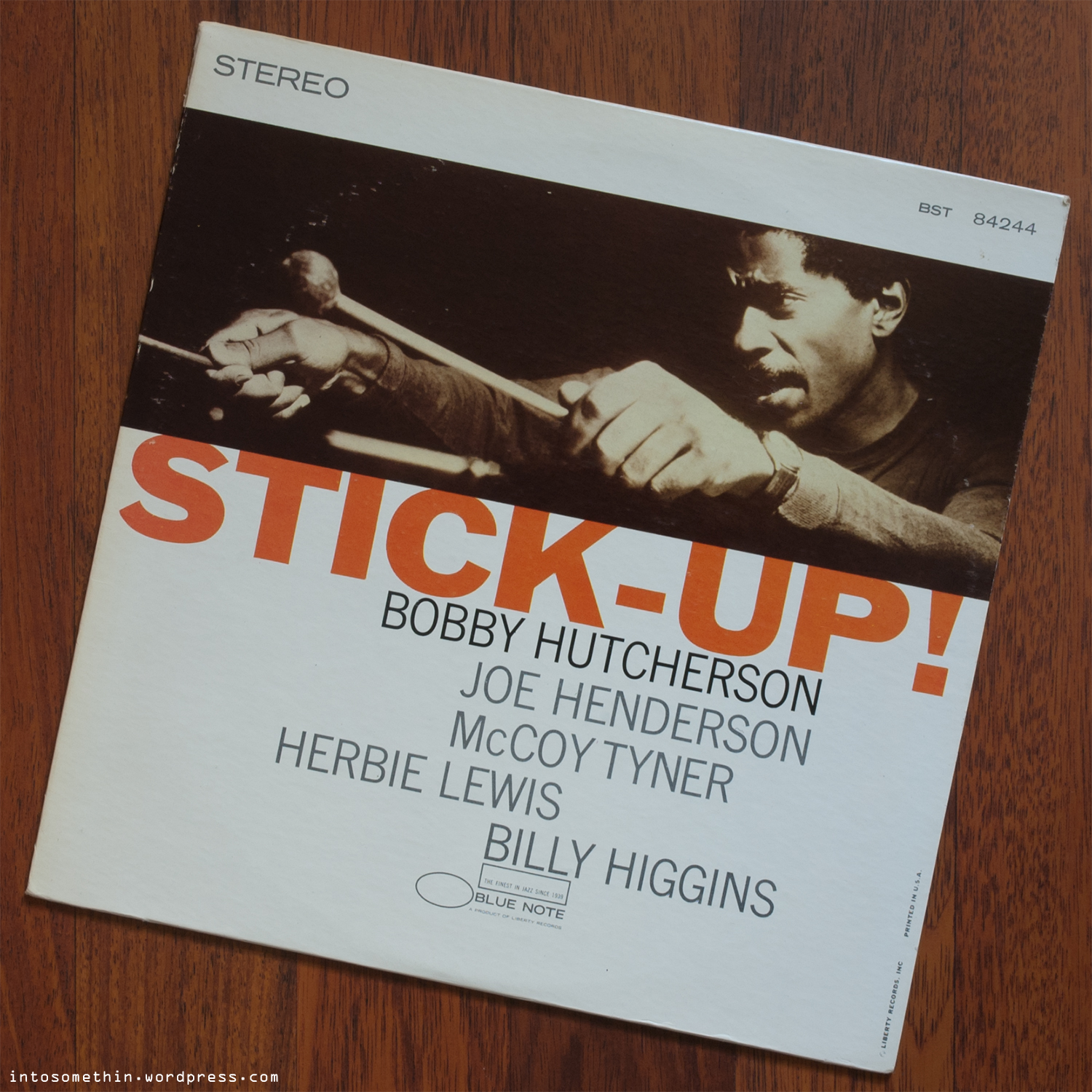
Bobby Hutcherson – Stick-Up! (Blue Note BST 84244)

bobby-hutcherson-stick-up-f

Discographical Details

Artist: Bobby Hutcherson.
Title: Stick-Up!
Label and Catalogue Number: Blue Note BST 84244.
Personnel: Joe Henderson (tenor sax); Bobby Hutcherson (vibes); McCoy Tyner (piano); Herbie Lewis (bass); Billy Higgins (drums).
Side 1: Una Muy Bonita; 8/4 Beat; Summer Nights.
Side 2: Black Circle; Verse; Blues Mind Matter.
Recording Date: 14 July 1966 at the Rudy Van Gelder Studio, Englewood Cliffs, New Jersey, USA.

On The Record

Selection: 8/4 Beat.

I returned from my August holiday to the sad news of the death of Bobby Hutcherson. It’s taken me a little while to come to terms with this loss despite it not being unexpected due to Hutcherson’s age and his health problems (he suffered from emphysema that meant he needed a supply of oxygen on hand at live performances in recent years). My immediate reaction was to think about which of Hutcherson’s many great records I most wanted to hear as my private act of remembrance. On the face of it, this was a difficult choice with so many records under Hutcherson’s own leadership supplemented by a substantial number of sideman appearances of exceptional quality. In fact, however, personal memories made the decision simple: it only took moments to be sure that Stick-Up! was the record for me.

I have a long history with this record because (alongside Components) it’s the one that first introduced me to the attractions of Hutcherson’s music. I won both these records as a brace in one of the now defunct Mole Jazz postal auctions that I sometimes mention. I can’t recall now the precise reasons that enticed me to bid for these records. I do know that I owned no Hutcherson records or CDs prior to this and had next to no idea of what they would sound like. I suspect that one of the prime motivations was the bold cover design – that may seem a little shallow in retrospect but it turned out the be one of the most rewarding record collecting decisions I ever made because it quickly led to an enduring fondness for Hutcherson’s music.

So why Stick-Up! over Components? Both are excellent and share many characteristics but I think there are two reasons for my fondness for the former. Firstly, I think the instrumentation is just a little less cluttered and that allows the music to shine through more clearly; second, the programme of tunes seems to embody the whole of Hutcherson’s oeuvre in one LP. What we have here is one of the genuinely and effortlessly hip records of the 1960s.

Across the six tunes we get to experience to full range of Hutcherson’s tastes, playing and compositional skills. The only track that Hutcherson didn’t write is Side A’s opener, a really driving version of Ornette Coleman’s Una Muy Bonita, one of several highlights on the LP. Next we get a sophisticated modal treat in the form of 8/4 Beat. Both these tracks really swing along propelled by Higgins’ cymbal pulse and iced by Hutcherson’s shimmering vibes. Then the mood changes completely for the romantic Summer Nights which conjours up images of a deserted big city in the wee small hours of the morning. Henderson sits out this one but Tyner’s diamond-like piano tone provides the edge to keep at bay any hint of sentimentality.

Side B is a sandwich affair. The wholesome slices of bread come in the form of two advanced and modern compositions, Black Circle and Blues Mind Matter but for me the real meat is the nine plus minutes of Verse. This cut contains clearly composed and planned set pieces that envelope and create the atmosphere for Hutcherson and Henderson to unleash their most potent solos of the date.

Some collectors spurn the Liberty era Blue Notes, which is to the advantage of those of us prepared to fish in this particular pool. There are plenty of top quality records from the period and first pressings are generally far more affordable than ones from the 1500 Series or the earlier releases in the 4000 Series. This is especially true of records that were recorded prior to the sale to Liberty but released after it. The Stick-Up! session was in 1966, yet the record itself was not released until 1968. In this case, despite the move away from Plastylite, the pressing quality is excellent. All things considered, listening to Stick-Up! is a fitting way to pay tribute to Hutcherson’s memory and, indeed, that of recording engineer par excellence Rudy Van Gelder who also passed away recently. I doubt we will hear their like again.

Between The Lines

bobby-hutcherson-stick-up-r

This record is embellished by liner notes penned by that doyenne of the art, Leonard Feather. Feather’s depth of experience and sensitivity shine through here in the effortless way he weaves together the essential threads. The notes are so deceptively easy to read that you finish them before you notice they’re over and that you’ve been granted insights into Hutcherson’s recording history, his character and the nature of the music on this particular record.

By 1968, the era of erudite liner notes was drawing to a close. Before much longer, shorter word counts by trendy but less qualified authors came to dominate the rear covers of records under the corporate cost management measures of Liberty. So this essay is one to savour.

Feather was clearly familiar with the the musicians, their paths to this date and the music recorded at here. Even under Liberty’s aegis, Blue Note ensured that Feather had all he needed to do the record justice and he doesn’t disappoint.

For Collectors Only

labels

Side A sports the blue and white “A Division of Liberty Records, Inc.” label and its deadwax bears a “Van Gelder” stamp and the hand etched matrix number “BNST 84244 A”. Side B is similarly graced with only the slightly different matrix number “BNST 84244 B”. The biscuit tips the scales at 150g and is in excellent condition. The unlaminated cover has a few minor marks that deny it the right to claim NM condition. The main point to note about the cover is the “1776 Broadway, New York 10019” address, an unusual occurence for Blue Note records of this period. All of which marks this out as a stereo first pressing.
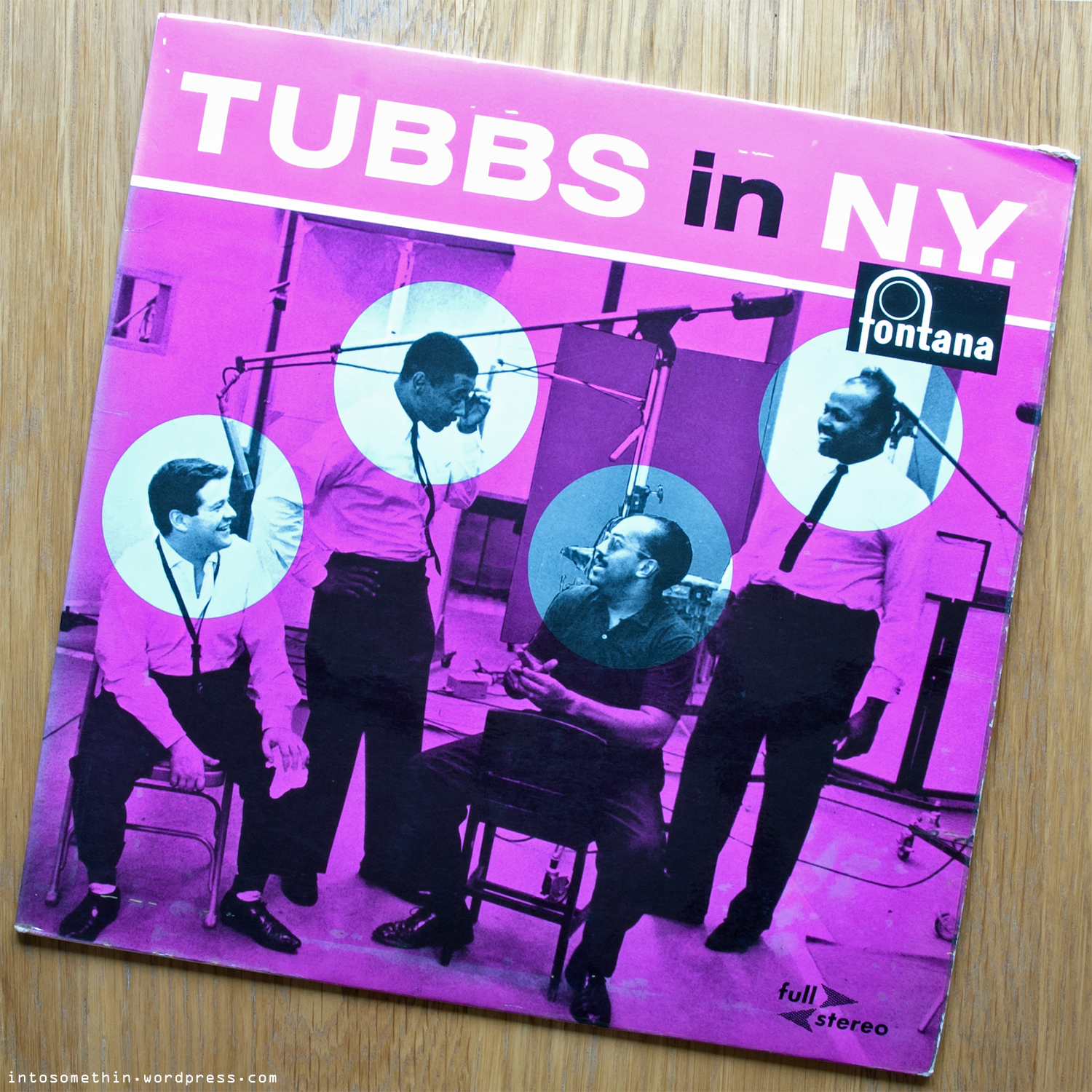
Tubby Hayes – Tubbs in N.Y. (Fontana STFL 595)

tubby-hayes-tubbs-in-ny-fro

Discographical Details

Artist: Tubby Hayes.
Title: Tubbs in N.Y.
Label and Catalogue Number: Fontana STFL 595.
Personnel: Tubby Hayes (tenor sax); Clark Terry (trumpet); Eddie Costa (vibes); Horace Parlan (piano); George Duvivier (bass); Dave Bailey (drums).
Side 1: You for Me; A Pint of Bitter; Airegin.
Side 2: Opus Ocean; Soon; Doxy.
Recording Date: 3-4 October 1961 in New York, USA.

On The Record

Selection: You for Me.

On a few rare occasions, record collecting is like waiting for a London bus: you loiter for ages without the one you want turning up and, when it finally does, two arrive at once! As I’ve mentioned previously, that was the case recently with not one but two Tubby Hayes records. And I don’t mean in the virtual netherworld of eBay but in actual record shop real life. Even more astounding is that the two records in question form a natural pairing by being the two that Hayes recorded in New York. Of course, dear reader, I snapped up the pair in overall best condition but favouring those with the better vinyl condition over those with the better cover condition.

The story of this, the first session, takes us back to a time when the Musicians Union had a ban in force that prevented, or at the very least, imposed prohibitive restrictions on American musicians performing in the United Kingdom. So when Ronnie Scott, owner of London’s most famous jazz club, booked Zoot Sims for a four week residency in 1961, there was a problem to be solved. The solution came in the form of a reciprocal arrangement that would see a British musician travel in the opposite direction to perform in the USA. Previous such deals had seen, shall we say, less prominent performers make the trip. This time was to prove different because Britain’s brightest jazz star was heading stateside and, what’s more, Hayes’ reputation preceded him which opened the door to a recording session with well established members of the New York scene.

I don’t know if You for Me was the first tune recorded but whoever chose it as the record’s opening number knew what they were doing. Hayes’ opening salvo before the rest of the band swings in serves clear notice of what’s ahead. It’s a typically ebulliant passage that sums up both the saxophonist’s talent and his un-British preparedness to show off that talent. This number and Soon from Side Two are the only quartet performances on the record and, for me, the setting as lone horn is the one in which Hayes thrives best. It’s no surpise to me that towards the end of his all too brief and tragic career, this became Hayes’ preferred modus operandi. If you need evidence to support that claim, then look no further than the masterpiece LP Mexican Green (Fontana SFJL 911).

That’s not to say that Hayes couldn’t hold his own when sharing the front line with others. He lays down the challenge with not one but two Rollins’ numbers. The first is Airegin with its notoriously challenging head that Hayes blasts clean through and out the other side into trademark high velocity soloing. The second is the record’s closer Doxy that gets a properly bluesy treatment commensurate with its title courtesy of Brother Parlan and Brother Duvivier.

Posterity hasn’t left me any clues about which specific New York studio hosted this recording or who was in the engineer’s chair but, on both counts, Hayes was well served. A nice, clean spacious sound comes through on this Fontana stereo first pressing with Hayes placed front and centre with bass and piano left and drums right. All of which leaves me feeling smug to have snagged this one in such fine condition.

Between The Lines

tubby-hayes-tubbs-in-ny-rea

British liner notes of the 1950s and early 1960s tended to be more restrained than those penned in the US. For this record, our own Benny Green – biographer, critic, BBC radio presenter and jazz musician in his own right – was charged with the task of combining our nation’s prediliction for modesty with the bursting pride the UK jazz scene clearly felt for Hayes’ immense talent. This LP, more than any previous Hayes record, must have heightened this challenge since the cirumstances put Hayes in front of the microphones alongside genuine US talents.

Green develops his theme chronlogically, starting by establishing his own credentials through his first contact with the teenage Hayes and stepping rapidly through the saxophonist’s development and association with Ronnie Scott. The second portion of the notes deviates from the conventional by detailing the circumstances which led to Hayes’ visit to New York. From our perspective, the union restrictions of the day may seem peculiar but they were very real back then so this is an informative historical passage that provides a highly relvant context for this session and, indeed, the reciprocal Zoot Simms dates.

The payback is that space constraints limit commentary about the music and performances to little more than two paragraphs. It’s a pity because apart from that, there’s a fascinating set of back stories from Hayes’ visit to New York about the live gigs he performed, the illustrious audiences who checked him out and his extensive preparaton for the recording session itself. I’m left with the lingering regret that, in contrast to the music itself, the liner notes were a missed opportunity to tell an extraordinary tale.

For Collectors Only

tubby-hayes-tubbs-in-ny-lab

Side 1 has the rough textured black and silver Fontana label and the deadwax is machine stamped with the substantial matrix number “AA885240 1Y 3 // 420 VTV”. Side 2 has the same style of label with an equally long machine stamped matrix number that reads “AA885240 2Y 3 // 420 TU”. Both labels bear some moderate spindle marks that probably show up more on the matt black of the rough texturing than they might on other label designs. The near mint vinyl itself is flat edged and registers at an understated British 145g. The cover is the standard British foldback style with a laminated front and unlaminated rear typical of the period. It’s in pretty good shape but a couple of the corners are a little dog-eared so I can’t describe it as being in near mint condition.

So, as all Tubby collectors will know, this bears all the hallmarks of a stereo first pressing.
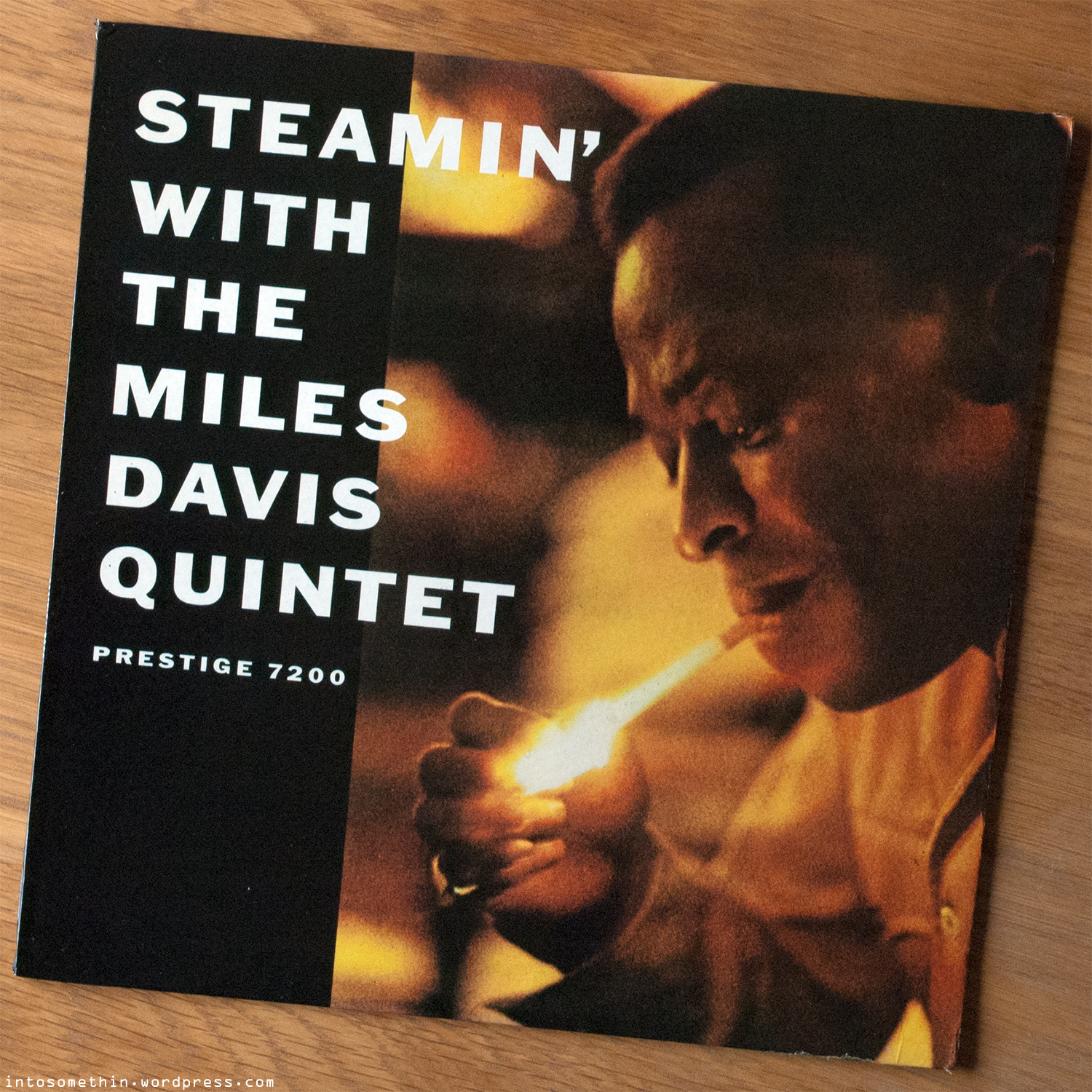
Miles Davis – Steamin’ with the Miles Davis Quintet (Prestige PRLP 7200)

miles-davis-steamin-front

Discographical Details

Artist: Miles Davis.
Title: Steamin’ with the Miles Davis Quintet.
Label and Catalogue Number: Prestige PRLP 7200.
Personnel: Miles Davis (trumpet); John Coltrane (tenor sax); Red Garland (piano); Paul Chambers (bass); “Philly” Joe Jones (drums).
Side 1: Surrey with the Fringe on Top; Salt Peanuts; Something I Dreamed Last Night.
Side 2: Diane; Well You Needn’t; When I Fall in Love.
Recording Date: 11 May 1956 and 26 October 1956 at the Rudy Van Gelder Studio, Hackensack, New Jersey, USA.

On The Record

Selection: When I Fall in Love.

I’ve been steering clear of posting about the legendary Prestige sessions of the First Great Miles Davis Quintet but I don’t think I can postpone taking the plunge any longer now that I have original pressings of three of the four records that these two dates produced. Notice I’ve written “original” rather than “first” pressings but more of that at a later date. For now, let’s get into this particular record…

The circumstances and history of Davis’ final two Prestige recording sessions is well-known and documented elsewhere, so I won’t dwell too long on the details here but it is worth an overview since Steamin’ with the Miles Davis Quintet is the first of the records from those sessions that I’m covering. Suffice to say that Davis’ ambitions had led him to seek a recording contract with a major record label (i.e. Columbia) and all the financial, logistical and promotional firepower offered by such a deal. The catch was that Davis was still under contract with Prestige. The deal brokered between Prestige’s Bob Weinstock, Columbia and Davis was that Davis would record enough new material for Prestige in 1956 to meet his contractual obligations prior to leaving and starting to record for Columbia with the proviso that Columbia would not release any material until the following year.

This arrangement seemed to suit everybody: Columbia got their man, Prestige got the material it was due and Davis got the move he craved. Davis also, incidentally, found a way to distinguish between his last Prestige dates and the start of his Columbia career via the smart move of insisting that the final Prestige dates would be used to record material from the quintet’s live “book” and, given the time contraints, each tune would be done in one take. These turned out to be inspired decisions: the band knew the material inside out so the performances were well-honed; and the one take nature of the sessions lent an intimate “live in the studio” air to proceedings – right down to the between takes chatter captured on the master tapes and, in several instances, preserved on the records themselves.

The total output from two days of recording was 26 tracks – enough material for Prestige to issue four legendary LPs: Cookin’ with the Miles Davis Quintet (Prestige PRLP 7094), Relaxin’ with the Miles Davis Quintet (Prestige PRLP 7129), Workin’ with the Miles Davis Quintet (Prestige PRLP 7166) and (you get the idea) Steamin’ with the Miles Davis Quintet (Prestige PRLP 7200) in chronological order of release. Weinstock was a canny operator, so he spread the release dates of these four records over a period of years from 1957 to 1961. Via that expedient, he was able to maximize sales of each record by not saturating the market and ride on the coat tails of Columbia’s promotional machine to get what effectively amounted to free marketing.

The other critical commercial factor was the programming of each record. Weinstock didn’t put the best material on the first release and then let the quality gradually slide with subsequent releases (bear in mind were talking in relative terms here – all the material is high quality). The result being that all four LPs are very desirable and for many people, me included, it’s hard to pick a favourite.

For no other reason than it’s the one that has recently been cleaned, I’m starting with the last of the four records: Steamin’, released in 1961. But what we get here is typical of all the records in the set – the combination of perky show tunes, emotionally taut ballads and bop standards that was this group’s trademark.

Indeed, the sequencing of the LP seems purposefully done to highlight these aspects with a remarkable symmetry between the sides: both begin with the type of medium tempo swinger that was this group’s speciality, followed by a bop standard leading to a closing ballad that served as a showcase for Davis’ muted trumpet technique with Coltrane sitting out.

In the case of Side A, it’s Surrey with the Fringe on Top from the musical Oklahoma! that sets the initial pace and provides plenty of soloing space for trumpet, saxophone and piano with bass and drums holding things steady. Right from the start, it is noticeable how Jones adjusts his backing to suit each soloist and how he extracts a variety of timbres from the cymbals. Things accelerate greatly for the rendition of Dizzy Gillespie’s Salt Peanuts which, aside from being the drum feature of the record, demonstrates tight dovetailing between the horns on the theme and at the handover between solos. The side closes with Something I Dreamed Last Night, one of several ballad performances from these sessions that exude a late night bar ambience.

It’s rinse and repeat for Side B: this time Diane is the limbering up performance, followed by Davis and Coltrane proficiently exchanging lines on Well You Needn’t which makes room for Chambers to show off his acro talents on the bass. The set closes with another smokey after hours turn from Davis on When I Fall in Love with poised backing from Garland’s piano work. Then that’s it… Time to metaphorically close the bar, turn out the lights and send the punters home happy to their beds.

Prestige pressings don’t hit the sonic heights of Blue Note’s Plastylite pressings but the engineering and mastering share the same Van Gelder DNA. The ones with the black and yellow fireworks labels offer the best transport back in time to these classic sessions. My copy, while exhibiting a few clicks and pops, is very clean and makes for a lovely evening with the lights down low and a single malt at my elbow.

Between The Lines

miles-davis-steamin-rear

It’s interesting to note that each of the four records derived from the two recording sessions was graced with liner notes by a different author. For this, the last of the set, the honour went to Joe Goldberg. His name may not be the most familiar but his writing graced many records starting in 1957 with Sonny Rollins’ Newk’s Time (Blue Note BLP 4001). Early in his writing career, Goldberg supported himself by also working at the original Sam Goody record store in New York but I get the feeling that by the time he was commissioned for this LP, he was well established in his chosen career.

These must have been hard liner to notes to tackle, not least because three other authors had taken the first bites of the cherry. So little original would have remained to say about the musicians or the two recording sessions. In the face of this challenge, Goldberg played with a straight bat: the reader is eased in with a couple of historical scene setting paragraphs and then it’s straight to an acknowledgement that this is the “final selection”.

Cross-reference and comparison with the earlier records is Goldberg’s device for describing the tunes selected for this record and placing them in context of their predecessors. But in the middle of this we are treated to one of the most famous and para-phrased passages ever written about the First Great Quintet: “The group consisted, we are told, of a trumpet player who could play only in the middle register and fluffed half his notes; an out-of-tune tenor player; a cocktail pianist; a drummer who played so loud that no-one else could be heard; and a teen-age bassist”. Of course, this isn’t a view to which Goldberg (or his paymasters, for that matter) subscribed and he proceeds to make this abundantly clear.

The closing paragraphs give Goldberg the chance to muse on Davis’ fame, his position in relation to other show business stars of the era and how that fame may endure. Perhaps more interesting to jazz fans, though, is the immediately preceding section which focuses on Davis’ admiration of pianist Ahmad Jamal. I wonder if these liner notes were the first time when this now widely known appreciation came to public attention. Davis’ regard for Jamal comes through loud and clear when Goldberg quotes his unequivocally positive statement that “all my inspiration today comes from Chicago pianist, Ahmad Jamal”. Goldberg, however, is waspish in response and takes a couple of sharp digs at Jamal’s importance. It’s dangerous territory for the jazz writer to aim his sights at musicians when to achieve even modest success in this genre takes extreme talent. Moreover, the New York jazz community was small and Goldberg must have run the risk of an awkward encounter with Jamal in one of the clubs!

For Collectors Only

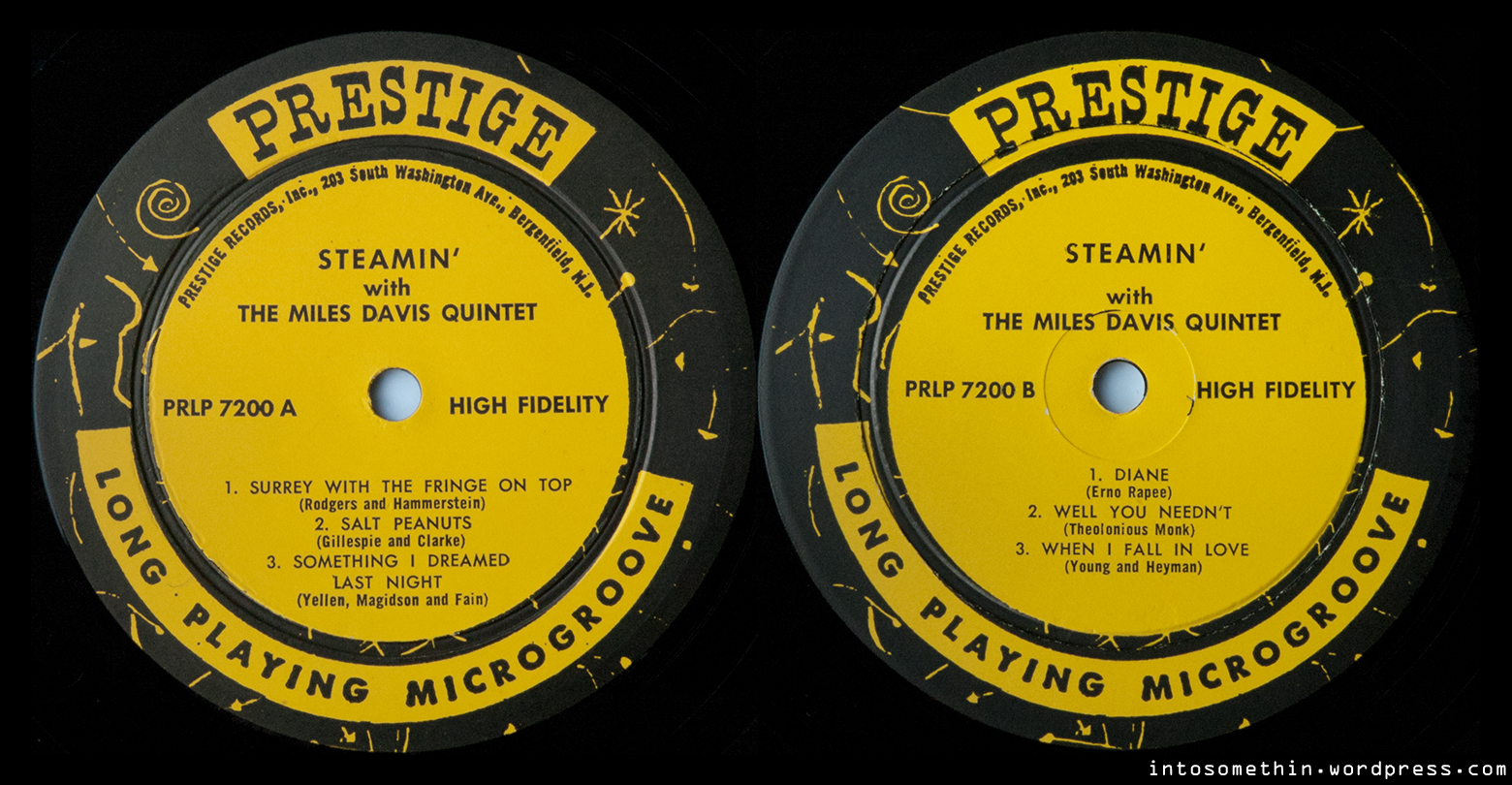
miles-davis-steamin-labels

For Side A, we have the deep groove yellow and black fireworks label bearing the “203 South Washington Ave., Bergenfield, NJ.” address. The matrix number “PRLP 7200 A” is hand etched in Rudy Van Gelder’s all too recognisable style. The deadwax also contains an “RVG” stamp and a stylised “AB” hand etch which I believe to be the mark of the Abbey pressing plant. The Side B label is the same in all respects except, of course, that the hand etched matrix number reads “PRLP 7200 B”. A check on the ever dependable digital scales reveals a vinyl weight of 133g – perhaps slightly surprisingly light for a pressing of this vintage.

The delicious laminated front cover is in, to all intents and purposes, near mint condition. The rear cover is in similar shape save for a small brown mark near the top right corner of the rear. As a bonus, this beauty came with the original inner sleeve intact and pretty well preserved – something of a rarity for Prestige records of this vintage.

miles-davis-steamin-inner

So unless anybody has some arcane knowledge to the contrary, I’m chalking this one up as a fine first pressing.

Chet Baker – In New York (Riverside RLP 12-281)

chet-baker-in-new-york-fron

Discographical Details

Artist: Chet Baker.
Title: In New York.
Label and Catalogue Number: Riverside RLP 12-281.
Personnel: Chet Baker (trumpet); Johnny Griffin (tenor sax); Al Haig (piano); Paul Chambers (bass); “Philly” Joe Jones (drums).
Side 1: Fair Weather; Polka Dots and Moonbeams; Hotel 49.
Side 2: Solar; Blue Thoughts; When The Lights Are Low.
Recording Date: September 1958 at Reeves Sound Studios, New York City, New York, USA.

On The Record

Selection: Hotel 49.

This is my first posting after a while focussed on other areas of life. The hiatus has given me time to think about how I want to present these postings and do the photography more efficiently. One of the things that contributed to the lack of posting was a desire to emulate the forensic (and, let’s be honest, time-consuming) standard of pictures being achieved elsewhere. I’ve realised that perhaps I should aim to achieve something else, offer a view through a different lens (so to speak) and thus be able to post more frequently. With that in mind, I’m going to evolve things a little – both in terms of the pictures but also in terms of the writing. One aspect that appeals to me is taking a closer look at the liner notes. After all, these are an atmospheric relic of the era and often offer insights and historical details that are absent from modern LPs.

So here goes with today’s subject…

The first time I heard Chet Baker was his poignant if brief contribution to Elvis Costello’s Shipbuilding. Of course, as a teenager, I didn’t recognise that fact until many years later and in the intervening time my encounters with Baker were mainly marked by his understated singing style. Add to that the fact that my tastes don’t currently run to the somewhat anaemic charms of the West Coast cool school and my decision to acquire this LP may seem surprising.

So what’s the attraction of this record? For me, it’s two-fold. Firstly, Baker may have operated almost exclusively in the middle register of his instrument but what he lacked in dynamic range he more than made up for in melodic lyricism. Secondly, this is one of those “East meets West” dates, not unlike Art Pepper Meets The Rhythm Section (Contemporary C3532) which shares two of the same sidemen.

The story goes that people at Pacific Records were tired of Baker’s drug problems and, following his release from a prison sentence, they were more than happy to farm him out. Enter Orrin Keepnews of Riverside Records and an agreement for Baker to record four records under the New York label’s aegis. Despite this unpromising beginning, two of the four records Baker cut for Riverside (this one and the ballads-based Chet (Riverside RLP 12-299)) qualify as among the best of his career. For discographical completeness, the other two were It Could Happen to You: Chet Baker Sings (Riverside RLP 12-278) and Chet Baker Plays the Best of Lerner and Loewe (Riverside RLP 12-307).

In New York‘s title is apposite both because Baker travelled to the Big Apple for the recording but also because Riverside teamed him with some of that city’s heaviest hitters. “Philly” Joe Jones and Paul Chambers were drafted in from the Miles Davis Quintet, the fast and fiery Theolonius Monk/Art Blakey alumnus Johnny Griffin rounded out the front line and nimble bop pianist Al Haig completed the line-up and brought his experience of working with Charlie Parker and Dizzy Gillespie. On paper, it’s almost impossible to imagine the Baker/Griffin combination working yet they go together like caramel and salt: each completely different yet strangely complementary when brought together. Baker’s influence draws some rich styling from Griffin; reciprocally, Baker seems encouraged to play hotter than usual over the pinpoint accurate driving of the rhythm section. Each horn player finds a new dimension to his playing without sacrificing his core characteristics.

Not only were the sidemen chosen with care but there’s also a deft touch behind the choice and programming of material. Griffin’s weight is lent to half of the numbers, mainly the up-tempo selections, which leaves Baker breathing space to do what he does best on the more romantic tunes. The cuts with Griffin’s involvement emphasise the Eastern compass point by including two Benny Golson compositions Fair Weather and Blue Thoughts as well as sprightly swinger Hotel 49. The latter tune being the one that takes Baker furthest from his comfort zone as Jones lays down some fierce swinging beats and each member of the group sinks teeth into meaty solos. There was a genuine risk here for Baker that he would be wiped out in such heavy company yet he manages to ride the wave to the end.

There are plenty reasons that invite, perhaps unfavourable, comparison with the contemporaneous Miles Davis Quintet: Chambers and Jones are both present; Baker inhabits the same middle register space as Davis and the choice of material echoes the Davis group’s book of that era with a combination of bop originals and show tunes. Even Davis’ own Solar is on the agenda and it’s here that Baker’s limitations are exposed – he lacks the improvisational imagination and mastery of knowing when not to play that made Davis so assured. Though once back on familiar ballad territory with Polka Dots and Moonbeams and When The Lights Are Low Baker regains his poise and walks the tightrope between heart rending emotion and cheesiness with aplomb. In New York was never going to start any musical revolutions but it does succeed on its own terms: East brings out the best of West and vice versa to deliver half a dozen hugely enjoyable, if not challenging, performances.

Some Riverside sessions suffer from less than stellar recording quality and I’ve seen some damning reviews of remastered/reissued versions of this particular record. However, judging by my mono first pressing copy, this is up there with the best of any Riverside record in my possession. You can judge for yourself by listening to the ripped track I’ve included above.

I read with interest a recent comment thread on the Jazz Collector website about the virtues or otherwise of Discogs as a source of collectible jazz records. In my limited experience, almost everything written there, both positive and negative, is true of Discogs. It should come as no surprise that caveat emptor should be your watch words.

There are genuinely desirable records on offer at good prices but there are also some records that are not all that their vendors purport them to be. I purchased the record discussed here from a Swedish seller on Discogs. When I first saw the listing of a first pressing of such a nice record in at least Excellent if not Near Mint condition for a reasonable asking price I was excited and skeptical in equal measure. So I took the option offered by Discogs to contact the seller, ask questions and request additional photographs of the specific record for sale. The seller was polite, prompt and thorough with his reply which gave me the confidence I needed to go ahead with the purchase. One of the things that trips up unwary buyers on Discogs is that the pictures of records and covers on the site are not ones of the actual item for sale. Some sellers play on this confusion while others provide links to places outside Discogs where they have uploaded photos of the specific item, so make sure you know what you’re dealing with before place an order.

Between The Lines

chet-baker-in-new-york-rear

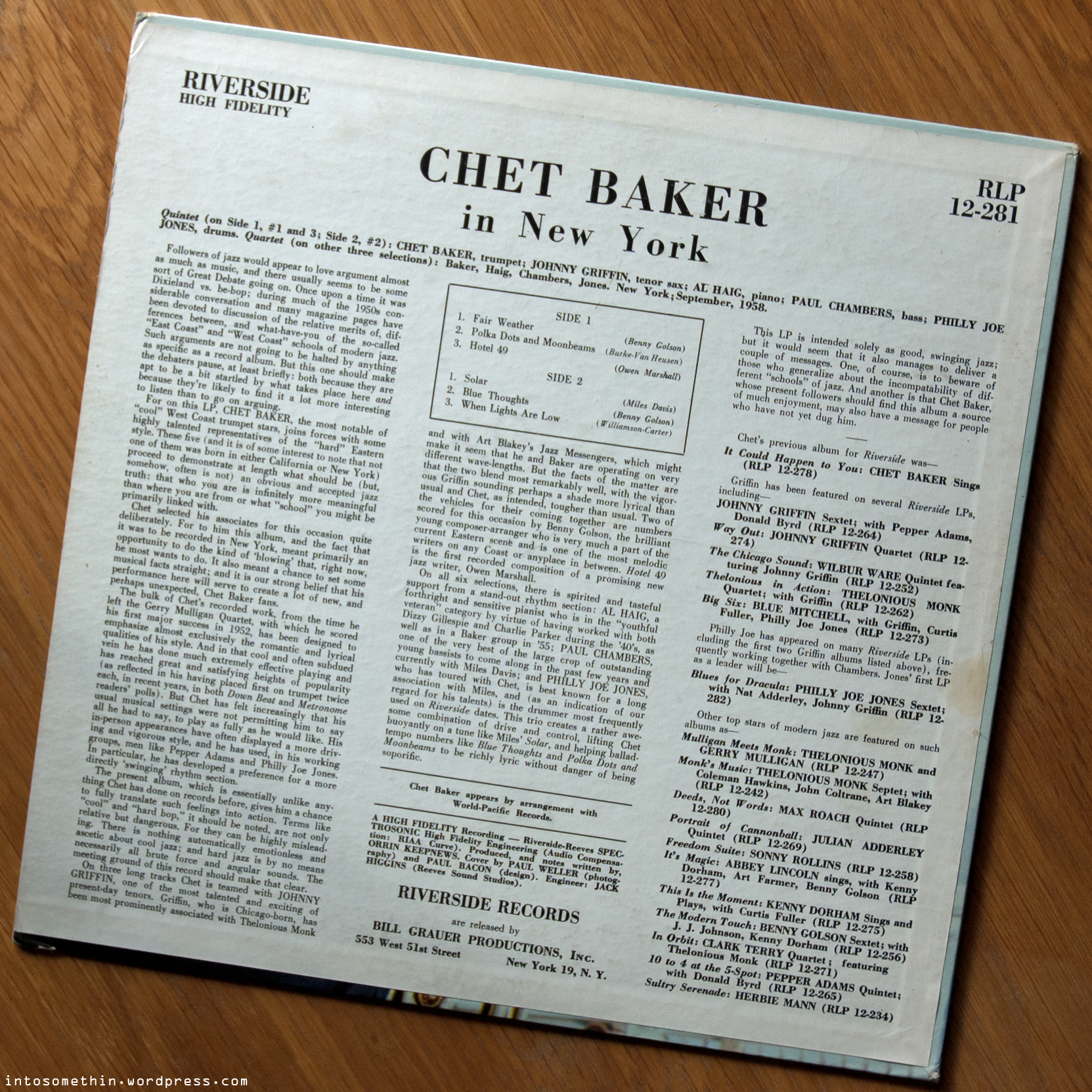
As I mentioned above, I’m going to start paying closer attention to liner notes as part of the evolution of the format of my postings. Fortuitously, this record offers a neat way into that area of discussion by virtue of it being blessed with a set of liner notes penned by Riverside co-owner Orrin Keepnews himself. In later years, Keepnews was to show himself to be one of the most thoughtful, well-connected and knowledgeable of jazz writers. So it comes as no surprise that the notes for In New York read like a well-paced essay, albeit one with a commercial undercurrent to the points it makes.

Riverside took a risk with Baker and I’ve read that Keepnews was initially opposed borrowing him from Pacific. Yet these notes offer no hint of concern and the judgement of history is that this was, on balance, a good decision. Rather, Keepnews chooses to focus on the positive. So much so that the notes almost read like a manifesto for not only this record but Riverside’s decision to sign Baker for a four album deal.

Keepnews’ vehicle for this is to exploit the East meets West theme to clever advantage. First Keepnews sets it up as a point of controversy or debate among jazz fans and then he knocks it down as a paper tiger by pointing out the true origins of the musicians concerned as being neither California or New York and highlighting Baker’s desire to break new ground because “Chet has felt increasingly that his usual musical settings were not permitting him to say all had had to say, to play as fully as he would like”. Along the way there are artful references to Baker’s previous success and laurels in the Downbeat and Metronome annual readers’ polls.

The notes then use the style of Chet’s playing on the record as a way to neatly slide into more familiar liner note territory with a few paragraphs about the tracks and each musician’s contribution. Keepnews closes out with two allusions to his original theme as final thoughts to lodge firmly in the reader’s mind and hopefully seal the deal on a record store purchase!

For Collectors Only

chet-baker-in-new-york-l2

Side 1 has the small (92mm diameter) blue and silver “reels and microphone” label with deep groove and the “BILL GRAUER PRODUCTIONS” wording without an “INC.” The deadwax etching has a faint matrix number “RLP-12-281A” and the letters “CC” both of which proved very hard to pick up in photography. I don’t know what the latter represents but it’s probably a mastering or pressing plant identifier. Can anybody can shed any light on that? Side 2 also has the small blue and silver “reels and microphone” label with deep groove and the same “BILL GRAUER PRODUCTIONS” wording. Again, the deadwax is faintly etched with another “CC” and the matrix number “RLP-12-281 B”. The record itself weighs 158g and is just short of Near Mint condition with a few non-intrusive pops.

The front cover is beautifully laminated with very minor corner wear. The rear cover is exceptionally clean and bears the “553 West 51st Street New York 19, N. Y.” address. Overall, it reflects the music – no revolutionary typography but an attractive choice of colours.

Given all the above, I think this passes muster as mono first pressing and, I’m delighted to say, demonstrates that Discogs can throw up some gems.

Tubbs Week!

tubby-hayes

This weekend would have seen the 81st birthday of Edward Brian “Tubby” Hayes, had he still been with us. Words like “under-appreciated”, neglected” or “overlooked” are perhaps applied to jazz musicians more than any other category of artist but in Hayes’ case they aren’t cliches. Such adjectives are perhaps more keenly felt by Hayes’ supporters than they are for others for a couple of reasons. Firstly, he was a British jazz musician in a world, let’s be frank, dominated by our cousins across the Atlantic. And secondly, Hayes was genuinely world-class, capable of holding his own with the very best, from where ever they hailed. Yet outside a relatively small coterie of fans of British jazz of a certain vintage, Hayes isn’t just under-appreciated – he isn’t even known at all!

My reason for mentioning this topic isn’t just the anniversary of Hayes’ birth, otherwise I’d have the opportunity every year to do this. No, something else has been in the ether lately. I’m not one for superstition but there seems to have been a serendipitous amount of Hayes in the air around me over the last few weeks. It all started when I gave my father (a long-standing Hayes fan) a copy of Simon Spillett’s excellent new Hayes biography The Long Shadow of the Little Giant as a birthday gift at the start of January. Perhaps because of that, I’ve since become more conscious of opportunities to add some Hayes records to my collection. I suppose it’s a bit like when you’re thinking of buying a new car: until you make your choice you don’t notice that model on the roads but as soon as you’re interested in one, they seem to be everywhere. OK, original Hayes records are pretty rare, so the chances of seeing them everywhere are slim but you get the sentiment.

I’d already been on the look-out for a nice copy of a Fontana first pressing of Mexican Green for quite a while and I actually knew where I could get one but at a three-figure asking price. I was hoping to do better and, as it happens, I had missed out on one such eBay opportunity right at the start of the year. But patience and perseverance are qualities every collector needs to nurture and I latched on to another copy on eBay from a UK seller with little or no history of being a specialist in jazz records. Such sellers can be double-edged swords. On the plus side, they sometimes don’t know the true value of what they’re selling and so don’t highlight their listings in a way that would attract a lot of competitive bidding. On the down side, not knowing what they’ve got can lead to unintentionally misleading or over-egged descriptions. In this case, the seller knew just enough to pique a little interest but left sufficient doubts to have probably put off some potential bidders. I opted to set a low snipe and accept what ever outcome the fates would bring. After all, there would be other opportunities if this one didn’t work out and if the quality wasn’t sufficiently good, I wouldn’t have paid over the odds.

As you might guess, I wouldn’t be writing this if that snipe hadn’t proved successful. Not only did I win the auction at a frankly bargain price but, when the record arrived on Monday, it proved to be in at least VG+ condition with only a couple of audible imperfections. Plus the cover was very nice too.

But that’s not the end of this story. On the day that the record arrived, I also used my lunch break to take a browse in a couple of the second-hand record shops near my office. In an amazing twist of fate, both shops had copies of first pressings of the same pair of Hayes’ Fontana LPs: Tubbs in N.Y.! and Return Visit. The pair in one shop had the nicer condition covers but the vinyl had some scuffs and, in one case, a couple of potentially alarming scratches. The pair of records in the other shop had slightly more worn covers but the vinyl in both cases was in superb condition. A short negotiation ensued in the second shop about a combined cash price for both records and a satisfactory deal was stuck along with an enjoyable conversation about rare British jazz LPs. The owner of this shop clearly knows his stuff, which shouldn’t come as a surprise given that this is the same location that yielded up a copy of the Don Rendell/Ian Carr Quintet’s Live for my collection last year.

tubby-hayes-records

Now every evening this week has turned into Tubby on the turntable night as I try to assimilate my new acquisitions. I’m going to need to listen several times over to take in all the music but my aim is to reach a position where I can write individual postings about each of the three records. In the meantime, I’ve got my fingers crossed that certain UK radio stations haven’t forgotten the significance of this weekend’s anniversary and will commemorate this nation’s greatest jazz musician appropriately.

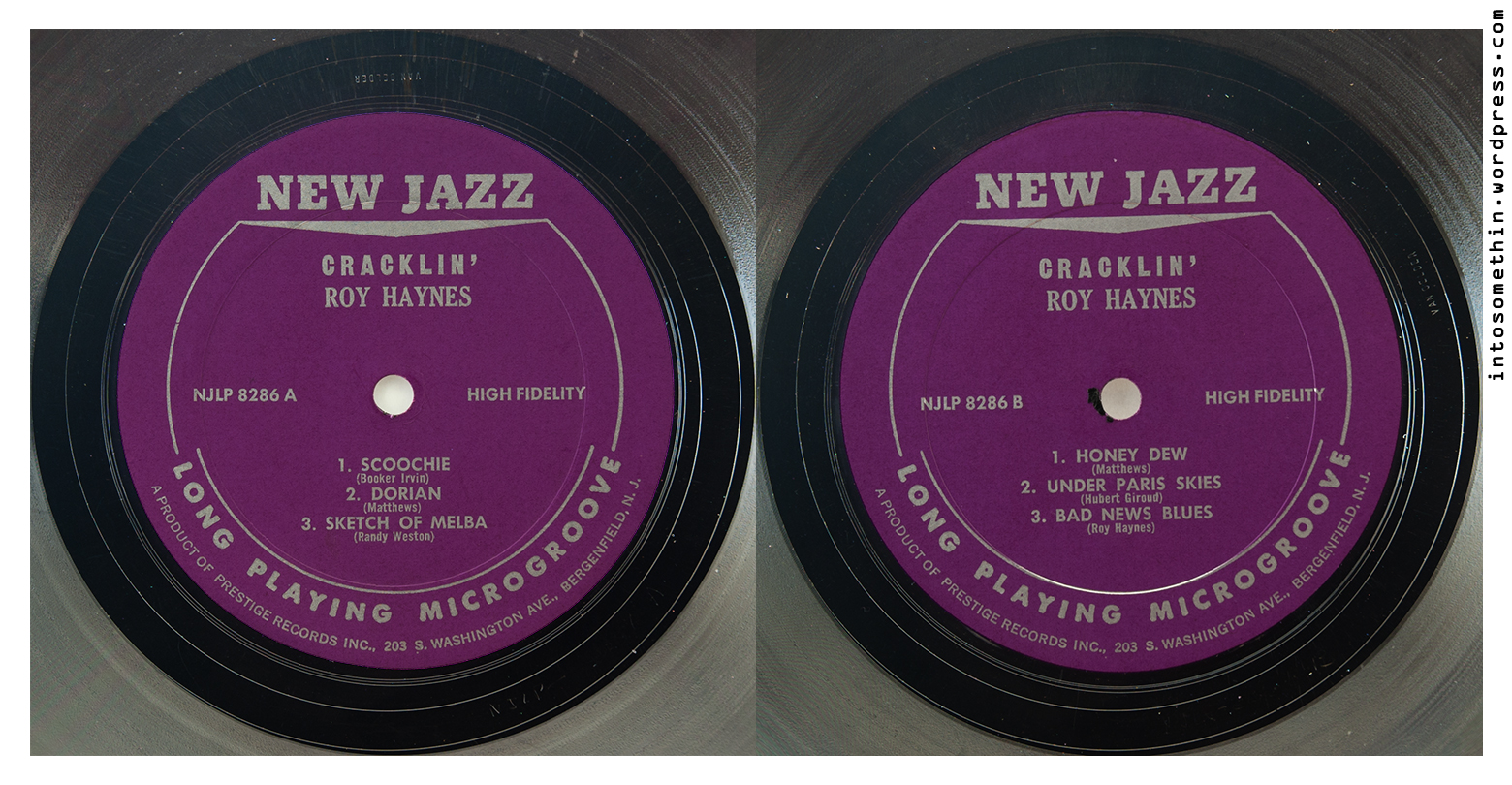
Roy Haynes with Booker Ervin – Cracklin’ (New Jazz NJ 8286)

roy-haynes-cracklin-front

Discographical Details

Artist: Roy Haynes with Booker Ervin.
Title: Cracklin’.
Label and Catalogue Number: New Jazz NJ 8286.
Personnel: Booker Ervin (tenor sax); Ronnie Mathews (piano); Larry Ridley (bass); Roy Haynes (drums).
Side 1: Scoochie; Dorian; Sketch of Melba.
Side 2: Honeydew; Under Paris Skies; Bad News Blues.
Recording Date: 6 April 1963 at the Rudy Van Gelder Studio, Englewood Cliffs, New Jersey, USA.

Listening Notes

roy-haynes-cracklin-rear

On many instruments, certain great jazz musicians are easily identifiable after but a few notes. This typically applies to trumpeters, saxophonists and even pianists but for a drummer to be instantly recognisable is a quality reserved for the privileged few. These include the likes of Art Blakey, Elvin Jones, Max Roach and Tony Williams – all of whom are relatively well known outside jazz circles. Roy Haynes is equally, perhaps more, distinctive but wider fame beyond the jazz cognoscenti tends to elude him. Haynes’ moniker “Mr Snap Crackle” describes his sound eloquently. His style is quick, clean and precise and he remains as active and potent as ever even though he’s into his nineties now.

Haynes’ discography as a sideman is extensive but his dates as leader are much more limited, especially during the golden era of the 1950s and 1960s. This plus the sheer quality of these recordings, make them highly prized by collectors, so I had to endure a lengthy pursuit to obtain a copy of Cracklin’, let alone one in prime condition. Few copies come on the market each year and there’s always the risk of picking up one with the significant background hiss that notoriously afflicts some original New Jazz pressings. This is widely held to be a result of the practice of using recycled vinyl that was deployed by label owner Bob Weinstock as a cost cutting measure. Plus it doesn’t help that Booker Ervin’s presence ups the desirability of this particular session.

Cracklin’ is a high quality package from a quartet of performers clearly familiar and at ease with each other. The programme offers something for almost everybody (except fans of latin tunes). We’re treated to some fingerpopping soul jazz, a beautiful ballad, some out and out blues blowing, a carefully structured compositional master class and one of the all time classics of modal jazz that is worth the purchase price all by itself. Sure, Haynes and Ervin get their names in lights but Mathews is no slouch at the keyboard or with the composer’s pen while Ridley gets several opportunities to display the merits of his solid bass tone.

The group flies out of the blocks with Ervin’s Scoochie, recorded elsewhere under variants of this title (for example as Skoo Chee on Horace Parlan’s On the Spur of the Moment LP). It’s taken here at an aggressive pace that gives us an immediate chance to appreciate Ervin’s distinctive tone. Next comes the epic Dorian, rightly regarded as one of the masterpieces of 1960s modal jazz. This track is a triumph for all involved from Mathews often overlooked compositional skills, through Haynes pinpoint accurate drumming and Ervin’s fervent blowing to Ridley’s tasteful bass solo. I could listen to this one over and over again and it was the track that set me off searching for this record in the first place. Side 1 closes with Randy Weston’s Sketches of Melba which offers the protagonists another route to display their talents via sensitive handling of this attractive theme.

Honeydew opens Side 2 with a brisk excursion into soul jazz territory. I can’t help but think that Herbie Hancock’s Watermelon Man, recorded the previous year, was a significant influence here – especially since Honeydew was paired with Dorian for release as a single (Prestige 45-264) by the parent record company, no doubt with an eye to the jukebox market. Now that would make an interesting curio for the collection! Haynes’ trademark drumming is as crisp as can be throughout this number and makes effective use a short breaks rather than an extended solo which would have overloaded this brief tune.

The penultimate performance is Under Paris Skies, which deceives the listener by setting off in one direction before establishing its evocative continental theme. To close, the quartet cuts loose with the in-your-face Bad News Blues. Everybody has fun and I especially enjoy the stop time interlude behind Ervin’s testifying tenor.

This is one of those LPs that lives up to its reputation among collectors: it’s all killer, no filler with not a weak moment across the whole date.

For Collectors Only

roy-haynes-cracklin-labels

Side 1 is non-deep groove and sports a New Jazz purple label with silver printing plus the “VAN GELDER” stamp and a hand etched matrix number “NJLP-8286 A” (which, incidentally, has mostly outwitted my photography skills). Side 2 is also non-deep groove and wears the same style of purple and silver label again with the “VAN GELDER” stamp and a hand etched matrix number “NJLP-8286 B”. I’ve logged the weight of this slab of near mint condition vinyl as 137g.

The cover has a lovely laminated front which, on arrival in my collection, was a little grubby. However, one of the blessings of laminated covers is that they respond well to some judicious cleaning with cotton buds and isopropyl alcohol. The rear cover isn’t laminated and had a couple of small typewriter correction fluid patches that detract from its otherwise lovely condition.

The controversial question is whether this example qualifies as a first pressing?

The difficulty here is that even within the scope of the New Jazz purple and silver labels for this specific record there are several variations in the wild: deep groove on one side versus non-deep groove on both sides, the typeface used for the artist, presence of “Side 1” or “Side 2” printed above the catalogue number, spelling “HI FIDELITY” versus “HIGH FIDELITY”. Add to that the fact that some copies are pressed on recycled vinyl (evidenced by the background hiss) and others, like mine, appear not to be and we’re faced with a knotty problem. The final factor here is chronology: this session was recorded in April 1963 and therefore released at some later date yet Prestige pulled down the shutters on the New Jazz imprint in 1964, which leaves little time for multiple pressings.

I have one theory that fits the facts: the possibility that several pressing plants were used simultaneously to press copies of this record – perhaps one plant on the East Coast of the USA, one on the West Coast and one somewhere in the mid-West as a way to limit distribution costs. There is a precedent for this with Columbia. If this theory holds good, then perhaps all these variations qualify as first pressings?

If you’ve got a copy of this record, maybe you’d be kind enough to share details and I’ll try to compile a chart of all the variations.

PS: I’ll add a rip of one of the tracks later in the week.

Duke Pearson – The Right Touch (Blue Note/Liberty BST 84267)

duke pearson - the right touch -front cover

Discographical Details

Artist: Duke Pearson.
Title: The Right Touch.
Label and Catalogue Number: Blue Note/Liberty 84267.
Personnel: Freddie Hubbard (trumpet), Stanley Turrentine (tenor sax), James Spaulding (alto sax), Jerry Dodgion (alto sax, flute), Garnett Brown (trombone), Duke Pearson (piano), Gene Taylor (bass), Grady Tate (drums).
Side 1: Chili Peppers; Make It Good; My Love Waits (O Meu Amor Espera).
Side 2: Los Malos Hombres; Scrap Iron; Rotary.
Recording Date: 13 September 1967 at the Rudy Van Gelder Studio, Englewood Cliffs, New Jersey, USA.

Selection: Los Malos Hombres.

Listening Notes

duke pearson - the right touch - rear cover

Duke Pearson was not the greatest pianist to record for Blue Note but he does have a special place in the label’s history. He first came to prominence as part of Donald Byrd’s group and appeared on a succession of notable recordings prior to his own debut as leader. But his place in the Blue Note pantheon was cemented by his role as A&R man, a duty he took over following the death of Ike Quebec in 1963. Pearson held down that job until 1971 alongside leading his own dates for both Blue Note and Atlantic, numerous sideman appearances and a healthy amount of work as an arranger. I get the impression that eight years of intensive activity must have taken its toll in the end. Pearson’s legacy is not just his own recordings but many under-appreciated Liberty-era Blue Note sessions that he organised.

The Right Touch is, for me, one of the high water marks of Pearson’s career. It illustrates all of Pearson’s strengths: genuine compositional ability (all the tunes on this LP were written by him), an ear for a catchy tune and a deft touch on the keyboard. Perhaps more than anything else, Pearson had a gift for arranging and he seems to have made a speciality of working with groups of six to ten musicians. I wonder what kind of a name he would have made for himself in the earlier big band era.

I first encountered this record because of the stand-out lead-off track Chili Peppers, which was a favourite on the UK jazz dance of the late 1980s and early 1990s. Nowadays, it’s found a new home as the theme tune of Cerys Matthews’ BBC Radio 6 Sunday morning programme, though I suspect few of her listeners are aware of the tune’s provenance. It’s one of several performances on this LP that give it a distinctly latin flavour – both in terms of titles and the music itself.

The closing track on Side 1, My Love Waits (O Meu Amor Espera), is an especially poignant tune with a languid bossa nova flavour and Los Malos Hombres provides another, more up-tempo, variation on the latin theme. It’s deceptively easy to listen to though its title, according to the sleeve notes, derives from its difficulty and is yet another example of the reverse psychology of jazz language – “bad” here meaning that you need to be a really good musician to perform this tune’s tricky fingering. Grady Tate gets a feature spot on this one and uses it to great effect. I get the impression that Pearson chose him mainly for his experience with larger ensembles though there are aspects of his playing here that echo the way Art Blakey propelled The Jazz Messengers.

My other favourite on this LP is Scrap Iron. It’s a complete change from the preceding latin number and offers instead a deep slow blues. Pearson’s piano and Turrentine’s tenor saxophone are both especially striking here as both go directly to the heart of the matter.

This record is another Blue Note Liberty-era selection from my trip to London earlier this year that bore the fruit of Lee Morgan’s The Gigolo. Like that acquisition, this example is also a case of a silk purse condition record hiding is a sow’s ear cover. And it goes to prove that the sound quality of Liberty pressings of 1967 wasn’t lagging too far behind the Plastylite pressings of the pure Blue Note years. This copy had a fair amount easily removed storage dust on the surface but not ingrained into the grooves. So, once cleaned, its Near Mint status quickly shone through. The cover, though, is in pretty poor shape with obvious ring wear, plenty of scratches and dents. Still, it’s done its duty and protected the all important vinyl!

For Collectors Only

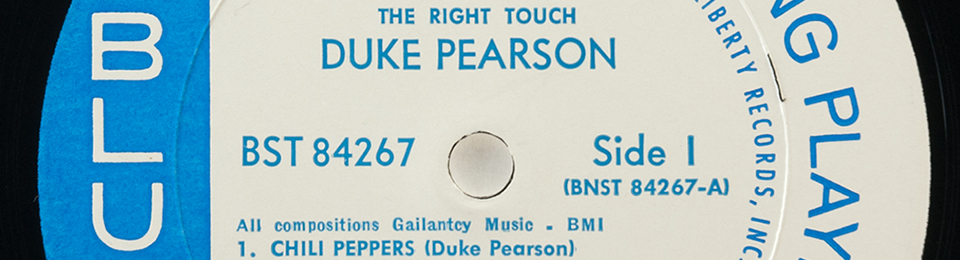
duke pearson - the right touch - labels

Side 1 is non-deep groove, bears a “VAN GELDER” stamp and has a hand etched matrix number “BNST 84267 A” with a Division of Liberty Records, Inc. label. Side 2 is non-deep groove, bears a “VAN GELDER” stamp and has a hand etched matrix number “BNST 84267 B” with a Division of Liberty Records, Inc. label. Shamefully, I haven’t yet recorded the weight of the vinyl – an oversight I’ll correct with a later update. The cover is non-laminated and has the “1776 Broadway, New York 10019″ address.

So there we have it, a straightforward stereo first pressing of this record (though Cohen’s book doesn’t cover stereo first pressings after 84252, so I am making a modest assumption here). As with 16 other sessions of this period, Blue Note/Liberty produced some mono promo copies for US radio stations and those command a price premium.

Miles Davis – In Person: Saturday Night at the Blackhawk, San Francisco (Columbia CS 8470)

miles-davis-saturday-night-at-the-blackhawk-front-cover

Discographical Details

Artist: Miles Davis.
Title: In Person: Saturday Night at the Blackhawk, San Francisco.
Label and Catalogue Number: Columbia CS 8470.
Personnel: Miles Davis (trumpet), Hank Mobley (tenor sax), Wynton Kelly (piano), Paul Chambers (bass), Jimmy Cobb (drums).
Side 1: Well You Needn’t; Fran-Dance, So What.
Side 2: Oleo; If I Were A Bell; Neo.
Recording Date: 21-22 April 1961 at The Blackhawk, San Francisco, California, USA.

Selection: If I Were A Bell.

Listening Notes

miles-davis-saturday-night-at-the-blackhawk-rear-cover

As promised, here’s the second part of my brace of postings about the Miles Davis Blackhawk records. Naturally enough, the focus here is on the Saturday Night record but, as previously noted, just how much of this record is really from the Saturday and how much is actually spliced in from the Friday is a matter of debate.

Of course, in reality, that makes little difference because the level of consistency and continuity across the two records in seamless. The same personnel play to the same excellent standard, in the same style across a similar profile of selections. Once again we see Davis choosing to explore familiar material in the shape of tunes like So What, Oleo and If I Were A Bell juxtaposed against new compositions like Fran-Dance and Neo that signal the future direction with the second great quintet. Perhaps the only surprise is the pace at which the band go at So What.

If I were looking for a difference between the two records it would be in a slight shift of emphasis from Mobley’s tenor to Kelly’s piano. On this record, as well as dancing elegantly around the horns for comping duties, Kelly gets ample space for his own soloing. And boy, does he make the most of the opportunity. At this place and at this time, Kelly was just about the perfect pianist for Davis. He could do everything that his employer was looking for and switch between elegant fleet-fingered bop lines, modal chords, bluesy phrases and flat out swinging. Take So What as a prime example – I don’t think Davis would allow any other pianist to shift the style so far from modal to a real swinger without chastisement.

Elsewhere, Rollins’ Oleo is also taken at speed, almost as if the band wanted to show off its proficiency with the tricky theme. The same could also be said of Monk’s Well You Needn’t. That other old favourite, If I Were A Bell is performed at the more usual Davis medium pace and is heralded by Kelly’s Westminster Chimes that echo Garland’s opening on the studio version from Relaxin’. Here too Kelly seems to get as much space as he wants to stretch out – something of a contrast with the way David seemed to ration Mobley’s airtime.

Sprinkled between the bread and butter of these familiar choices, we’re treated to some slightly spicier fillings with the two newer Davis compositions. They have a lot in common but my slight preference is for Neo. The theme seems to be more substantial and gives both musicians and listeners a firmer anchor point to return to after the winding currents of the solos.

For Collectors Only

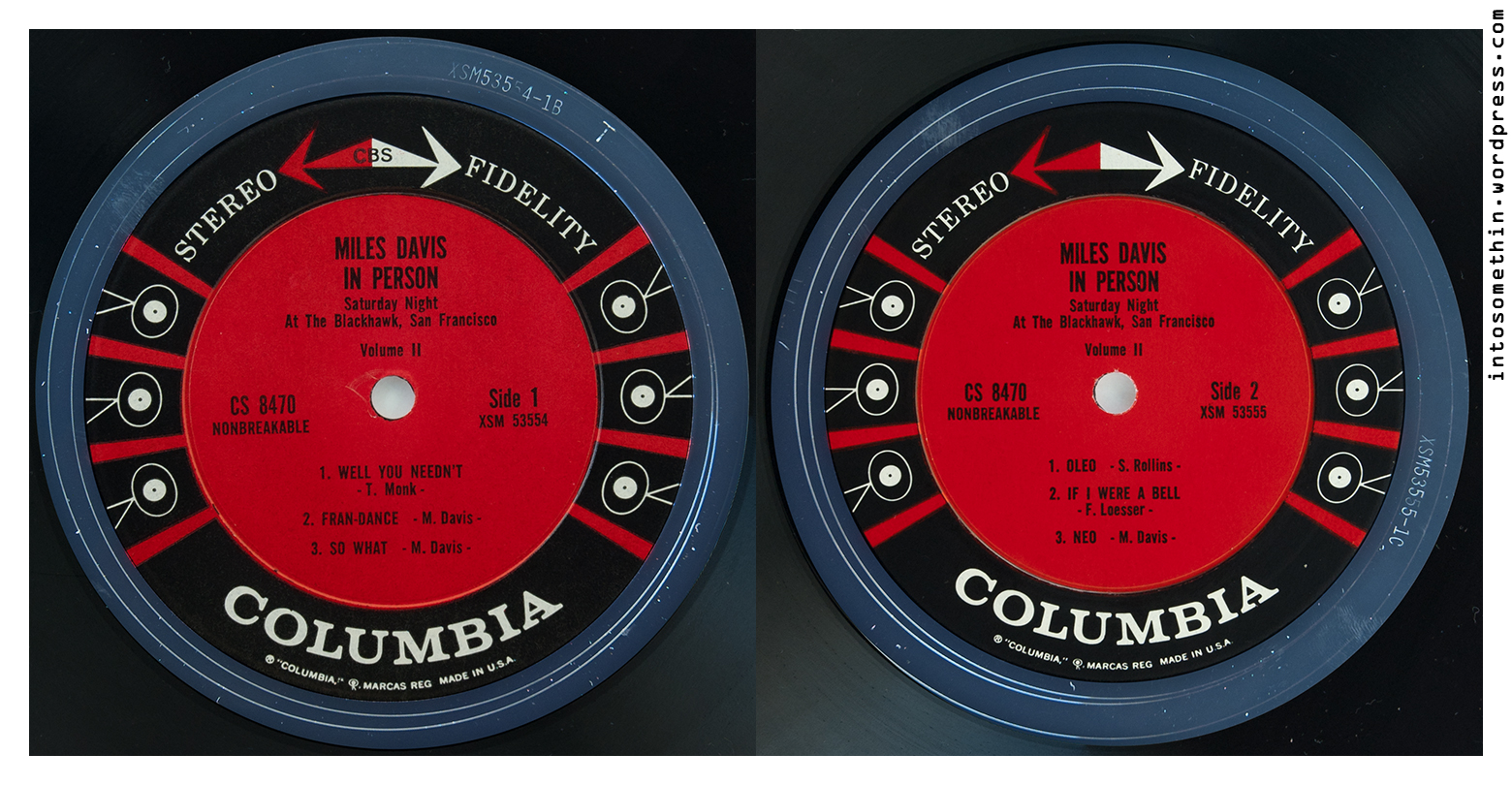
miles-davis-saturday-night-at-the-blackhawk-labels

My copy of this record is another Columbia six-eye pressing which makes for a nice pair with the Friday Night record with one proviso. Those of you paying careful attention to the label photography will notice that Side 1’s label is not quite a pure six-eye but rather one that is referred to as a six-eye CBS overprinted label. This slightly later label is sometimes a portent of slightly poorer pressings but in this case, I don’t think that applies because Side 2 has a pukka six-eye label, the stamped matrix numbers end with 1B and 1C respectively (Side 1 is stamped XSM53554-1B and Side 2 is stamped XSM5355-1C) and both sides are deep groove (albeit a narrow one) making it an early example of the species. So my interpretation is that we’re looking at a transitional pressing here with not quite enough pedigree to claim first pressing status but not far enough off to be relegated to a second pressing. Is there such a thing as a one-and-a-halfth pressing? Either way, I’m perfectly happy with this mongrel!

The main point of interest here is that although the cover isn’t in perfect shape, the record itself came to me still sealed in its original Columbia polythene bag with perforated edge. In theory this makes for a Mint condition record but in practice, over fifty years sealed for posterity in plastic doesn’t guarantee perfection and I’d actually rate the condition as Near Mint because of a few pops here and there.

Miles Davis – In Person: Friday Night at the Blackhawk, San Francisco (Columbia CS 8469)

miles-davis-friday-night-at the blackhawk-front-cover

Discographical Details

Artist: Miles Davis.
Title: In Person: Friday Night at the Blackhawk, San Francisco.
Label and Catalogue Number: Columbia CS 8469.
Personnel: Miles Davis (trumpet), Hank Mobley (tenor sax), Wynton Kelly (piano), Paul Chambers (bass), Jimmy Cobb (drums).
Side 1: Walkin’; Bye Bye Blackbird.
Side 2: All of You; No Blues; Bye Bye; Love, I’ve Found You.
Recording Date: 21-22 April 1961 at The Blackhawk, San Francisco, California, USA.

Selection: Bye Bye Blackbird.

Listening Notes

miles-davis-friday-night-at

My Miles Davis plan for 2015 had been to round out my collection of Columbia two-eye label records of the “second great quintet”. Not a particularly arduous target, yet I find myself well past the mid-point of the year with no progress on that specific front having had my head turned by some earlier Davis records that I encountered along the way. In this case, a rare foray into eBay “buy it now” territory: an excellent pressing at a good price that I rushed to snap up before anybody else found it.

This is by way of a two parter: part one now to look at my copy of In Person: Friday Night at the Blackhawk and, coming next, part two about my copy of In Person: Saturday Night at the Blackhawk. Immediately, we’re into controversy because now that I own both records I’ve been doing some research and I’ve come across several sources that describe how Davis and Teo Macero edited the performances in preparation for release across these two records. Now the first part of the editing story is perhaps not too surprising. I was able to compare track lengths on my records with those published for the Mosaic box set of the complete Blackhawk recordings and it turns out that some of the former are shorter. For example No Blues lasts around nine minutes on the original Columbia six-eye pressing but stretches out to over 17 minutes for the unedited version on the Mosaic box set. Such editing wasn’t uncommon – not least because there’s only so much room on any given side of vinyl.

But there’s a deeper level of manipulation to this editing that some sources claim happened. The assertion being that some cross-pollination occurred between versions prepared for the Friday Night record and those prepared for the Saturday Night record. In other words, Friday Night includes some snippets from Saturday Night and vice versa. I don’t know if it’s true but it would be of academic interest to find out. Perhaps those of you lucky enough to have either the Mosaic vinyl box set or the Columbia CD box set of the complete Blackhawk recordings can review the accompanying booklets for clues?

In the end, though, it matters not because both records are a treat for the ears – especially as original six-eye pressings.

This particular Davis line-up was reputed to be his most popular with live audiences and that may have been a factor in Davis’ consent to these, his first ever officially released live recordings. It’s easy to see why this band hit the sweet spot with the paying public in the clubs: Messrs Kelly and Mobley add a genuine warmth and accessibility to Davis’ otherwise austere approach. Each, in their own way, make sections of these two nights of live performance their own. On Friday Night, Mobley takes the laurels for his deep and emotional solo on Bye Bye Blackbird which garners audible words of praise from the excitable audience. Yet Davis almost seems to push Mobley out of front line on other tracks. In the gaps (and with Davis there are plenty because he knew better than anybody else when not to play) we can can glimpse through to Kelly but more of that when I write about Saturday Night in the next posting.

The Janus-like band line-up and set list look both backwards and forwards. From the past we get the Kind of Blue rhythm section plus a selection of Davis’ regular themes like Walkin’. Looking to the future, we can begin feel the influence the growing partnership with Teo Macero and hints at Davis’ search for a new direction with No Blues (also known as Pfrancing). My sympathies lie with Mobley who, like other capable players (Stitt, Rivers, Coleman), got caught in the crossfire between Davis losing Coltrane and finding Shorter.

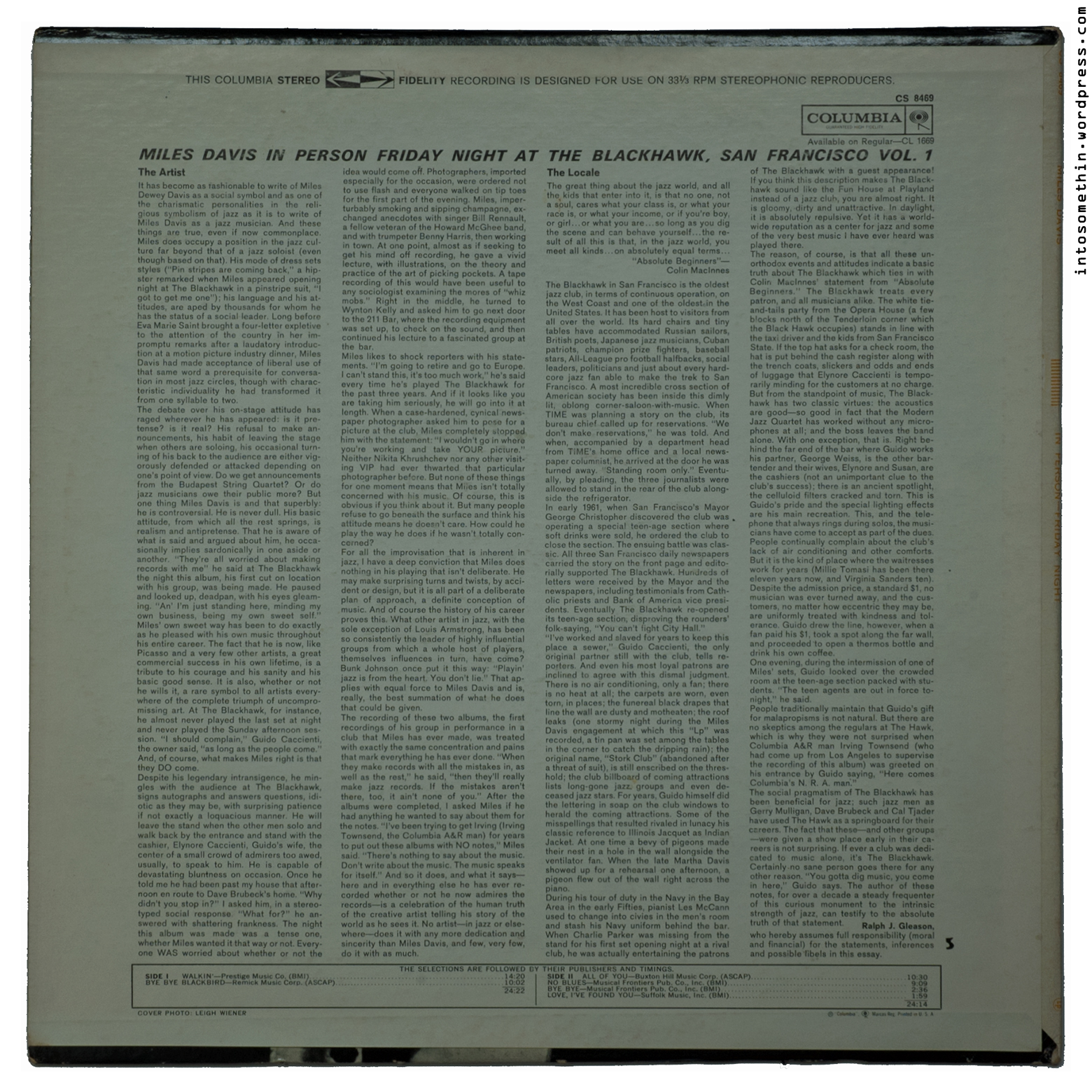
However, whatever the material, this personnel aces it and this is one of those records that just seems to get better and make me smile more each time I listen. On that note, I’ll leave you until I cover Saturday Night in part two of this brace with an encouragement to read Ralph J. Gleason’s sleeve notes. He was quite a character and these are probably the last coherent (and incidentally rather entertaining) set of notes he wrote for a Davis LP. If you don’t believe me, take a look at the dodgy doggerel on the back of ESP!

For Collectors Only

miles-davis--friday-night-a

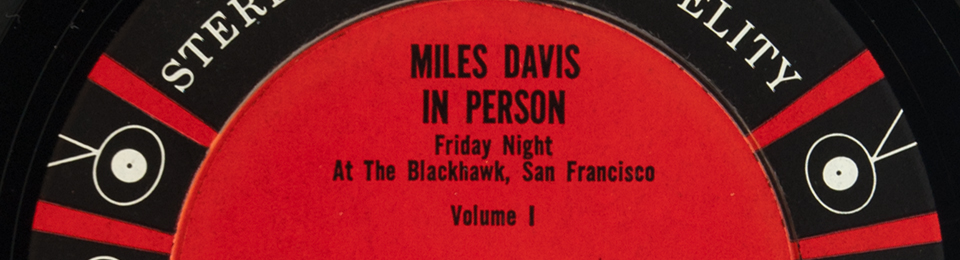
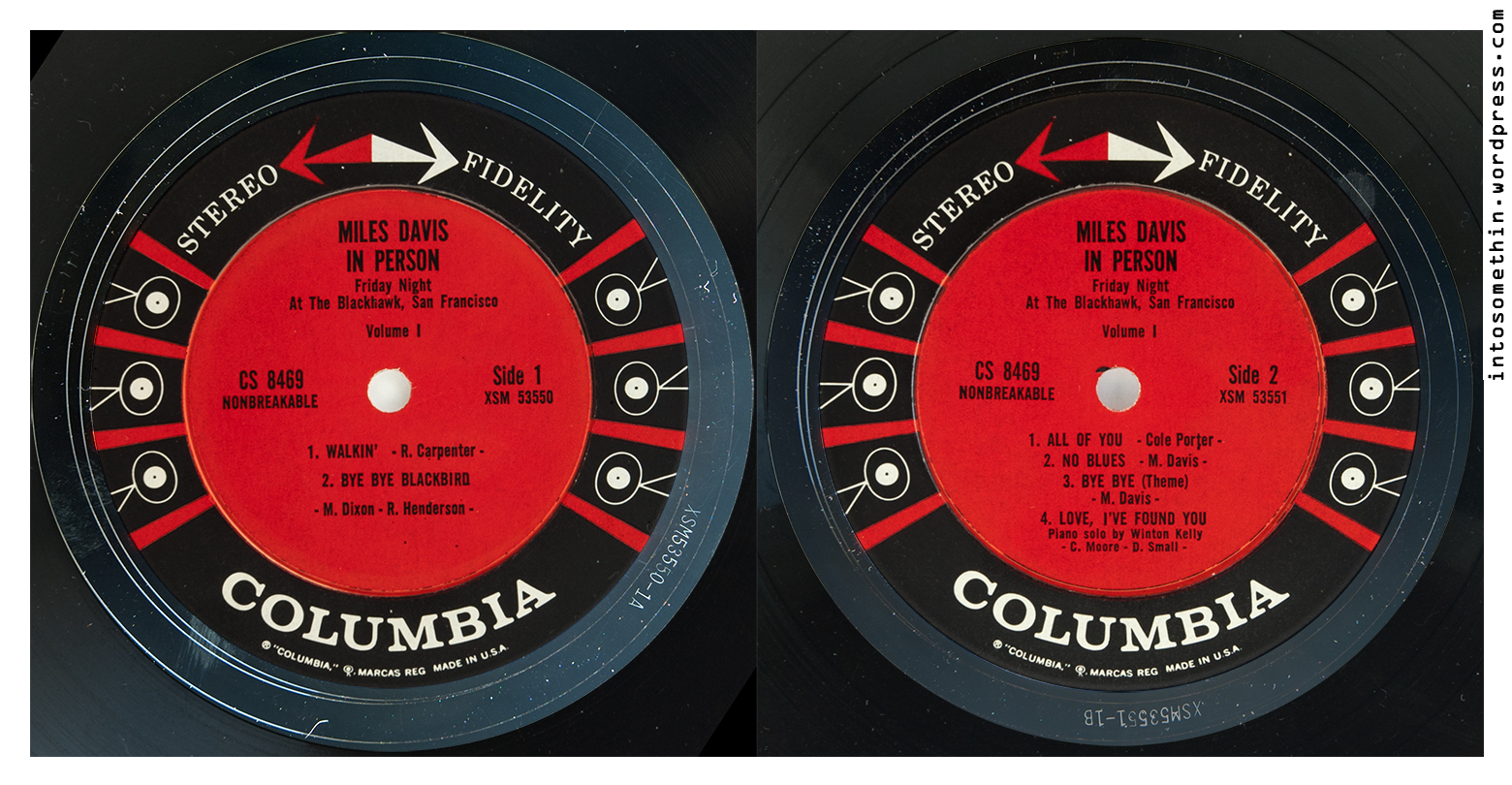
Side 1 is deep groove with a Columbia six-eye label and matrix number “XSM53550-1A” stamped in the deadwax. Side 2 is also deep groove with a Columbia six-eye label and this time the stamped matrix number in the deadwax is “XSM53551-1B”. So almost the much coveted 1A/1A! However, given that Columbia used multiple pressing plants across the USA at the same time, I feel confident that this still qualifies as a first pressing. The vinyl measures 148g on my trusty kitchen digital scales.

The deep grooves are not as pronounced on these Columbia pressings as ones on, say, Blue Note or Riverside pressings so they don’t show up so obviously in the photography. But I know they’re there because I’ve felt them with my fingernails! By the way, did you spot the spelling error on Side 2’s label? Yes, we have a closing piano solo by Winton (sic) Kelly!

The condition of the sleeve doesn’t match up to that of the record and shows some wear, especially at the corners. But it’s still structurally sound, so it’ll do for me.

Coda

This posting marks a small incremental enhancement in the photography. For the first time, I’ve been able to successfully replicate Andy’s technique at LJC for capturing deadwax markings. This first attempt was rather painful but I hope to improve productivity for future postings, so please enjoy the fruits of my labour.