Less prolific and overshadowed by other UK tenorists, Dick Morrissey’s tasty mid-1960s pair of quartet LPs on the Mercury label deserve reassessment with a side-dish of factual accuracy.
Storm Warning! in all its front laminated flipback cover glory. This was the first of a brace of LPs Dick Morrissey recorded for Mercury but there seems to be a widespread misconception that this was a live recording when all hard evidence points to it being a studio session.
UK tenor saxophonist Dick Morrissey emerged on the London jazz scene at the start of the 1960s and quickly forged an exciting live reputation. He was just 21 years old when recorded his debut LP It’s Morrissey, Man! for Fontana in 1961 and then promptly decamped to India for over a year. That decision seems to have put the kibosh on his relationship with Fontana but it did cement his bond with pianist Harry South. When the pair returned to the UK in 1963, they formed a quartet with the addition of former Jazz Couriers members Phil Bates (bass) and Jackie Dougan (drums). Morrissey, South and Bates remained a stable unit playing live and recording three albums together over the next three years with a different drummer on each occassion.
The first of the three long players, 1963’s Have You Heard?, is now a UK jazz record collectors’ holy grail. Unfortunately for Morrissey, at the time of release, it got little attention outside London by dint of being recorded for 77 Records, the tiny label associated with Doug Dobell’s Charing Cross Road record shop. But somebody must have been listening because Morrissey soon found himself cutting a pair of records for Mercury, a company not known for dipping its toes in the UK jazz scene.
The first of these of albums was Storm Warning!, recorded on the evenings of 22 and 29 November 1965 and released in early 1966. For some reason, a lot of secondary sources on the Internet (including Wikipedia) assert that this record is a live recording. Perhaps it’s the fact it was recorded on two evenings? Perhaps it’s the front cover photo? Perhaps it’s the way the sleeve notes mention the quartet’s regular live dates at The Bull’s Head in Barnes? Whatever the reason, the assertion is based on assumptions and not facts. I have closely compared the sound of Storm Warning! with Here And Now And Sounding Good! and it’s almost identical. The latter is definitely a studio date and my copies of both records are mono first pressings. So there’s no doubt in my mind that Storm Warning! is a studio recording and not a live one. Indeed, the 2011 Vocalion CD reissue backs up my conclusion by stating that both LPs were recorded at the Philips Studios, Stanhope Place, London. Please let me know if you have additional information.
Here’s the rear cover. The liner notes make a lot of references to the quartet’s live performances and perhaps that’s why people have misconstrued that this is a live recording – the ambiguous opening phrase of the final paragraph hardly helps matters.
And so to the music: of course Storm Warning! is a showcase for Morrissey. It’s his tone that stands out. He has a clean, clear, soulful sound that blends aspects of several American players. Other people have mentioned Mobley and Rollins and I’d like to add Turrentine to that brew. Technically, Morrissey is not as supercharged as that doyenne of UK saxophonists, Tubby Hayes, but he is really enjoyable and I can see why the quartet was so appealing on the live circuit.
The group’s not-so-secret weapon here is the semi-mythical drummer Phil Seamen. Seamen seems to be one of the few jazz musicians about whom every tall story was probably true! He famously lived life with the dial permanently set at eleven and while this sometimes resulted in erratic performances, when Seamen was on it, he was incredible. A lot of his work on this record isn’t showy, in-your-face stuff but, for example, pay close attention to what he does under the soloists on Come Rain Or Come Shine.
South is not such an engaging player as Morrissey but he is an accomplished composer and contributes two fine tunes to Storm Warning! This side of his career flourished in the 1970s and perhaps his most lasting contribution to British culture was the theme tune to the TV police series The Sweeney.
The front cover of Here And Now And Sounding Good! sans exclamation mark at the end of the title but which appears on the rear of the cover and the labels. Again, this is the classic UK mid-1960s front laminated flipback design.
The quartet was back in the studio less than a year later on 23 and 23 September 1966 to record Here And Now And Sounding Good! albeit now with Bill Eyden on drums. With mostly the same band, same studio and the same producer/liner notes author it’s hardly a surprise that consistent results were achieved. The main difference second time around was an emphasis on highlighting British composers. So we get two Tubby Hayes’ tunes, one by Ian Hamer, a Stan Tracey chart and the balance from South. In fact this was the first recording of Hayes’ Off The Wagon and pre-dates the master’s own version on Mexican Green.
And for the record, here’s the rear cover. At least this time the designer has laid out the text in three columns to make it easier to read than the single column full-width approach to the text on Storm Warning! which makes it hard to scan.
As mentioned above, my copies of both records are mono first pressings. The sleeves are the traditional UK flipback design with laminated fronts. The thin card used to make these flipbacks often left them vulnerable to damage but mine have fared well over their near sixty year lifespans. They have also done their jobs well to protect the vinyl which is in lovely condition.
The labels for Storm Warning! in silver ink on a textured black background. The text confirms the year of release as 1966 and, yes, this one is a promo copy.And the very similar labels for Here And Now And Sounding Good! Although it was recorded in September 1966, the process of getting the record released seems to have spilled over into 1967 as witnessed by the publication year here.
The labels on both records are the Mercury design of the mid-1960s that featured silver printing on a stylish textured matt black paper. There are some minor design changes between the two pairs of labels – feel free to indulge in a game of “spot the difference”. The other fun thing is that Mercury’s copy editors were a little inconsistent with their treatment of exclamation marks on Here And Now And Sounding Good. They appear on the labels and the rear of the cover but didn’t make the cut for the front cover.
Vinyl collectors of Dick Morrissey 1960s output are not well served. Both these records have only been re-issued scarcely. They both got 1993 pressings in Japan on the Norma label and Here And Now And Sounding Good! garnered one further limited edition re-issue in 2006 – again, in Japan. So you can see why I’m so delighted to have them both in my collection.
What better way to relaunch my blog than with an all-time great LP and a bit of musing over our obsession with first pressings?
The simple, powerful, iconic front cover of my Van Gelder mastered mono Impulse pressing of A Love Supreme in all its laminated gatefold glory! One interesting piece of trivia is that this was the first Impulse release to dispense with the famous orange and black spine – instead it has an austere white one with black text to match the serious nature of the overall design.
I’ve found myself more focused on my Instagram account than this blog over recent times so there has been a distinct lack of new content here for a long while. This has led me to think about what’s realistically achievable and sustainable in future. I even toyed with the idea of a “vinyl community” YouTube channel! However, I’ve settled on using Instagram for short-form postings about individual records while using this blog for postings that will be longer either because I want to dive into greater depth about a topic or because they may be about multiple records that share a common theme. I will try to establish links between the two platforms in ways that should become self-evident over time.
Today’s blog posting fits in the “deep dive” category. And, because I’m giving my blog a metaphorical makeover, what better than pick stone classic to kick off things with a bang? So, yes, this posting is about Coltrane’s A Love Supreme but that’s also a vehicle to explore another topic in a bit more detail. That’s not to say the music itself isn’t the most important thing. Of course it is but much has already been written about that aspect of this record so I want to scratch a different itch.
I want to talk about our collective obsession with so-called “first pressings”. In order to do that, I think I have to bare my soul a little so that you can appreciate where I’m coming from. The question I have asked myself on more than one occasion is: am I a first pressing fundamentalist? If you’re a reader of this blog or a follower of my Instagram account, I suspect you may have asked yourself the same question at least once. No shame in that. And, actually, what ever your response was then or is now or will be in future – there’s no shame in your answer. Your answer (what ever it is) is valid as long as you’re at peace with it. Remember, it’s your hobby, so it’s your prerogative to enjoy it in the way that makes you happy. Don’t listen to anybody else – even me!
So I bet you’re itching to know my answer to this question? Nowadays it goes like this: I’m a first pressing fundamentalist… Except when I’m not! How does that work? Well, I’m going to use A Love Supreme to try to explain.
We need a little (historical) discussion about the master tapes as a pre-requisite. Buckle up, this is where the deep dive begins and it’s fact-based (for as much as possible) plus a little conjecture to fill in the gaps. Here’s what we know:
The music that appears on the classic quartet version of A Love Supreme was recorded by Rudy Van Gelder at his Englewood Cliffs, New Jersey, USA studio on 9 December 196411.
Van Gelder recorded that music straight to stereo master tapes (by 1964 he had abandoned the practice of recording separate mono and stereo master tapes simultaneously). So when I talk about the “master tapes” for A Love Supreme in this posting, these are the only tapes I mean – my contention is that all other tapes are NOT the master tapes but second (or later) generation copies.
Van Gelder cut both mono and stereo lacquers from these stereo master tapes (the mono being a fold-down). In other words, he did the mono and stereo mastering from these tapes. Only the earliest pressings that bear the “VAN GELDER” stamp in the deadwax were mastered by him. Any other pressings, no matter how early they may appear to be, or how early anybody claims them to be, were not mastered by Van Gelder.
There are other 1960s pressings of A Love Supreme that were not mastered by Rudy. Notably, ones mastered at Bell Labs.
There is strong evidence that the master tapes were destroyed by 1971. No less an authority than Michael Cuscana was 99% certain of this sad event2. Which begs the question of which tapes were used as the source for subsequent pressings?
These points speak to my stance on first pressing fundamentalism. In general, one of the reasons I prefer first pressings because they are the ones that get me closest to the original master tapes at the point in time when they were in best condition. But this is not an exact science and sometimes other factors inform my preferences hence that “except when I’m not” caveat.
A pure first pressing fundamentalist approach to A Love Supreme might lead me to pursue the Van Gelder mastered stereo first pressing over the Van Gelder mastered mono first pressing because the latter is a fold down. But there’s a problem here: Van Gelder made a rare error when he cut the stereo master and there’s an annoying background hum on it (maybe caused by a dodgy cable or connection but we will never know for sure). So the next best option is the Van Gelder mastered mono first pressing and many people actually would prefer that (me included because it places Coltrane’s saxophone centre stage where it deserves to be).
And now we get to the heart of the matter. Apart from test pressings and white label promotional copies, Discogs lists three Van Gelder mastered mono variants for 1965 (bear in mind that A Love Supreme was first released in February 19653). We know from research done by others that one of those is the earliest variant because it is the one without “-A” and “-B” suffixes after the “A-77” catalogue number on the Side 1 and Side 2 labels respectively. One of the other variants has a serrated edge which is an indicator that it was pressed at Keel Manufacturing and the remaining third Van Gelder mono 1965 variant has a smooth edge. Discogs lists the next Van Gelder mastered mono pressing as appearing in 1967 and it can be identified by a subtle change to the labels: a line of small white text reading “NEW YORK N. Y. 10019” was added above the “PRINTED IN USA” line.
Here’s the label and deadwax on my Van Gelder master mono copy of A Love Supreme. Note the “-A” and “-B” suffixes after the “A-77” catalogue number (A) which identify it as not being the earliest pressing variant. Also there is no additional line of white text reading “NEW YORK N. Y. 10019” above “PRINTED IN THE USA” (B) so this is an earlier pressing than the 1967 Van Gelder mastered mono variant.
So now I was able to use the information about those four Van Gelder mono variants to apply a process of elimination to identify my copy. Mine has the “-A”/”-B” suffixes and a non-serrated edge but does not have the extra third line of text. So that means it is one of the 1965 variants but not the earliest one. Further, it means that it was pressed before the 1967 variant. That narrows it down to being pressed some time between February 1965 and some point in 1967. But could I narrow down the date range any further? Well maybe…
Luckily, my copy came complete with an inner sleeve which has some distinguishing features – specifically the address “ABC – Paramount Records Inc., 1501 Broadway, New York 36, N. Y.” and the fact that the highest Impulse catalogue number promoted on it is A-50 (John Coltrane – Live At Birdland released in January 1964). From what I can gather, this inner sleeve design ceased to be used around March/April 1966 though that is open to some conjecture because there would have been a cross-over period when stock of this inner sleeve was used up while the new design was being introduced. The new inner sleeve design included the “1330 Avenue of the Americas, New York, N.Y.” address and what is certain is that Impulse moved to this address in July 1965 when it took up residence in the ABC building on Sixth Avenue4 (also known as Avenue of the Americas).
This is the inner sleeve that came with my Van Gelder mastered mono copy of A Love Supreme. It helps to narrow the window of the pressing date of my copy because this design of inner sleeve stopped being used around March/April 1966 after the Impulse office moved to 1330 Avenue of the Americas, New York, N.Y. Note the 1501 Broadway, New York 36, N. Y. address (A) and the promotion of A-50 as the highest Impulse catalogue number shown here (B).
All of which enables me to narrow down the pressing date of my copy to between February 1965 and (probably) March/April 1966. And that’s good enough to assuage my first pressing fundamentalist urges and be satisfied with the “except when I’m not” caveat. Sure, if I come across a genuine first pressing mono Van Gelder mastered variant in really good condition at a sensible price, I might be tempted. But the probability, effort and cost is likely to be massively disproportionate to any benefit over my really nice copy that is already a mono Van Gelder mastered one pressed at the very worst within 14 months of the pure first pressing.
The other reason I might decline such an opportunity is that there is strong evidence to suggest the only difference between the genuine first pressing and my copy is the labels. The reasoning behind that assertion is my analysis of the deadwax. On my copy, both sides have “VAN GELDER” stamps, matrix numbers (“A-77-A” on Side 1 and “A-77-B” on Side 2) in Van Gelder’s distinctive writing plus a hand-etched “LW” added by the Longwear Plating Company. I compared the position of these markings with photographs of my fellow collector Fredrik’s white label promotional copy and they’re a perfect match. That at least means the stampers used to press them were derived from the same mono lacquer master cut by Van Gelder.
Hunting early Van Gelder mastered mono pressings of A Love Supreme isn’t everybody’s cup of tea – it takes time, knowledge, dedication and effort. So what are your options if you want something that gets you close to the original master tapes without all that pain? There have been many vinyl releases over the years – Discogs lists 163 vinyl versions worldwide at the time of writing. With the vinyl revival of recent years, there have been quite a few of those releases that make claims about the sources used to make them that often use ambiguous wording that implies use of the original master tapes. But it’s 99% certain that Van Gelder’s master tapes had been destroyed by 1971, so what’s going on here? The answer is obvious: second (and later) generation copies have been used and just how many times they have been copied is often unclear.
This is the front cover of my EMI-HMV UK mono first pressing of A Love Supreme which, while laminated, is not a gorgeous gatefold like the US Impulse mono pressing. The sleeve is a little careworn which is a perennial challenge with vintage UK flipback sleeves: in principle the design is more robust than US tip-on sleeves but was often undermined by the use of thin card.
But there is one clear and unambiguous fact: when EMI/HMV released their UK first pressings (mono and stereo) in 1965, they did their own mastering from second generation “safety” copies of Van Gelder’s master tapes that were shipped to the UK for the purpose5. These tapes were safely stored in the Abbey Road Studio library and survive intact to this day. So if you want a good modern re-issue, opt for one that used these tapes as their source. If you’re in the market for a vintage 1960s pressing made using these tapes when they were as fresh as daisies, then I recommend the EMI/HMV UK mono and stereo first pressings.
These are the labels from my EMI-HMV UK mono first pressing of A Love Supreme which was mastered from “safety” copies of the original master tapes. The fact that the mastering is different from Van Gelder’s is obvious from the much larger deadwax area.
For a long time, my go-to copy of A Love Supreme was my EMI/HMV UK mono first pressing. The mastering is more restrained and polite than Van Gelder’s but the quality of the vinyl pressing is excellent (easily a match for contemporary US pressings). My one isn’t in top condition and has a few clicks and pops (annoyingly most obvious during Garrison’s bass interludes). The main challenge with these UK pressings is that the flipback covers were flimsy and thus prone to damage. However, they sound great and can be found at a fraction of the price of US Van Gelder mastered pressings.
So go out there and enjoy this masterpiece – I just hope that I’ve equipped you with some useful knowledge to enable you to make an informed choice about how you do it!
Record Details
Artist
John Coltrane
Title
A Love Supreme
Label/Catalogue Number
Impulse A-77 (mono) and EMI/HMV CLP 1869 (mono)
Personnel
John Coltrane (tenor saxophone); McCoy Tyner (piano); Jimmy Garrison (bass); Elvin Jones (drums, gong, tympani)
Side 1
Part 1: Acknowledgement; Part 2: Resolution
Side 2
Part 3: Pursuance/Part 4: Psalm
Recording Details
Recorded at the Rudy Van Gelder Studio, Englewood Cliffs, New Jersey, USA on 9 December 1964
Footnotes
The source for this is Van Gelder’s 1964 diary (now that’s definitely what historians would call a primary source). A photograph of the relevant diary page appears on page 13 of the booklet that comes with the 2016 three LP set John Coltrane – A Love Supreme: The Complete Masters (Impulse 00602547536044). ↩︎
Cuscuna is quoted on page 215 of A Love Supreme / The Creation of John Coltrane’s Classic Album (Granta Books, London, 2006, ISBN 1-86207-545-X) as saying “I’m ninety-nine percent sure that the master tapes of A Love Supreme were scrapped.”. ↩︎
A lot of sources on the Internet (including Wikipedia) state the release date as January 1965 but I put my faith in the extensive research of Ashley Kahn who states the release date as February 1965 on page 124 of his book The House That Trane Built: The Story Of Impulse Records (Granta Books, London, 2006, ISBN 1-86207-646-4) and he states the same release month on page xvi of A Love Supreme / The Creation of John Coltrane’s Classic Album (Granta Books, London 2002, ISBN 1-86207-545-X). ↩︎
Phil Kurnit, in-house counsel for Impulse, is quoted on page 172 of The House That Trane Built: The Story of Impulse Records by Ashley Kahn (Granta Books, London 2006, ISBN 1-86207-646-4) as saying “… But in July of ’65, we moved into the ABC building on Sixth Avenue.” ↩︎
Michael Cuscana’s discovery of the “safety” copies of the master tapes in London is described on page 217 of A Love Supreme / The Creation of John Coltrane’s Classic Album (Granta Books, London, 2006, ISBN 1-86207-545-X). ↩︎
This collectible Miles Davis French film soundtrack LP was made in a plethora of cover and label variants in 1958-59. Key attributes for identification of the earliest copies are:
Front flipback cover with no text about awards.
Rear cover bears printer’s credit with an 18 printer’s code.
Labels have pale green background with dark red text in un-condensed typeface.
Matrix codes stamped in deadwax are “660213 1R 380″ (Side A) and “660213 2R 380″ (Side B).
Originally issued with plain rice paper inner sleeve.
CONTEXT
Many 10-inch jazz LPs have an aura about them but Ascenseur Pour L’échafaud seems to possess an even greater degree of je ne sais quoi. This tiny jewel of a collector’s item combines the hipness of New York’s pre-eminent modern jazz personality with the chic of French New Wave cinema: great music in support of high art with a terrific background story. What more could you ask for?
With the First Great Quintet disbanded for the time being, Davis travelled to Europe in late 1957 to make some guest appearances with local musicians. During this trip he played frequently at the Club St Germain in Paris with the line-up featured on this record. He met Louis Malle through his then lover Juliette Greco and agreed to record a film soundtrack. Davis described his working method in his autobiography:
“I would look at the rushes of the film and get musical ideas to write down. Since it was about murder and was supposed to be a suspense movie, I used this old very gloomy, dark building where I had the musicians play. I thought it would give the music atmosphere, and it did.”
Over a period of just two years (1958-59), the variants of this record have a surprisingly complex and undocumented history. Perhaps this level of obscurity stems partly from the fact that Ascenseur Pour L’échafaud was recorded and released in France and partly from the fact that the better known US release of this music came as one side of 1959’s Jazz Track 12-inch LP (Columbia CL 1268). The analysis presented below is based on my own research and therefore may contain errors and/or omissions. Where possible, I’ve stated my assumptions and flagged areas for further investigation. If you can add missing pieces to the jigsaw, please do so via the comments and I’ll aim to update this Collector’s Field Guide accordingly.
FRONT COVER VARIANTS
My copy with Variant 1 front cover.
Front cover variants January 1958 to December 1959 (and beyond) with Variant 3 typo and Variant 4 “MADE IN FRANCE” text change highlighted.
At a casual glance, there would appear to be only one front cover design used for this record during the 1958-59 period but closer inspection reveals a number of subtle and not-so-subtle changes that sum up to a total of four front cover variants that I’ve identified to date. All four variants use the same black and white photograph of Jeanne Moreau and are of European “flipback” construction. The card is thin, flimsy even, and if there is lamination it too is very thin. The details of each are:
Variant 1: the earliest version of the front cover has three text elements: the LP’s title in large orange-red text; below that smaller text reads “MUSIQUE ORIGINALE du film de L. Malle”. The third text area appears in the lower left quadrant and reads “JEANNNE MOREAU – PHOTO N.E.F. FABRIQUE EN FRANCE”.
Variant 2: this variant includes the same three text elements as Variant 1 but with the addition of a new line above the LP’s title that reads “”PRIX LOUIS DELLUC 1957″”. All four text elements are in a redder shade of ink than Variant 1.
Variant 3: this variant includes the same four text elements as Variant 2 but with addition of a fifth element that reads “GRAND PRIX DU DISQUE 1958 ACADEMIE CH. GROS”. This new element contains a typographical error – “GROS” should actually read “CROS” but it’s an understandable oversight given the similarity between the capital C and capital G.
Variant 4: this final variant looks very similar to Variant 3 but there are two small differences. Firstly, the typographical error note above is corrected. Secondly, there is a change to the text element in the bottom left quadrant that modifies the French wording “FABRIQUE EN FRANCE” to “MADE IN FRANCE”. This suggests that copies of the record with this cover were intended for overseas English-speaking markets – this supposition is supported by the fact there there were no releases of this record in the UK and US until the music was included as part of the Jazz Track LP mentioned above.
While not strictly speaking an attribute of the front cover, it is worth at this point describing one other obscure detail for collectors. The difference between Variant 2 and Variant 3 suggests that the record was awarded the Acadamie Charles Cros Grand Prix du Disque between the printings of these two variants. Fontana clearly didn’t want to wait until the Variant 3 cover was in the shops to make the most of this marketing opportunity so they went for a cost-effective tactical solution: they created a 1950s French version of the obi that is commonly seen wrapped about Japanese re-issues. This quaintly named “banderole” was made from brown paper/thin card and advertised the award. Copies of the record complete with this are the rarest (but not earliest) version and I have only ever seen a photograph of a copy from just one eBay auction.
REAR COVER VARIANTS
My copy with Variant 1 rear cover.
Rear cover variants January 1958 to December 1959 (and beyond).
If you were hoping that the story of rear cover variants would be simpler, I’m sorry to have to disappoint you. There are five variants that I know of with subtle changes that could easily be missed:
Variant 1: this is the first rear cover and appears exclusively with Variant 1 of the front cover (see picture for details). There is a tiny printer’s credit in the middle of the lower flipback which reads “Imp F. G. RICHER – Paris – Le Perreux” followed by a number (more about that below).
Variant 2: this is similar to Variant 1 but with three changes. First the wording “PRIX LOUIS DELLUC 1957” now appears below the Fontana logo; secondly, two lines of technical text appear below the sleeve notes in the bottom left quadrant; thirdly, the wording of the printer’s credit changes slightly to “F. Richir – Maitre Imprimeur – Paris – Le Perreux” followed by a number.
Variant 3: this variant moves the “PRIX LOUIS DELLUC 1957” to above the Fontana logo. The two lines of technical text in the bottom left quadrant are removed and replaced by a paragraph below the Fontana logo. The printer’s credit remains the same as Variant 2.
Variant 4: this is the same as Variant 3 except that the paragraph of technical text is in a condensed typeface.
Variant 5: this is also the same as Variant 3 except that the printer’s credit changes to “F. RICHIR – MAITRE IMPRIMEUR – PARIS – LE PERREUX” and is no longer followed by a number.
There is one tiny detail that makes this aspect of original copies of Ascenseur Pour L’échafaud much more complicated yet provides a powerful forensic tool. There are a variety of different numbers after the printer’s credit that can be used to identify when the cover was printed and thus accurately determine the age of individual copies. This number always comprises two or three digits. The first one or two digits identify the month and the last digit identifies the year. So, for example 18 represents the first month of the eighth year (i.e. January 1958) and 99 represents the ninth month of the ninth year (i.e. September 1959). The earliest copies I’ve seen were printed in January 1958 but I suppose it is theoretically possible (but unlikely) that some were printed in December 1957 given that the recording sessions only took place early that month. I would be interested to know if anybody has a copy with the number 127 after the printer’s credit. My assumption is that the last possible number that could have been used is 129 (for December 1959) but it is possible that no copies were printed that month. Extrapolating further, I assume that copies without a number were printed after December 1959.
With four front cover variants and five rear cover variants, it is tempting to suspect that there were 20 different covers. Fear not, many of the possible pairings do not exist – in fact, I have only been able to identify seven combinations in this probable order of production:
Front cover Variant 1 / rear cover Variant 1 – definitely the earliest.
Front cover Variant 2 / rear cover Variant 2.
Front cover Variant 3 / rear cover Variant 2.
Front cover Variant 3 / rear cover Variant 3.
Front cover Variant 4 / rear cover Variant 3.
Front cover Variant 4 / rear cover Variant 4.
Front cover Variant 4 / rear cover Variant 5 – definitely the latest.
LABEL VARIANTS
My copy has Variant 1 labels.
Label variants January 1958 to December 1959 (and beyond).
So far I have discovered four different label variants:
Variant 1: this is the earliest variant and has a pale green background with text and the price code M printed in dark red. There is a light red circle containing the text “33T/M” and the Fontana logo is in cream/white.
Variant 2: this variant retains the pale green background and cream/white Fontana logo. The text and price code M are now in the same lighter red as the circle that contains the text “33T/M”. There are typographical changes to the text: the LP’s title is now in a serif typeface (possibly Vendome?) and the rest of the text is in a condensed typeface that I haven’t yet successfully identified.
Variant 3: this variant has a dark green background but the Fontana logo is still in cream/white. The typography is the same as Variant 2 but the text is now printed in silver rather than red. The price code remains M.
Variant 4: this final variant is the same as Variant 3 except that the price code has changed from M to P.
A brief digression about French price codes is called for at this point. At the time this record was released, the government-imposed code-prix conseillé price coding system was in force and used by all French record companies. There were three standard codes: the most expensive was A (for Artistique), the commonly used middle level was M (for Medium) and the cheapest was S (for Standard). Beyond this some record companies used additional codes. Of relevance here is P (for Populaire). This tells us that by the time the fourth label variant was introduced, the retail price of this record had dropped!
VINYL VARIANTS
There are potentially three distinguishing features of the vinyl to consider: pressing die variations, flat edge versus beaded edge and matrix numbers stamped in the deadwax.
Over the 1958-59 period a variety of pressing dies appear to have been used – some entirely flat, some with a central dish-shaped depression and some with a shallow 1mm wide ring with inner diameter 22mm. It would require significant extra research effort to identify any pattern and I suspect we’re into the law of diminishing returns. Similarly, I don’t think is much mileage to be had from investigating flat edge versus beaded edge. My copy, which has the earliest front cover, rear cover and labels, comes with a beaded edge. I have seen some sellers on eBay claiming that their copies have a flat edge but it’s impossible for me to verify this. On present evidence, I’m inclined to think that flat edge copies do not exist but let me know if you can prove otherwise.
That leaves us with deadwax markings as the only tangible way to distinguish vinyl variants. I’m fairly certain the earliest variant comes with “660213 1R 380″ stamped on Side A and “660213 2R 380″ stamped on Side B. Beyond that, I’ve seen reports of variations on this theme with other prefixes or suffixes such as “C 660213 1R 380″ and “C 660213 2R 380″, “660213 1R 380 34″ and “660213 2R 380 36″, or “660213 1R 380 L2″ and “660213 2R 380″. At present, I view these variants as unconfirmed until presented with photographic evidence – perhaps you can help there?
VERSION HISTORY
Version 1.0 (20 June 2020): first published version.
Artist: Ronnie Ross. Title: Cleopatra’s Needle (Fontana SFJL 915) Label and Catalogue Number: Fontana Personnel: Ronnie Ross (baritone saxophone); Art Elefsen (tenor saxophone); Les Condon (trumpet); Bill Le Sage (piano and vibraphone); Spike Heatley (bass); Ronnie Stephenson/Tony Carr (drums). Side 1: Dolphin Square; Smiling Jack; Eucalyptus Kid; U69. Side 2: Cleopatra’s Needle; Tibufa; Stand By; Brewer’s Castle. Recording Date: June 1968 in London, United Kingdom.
On The Record
Selection: Cleopatra’s Needle
Ronnie Ross is one of those musicians most people have never heard of but, unwittingly, they have probably heard at least one of his recordings. It’s bad enough that most leading lights of the 1960s British jazz scene go unremembered nowadays but Ross made his place in posterity even harder to secure through choosing the baritone saxophone as his main instrument. After all, how many prominent baritone players can the average jazz fan name? Gerry Mulligan, Pepper Adams and maybe Serge Chaloff before the well starts to run dry…
Yet there are things that count in Ross’ favour. He was saxophone teacher to the 12 year old David Bowie (David Jones at that age). That wasn’t forgotten when Bowie co-produced Lou Reed’s 1972 LP Transformer and Ross was invited to play that solo on Walk on the Wild Side. Ross also occupied the alto saxophone chair in Tubby Hayes’ big band but, by the 1970s, earning a living from jazz wasn’t economically viable so Ross’ parallel career as a session musician took precedence. For me, though, the single most important item in the credit column of the Ronnie Ross ledger is Cleopatra’s Needle. Ross had previously recorded three records as co-leader but this was to be the first and last under his sole leadership.
This hard-to-find 1968 release is a niche classic and exudes the aroma of London in the swinging sixties more than any other jazz record in my collection. Recorded in London, it features a coterie of that city’s hip jazz and session musicians like the effortlessly cool Le Sage, the prolific Heatley and mysterious Elefsen. Plus the title and cover art deliberately place this record at the heart of the nation’s capital.
The music is never less than interesting with a rich spread of instrumentation and strong ensemble playing. Ross’ baritone, of course, gets most attention but both drummers provide drive and guile and bassist Heatley delivers several highlights. Three tracks are immediate attention grabbers – Dolphin Square, Brewer’s Castle and the stand-out title track but that’s not to say the remainder of the LP is lacking. Plus you’ve got to love an LP that boasts a track (U69) allegedly titled for a microphone, though I haven’t been able to prove the existence of the specific model that merited this garland. The recording and pressing quality is great and being a stereo-only release doesn’t hamper Cleopatra’s Needle in the slightest. In general, by this date, engineers had got to grips with the stereo sound stage and it suits groups with six or more instruments anyway.
Soapbox alert: Cleopatra’s Needle is another example of the criminal neglect of native British jazz recordings from the 1960s. We still seem to suffer a chronic inferiority complex in relation to our trans-Atlantic cousins yet I struggle to think of many US baritone saxophone releases of the same vintage that better this album. The tragic result is, after the original Fontana first pressing of 1968, this record has never been re-issued on vinyl in Europe or America. This makes it a highly desirable and awkward proposition to acquire not to mention an expensive one if you care about condition. A quick check on Discogs statistics at the time of writing shows nine members of that august community own the first pressing but 143 want it (i.e. almost 16 times more people desire this record than actually own it) and only five copies have been sold through the site with about 40 eBay auctions for it in total.
So what’s the alternative? At present, on vinyl, there’s only one option: the 2006 180g audiophile Japanese remastered limited edition re-issue (Fontana UCJU-9053) that appeared as part of the quaintly named in translation Fontana And Philips Illusory Masterpieces series of 14 titles which also included four Tubby Hayes re-issues and one Dick Morrissey re-issue. This pressing is a little more readily available and certainly less expensive than the first pressing but I can’t offer an opinion on the sound quality. Bear in mind that you are also likely to have to factor in shipping costs from Japan as part of your budget so you may as well target a well-preserved copy complete with the traditional Japanese “obi” paper ribbon.
Between The Lines
I can usually identify the author of liner notes but the Patrick James credited with this set has eluded my detective skills. If you have any pointers to the true identity of this writer, please let me know. The other vexing aspect of these liner notes is the design decision to lay them out as a single full width column rather than two or three narrower ones. This makes them hard for the eye to scan in the first place but the faux pas is compounded by having the flow of text broken up by a great big photograph in the middle. I’m sure the concept of an unidentified exotic female posed before an enigmatic sphinx had an appeal at the time but it would get low marks in a modern graphic design examination.
All of which, I’m ashamed to say, pre-disposed me negatively against the liner notes. They are conventional in almost all respects. We have the usual biographical notes about the star performer’s career to date enlivened by one or two interview quotes but discussion of the music on the record is limited. There is, however, redemption of a sort in the final paragraph. The last sentence could be taken as much as an epitaph for the liner notes as a comment on the LP: “No attempt is made to prove anything – except, maybe, what a good idea it was to make the record”. I’d certainly concur it was a good, much more than good, idea to make the record. I’m not so convinced it was a good idea to invite Mr. James to pen the liner notes. They leave me with the feeling that he still needed to prove and improve much.
For Collector’s Only
Both sides of my copy have the smooth turquoise and silver Fontana labels that replaced the earlier black and silver rough-textured labels. Side 1’s deadwax has a stamped “886507 1Y 1” matrix number with a small inverted triangle between the “Y” and the final “1”. Closer inspection also shows a faint orphan stamped “1” lurking in the three o’clock position. Side 2’s stamped matrix number reads “886507 2Y 1” with another small inverted triangle in the corresponding position. This time there’s no other obvious machine stamped marking but there is something that could be interpreted as a hand etched “1”. It’s a lovely pressing and registers a perfectly respectable 133g on the scales.
The cover manufacture is the typically thin card flipback construction common to British records of the 1960s. The front is laminated and is in exceptional shape apart from one or two minor blemishes. The rear is unlaminated but well-preserved and unmarked.
This, then, is a well looked after first pressing of a neglected gem.
Artist: Sonny Rollins. Title: The Sound of Sonny. Label and Catalogue Number: Riverside RLP 12-241. Personnel: Sonny Rollins (tenor saxophone); Sonny Clark (piano); Paul Chambers (bass); Percy Heath (bass); Roy Haynes (drums). Side 1: The Last Time I Saw Paris; Just in Time; Toot, Toot, Tootsie; What is There to Say; Dearly Beloved. Side 2: Every Time We Say Goodbye; Cutie; It Could Happen to You; Mangoes. Recording Date: 11, 12 and 19 June 1957 at Reeves Sound Studios, New York City, New York, USA.
On The Record
Selection: Just in Time.
By 1957, Sonny Rollins was established as the pre-eminent tenor saxophonist in modern jazz. Stints with Miles Davis, the Clifford Brown/Max Roach quintet and Thelonious Monk and a stunning series of records under his own name for Prestige Records had provided ample justification for the soubriquet Saxophone Colossus. This solid foundation provided a launchpad for Rollins to become more adventurous on two fronts.
Firstly, he began to experiment with different group formats: most notably, piano-less trios. Secondly, he sought to avoid long term commercial ties to a single record label. After leaving Prestige in 1956, Rollins cut LPs for three different labels (Blue Note, Contemporary and Riverside) in 12 months. This record, The Sound of Sonny, was taped right in the middle of this hectic productive period. Rollins serves up a typically eclectic and engaging mixture for his first Riverside record. He gets close support from compadre Roy Haynes on drums (these two great jazz survivors remain life-long friends to this day), the alternating bass talents of Paul Chambers and Percy Heath plus fresh new-on-the-scene pianist Sonny Clark.
We are kept on our toes right from the outset with a piano-less rendition of The Last Time I Saw Paris. The focus here is, naturally, on Rollins’ full-toned vigorous and confident playing but there’s plenty to admire in Haynes’ typically precise stick work. The rest of Side 1 takes us on an enjoyable ride through a state-of-the-art tenor saxophone quartet repertoire with a twist. Never one for the obvious choice when picking show tunes, Rollins selects either tunes with a quirk or takes tired clichés like Toot, Toot, Tootsie and burnishes them with a new angle. Even if you’ve only got time to listen to a single side, this first half provides satisfying nourishment and it’s worth keeping an ear out for a series of brief yet sparkling contributions from Clark.
The first two tracks on Side 2 extend the mood. Both Every Time We Say Goodbye and Rollins’ sole composition on the record, Cutie, continue that insistent, relaxed swing. These full quartet numbers provide several highlight opportunities for each instrument without lengthy over-indulgence. Then we’re knocked out of our comfort zone with the surprise rendition of It Could Happen to You. This tune was a popular vehicle for several groups of the era but this time itforeshadows what was to become a Rollins trademark: the unaccompanied performance. There’s no hiding place and Rollins doesn’t seek one. It takes a player of either misguided hubris or genuine mastery to attempt something like this. I think it’s a no-brainer that Rollins easily qualifies as the latter.
Matters are brought a close with the band’s take on a popular Rosemary Clooney hit of the time, Mangoes. Haynes gets another chance to showcase his crisp technique as he embellishes the tune with a latin flavour on introduction and continues to conjure a variety effects throughout behind Rollins.
If I were to try to characterise The Sound of Sonny, I’d say it was a choice record for Sunday morning listening rather than one for a Saturday night dancing. The groove is relaxed, precise and thoroughly enjoyable without ever lapsing into the mundane – ideal accompaniment to a hip late breakfast of coffee and croissants!
Between The Lines
As is so often the case with Riverside LPs, the author of the liner notes is company co-owner and producer Orrin Keepnews. In wearing the several hats of liner notes writer, record company owner, producer and jazz enthusiast, Keepnews often set himself the challenge of needing to balance several competing priorities.
In this case, the imperative to promote the star artist seems to have won the day with at least three quarters of the copy devoted to the subject of Rollins and his achievements. There are plentiful references to Rollins’ magazine poll winning accolades, his skills as a performer and admiring quotes from respected critics such as Whitney Balliett. All of which are artfully placed without a single reference to any of Rollins LPs for other record labels. I’m a fan of Keepnews’ writing but it does draw a wry smile when he understandably and (not so) subtly focuses on the commercial necessities of Riverside.
Like all perceptive jazz writers, though, Keepnews does manage to accurately forecast a greast future for Rollins when he writes “Sonny Rollins appears to be an excellent bet to be one of the best”.
For Collectors Only
The Sound of Sonny was first released at a time that pre-dates the famous royal blue and silver Riverside labels. Instead, both sides of this beauty are deep groove and sport the earlier white labels with sky blue and black over-printing. One of the drawback of these early white labels is that they run the risk of showing ageing and you can see evidence of a few blotches in the picture above.
However, this is no reflection on the condition of the vinyl itself which is 145g of Near Mint loveliness. Side 1 has a hand etched “RLP-12-141-A” matrix number and the equivalent “RLP 12-241-B” hand etched slightly more boldly. Both sides also bear UK (713418) and US (RE 23946) machine stamped patent numbers that sometimes on appeared on Riverside pressings. These patents were filed in 1949 by Alan Ellsworth of the Research Craft pressing plant in California, USA and pertain to the raised rim and raised central label area that were designed to protect the grooves when records were stacked in a record changer.
The cover is a tale of two halves. The front is vibrantly coloured and well laminated with sharp corners. The only signs of wear being a little ageing and staining on the white upper portion. The rear is intact without any tears but shows greater signs of handling over the years.
Overall, though, this copy exhibits all the signs consistent with a mono first pressing.
Artist: McCoy Tyner. Title: Inception. Label and Catalogue Number: Impulse! A-18. Personnel: McCoy Tyner (piano); Art Davis (bass); Elvin Jones (drums). Side 1: Inception; There is No Greater Love; Blues for Gwen. Side 2: Sunset; Effendi; Speak Low. Recording Date: 10-11 January 1962 at the Rudy Van Gelder Studio, Englewood Cliffs, New Jersey, USA.
On The Record
Selection: Effendi.
I have a love-hate relationship with piano trio LPs. Poorly conceived ones always run the risk of being an indulgent focus on the pianist or end up sounding a bit same-y on every track. The challenge, of course, is how to cook up a varied and interesting menu across forty or more minutes of music with only the three rhythm section ingredients at your disposal.
Fortunately, there’s a small elite of pianists who seem to excel at leading in a trio format. Bill Evans springs to mind of course; Horace Parlan produced a string of convincing trio records at the start of his career and then returned to the format in his later years; and here we have another fine example of a performer who mastered this arrangement right from the outset.
Inception was McCoy Tyner’s first record as leader and he appears to have been confident enough not to hide behind a band with the added spice of horn players. In his excellent book about Impulse!, The House That Trane Built, Ashley Kahn picks Inception as one of the book’s focus records and explains how it came to happen. Tyner recalls that “Bob Thiele came to me and said, ‘Listen, your piano is a pretty accessible instrument.’ I don’t know if he said those exact words, but in essence that’s what he meant. ‘I think you ought to start your own recording career.'”
Whatever the genesis, Tyner’s apprenticeship with John Coltrane clearly imbued him with the necessary qualities to strike out on his own. There’s confidence and focus to Tyner’s work at the keyboard and his preparation of the compositions. From aptly named title track, through the dramatic yet pastoral flourishes of Sunset to the sprightly Blues for Gwen, Tyner shows he had already developed a voice of his own. Of course, the influence of his employer would inescapable for Tyner and this shows most obviously in the modalities of the record’s strongest track Effendi.
The date is rounded out with two show tunes. The more conventional choice, Speak Low, is given some Latin figures to lend an air of intrigue while the infrequently heard There is No Greater Love receives a splendid jaunty treatment. Throughout the record we are treated by Davis’ pliant and elastic bass tone; Jones keeps firm control over his volcanic talents behind the drums to ensure an even balance is achieved between the three musicians. Tyner was to follow this trio formula for his next few Impulse! releases with a varied supporting cast but the same consistently impressive results.
On checking my notes, I see this record was another of my forays into Discogs purchasing. In this instance, the seller was based in Italy and I recall carrying out my usual precaution of asking for photographs of the specific item before committing to the purchase. In my experience, such checks go a long way to ensuring a successful deal. There was another promising McCoy Tyner Impulse! LP offered for sale at the same time from a different seller in Poland. This seller never responded to my request for photographs so I walked away from the deal.
Between The Lines
One of the joys of the classic Impulse! gatefold sleeves is the space that they afford for liner notes. On this occasion, the beneficiary is Nat Hentoff, who’s perceptive words are given room to breathe by the layout and photography of the design. This combination invites you in and gives you the impression of reading a glossy magazine feature article. Effectively, given Hentoff’s journalistic experience, that’s what’s actually happening anyway.
This being Tyner’s debut, Hentoff offers up some biographical background and sets this in the context of Tyner’s preceding two years as part of John Coltrane’s group. He goes so far as to seek an opinion from the master (no doubt facilitated by those involved with Impulse!) and is rewarded with some typically positive and kind remarks. We learn of Tyner’s appreciation for Bud Powell and especially Thelonious Monk. I would not have picked up this influence from Tyner’s playing alone but, on reflection, the connection through Coltrane makes sense.
The second part of the notes is given over to discussion of the six tunes. As with several Coltrane records, the importance of family bonds shines through – Blues for Gwen being named for Tyner’s sister and the story of how his wife suggested the title for Sunset is recounted. The closing words are left for Coltrane himself who chooses one simple word to describe Tyner’s playing: beauty.
For Collectors Only
Ah, the famous orange and black labels of the Impulse! brand. Both sides bear these iconic labels with the “A PRODUCT OF ABC-PARAMOUNT RECORDS, INC.” wording which, for such a low catalogue number (A-18), mark this example out as a second pressing. The correct wording for first pressing labels in this case would have been “A PRODUCT OF AM-PAR RECORD CORP.” Though, sonically, they are probably indistinguishable. The deadwax areas of both sides have “VAN GELDER” stamps and hand etched “LW” for the Longwear Plating Company. There’s a hand etched “A-18-A” matrix number on Side 1 and Side 2 has the equivalent “A-18-B” hand etched matrix number. The vinyl weighs 133g but, give4n I own only a few Impulse! LPs, I’m not in a position to comment on how hefty this is in context.
Like all Impulse! records of this era, Inception comes with a beautiful laminated gatefold cover. This one is in lovely condition with just a few ageing marking and a BIEM sticker on the rear. An added bonus was the inclusion of the original inner sleeve. This provides further evidence this this isn’t a first pressing because it advertises later Impulse! releases including Tyner’s follow-up record Reaching Fourth (Impulse! A-33).
Overall then, a super example of an Impulse! mono second pressing.
Artist: Art Blakey and The Jazz Messengers. Title: Indestructible! Label and Catalogue Number: Blue Note BLP 4193. Personnel: Curtis Fuller (trombone); Wayne Shorter (tenor sax); Lee Morgan (trumpet); Cedar Walton (piano); Reggie Workman (bass); Art Blakey (drums). Side 1: The Egyptian; Sortie. Side 2: Calling Miss Khadija; When Love Is New; Mr. Jin. Recording Date: 24 April 1964 and 15 May 1964 at the Rudy Van Gelder Studio, Englewood Cliffs, New Jersey, USA.
On The Record
Selection: Calling Miss Khadija.
The hardest of hard bop is synonymous with Art Blakey and the Jazz Messengers and both the front cover and the title of Indestructible! leave you in no doubt that the man meant business. This LP is drawn from the last two sessions the Jazz Messengers set down for Blue Note (although the record itself was not released until two years later and even then was not the final Jazz Messengers LP to be put out on the Blue Note label as new owners Liberty continued to mine the vaults for un-issued material). It also represents perhaps the zenith of the group’s line-ups and recordings – talk about leaving on a high!
Given that the make-up of this sextet version of the Jazz Messengers had been stable (apart from Morgan’s return to replace Hubbard) for some time, the quality of this record should come as no surprise. The surprise comes when one looks at the session log which shows that a session on 16 April 1964 produced no takes used on this LP and that the session of 24 April 1964 only contributed When Love is New. It was the third session the following month that saw the band get its act together and successfully commit to tape the remaining four takes used on the record. For completeness, I should note that a take of It’s a Long Way Down from the first session did eventually make it to vinyl on the Japanese release Pisces (Blue Note/King GXF-3060).
Many successful Jazz Messengers incarnations have been based on a quintet format but the addition of Fuller on trombone led to a stable and lengthy stint as a sextet between 1961 and 1964. Aside from a quartet of LPs for Blue Note, there was one for Impulse, three for Riverside and an obscure one-off for Colpix that all featured Fuller as part of a sextet. Indestructible! really shows how the trombonist added a new dimension to the standard hard bop/soul jazz groove. Not only did his instrument provide another richer tonal dimension but his writing also made a difference.
It’s fitting that the whole of Side 1 is devoted to two of Fuller’s compositions. Both Sortie and The Egyptian are strong tunes that extend the Messengers tradition with interesting new possibilities and I was sorely tempted to choose one or the other of these as the track for the audio selection on this posting. The reason I didn’t is that while I was compiling this, Andy over at London Jazz Collector added a review of the recent Music Matters stereo re-issue of this LP and picked Sortie as his sample while his older posting about his stereo first pressing included a rip of The Egyptian. So, rather than repeat pleasures you can experience elsewhere, I’ve gone for Morgan’s Side 2 opener Calling Miss Khadija to give you a flavour of how this record sounds in its mono guise. This too is a potent performance and typical of Morgan’s mid-1960s style with the added bonus that it gives us a clear opportunity to hear Workman’s bass sound.
The rest of side two democratically shares out the compositional cake between Walton’s When Love is New and Shorter’s Mr. Jin. The former is perhaps the gentlest moment on the record and the latter is an example of how Shorter was fast evolving into one of the most inventive composers in jazz – it’s all too clear to see why Miles Davis was so keen to recruit him for his new quintet.
Having alluded to the new Music Matters re-issue above, I’m going to take the liberty of borrowing their terrific photograph of the master tape box. I’m sure Ron Rambach won’t mind, especially if I direct you to details of how you can order this high quality package. The sad news is that this is one of the final 13 such Blue Note re-issues that Music Matters will be doing. I don’t know what Ron plans to do next (if anything) but I hope that I’ll be able to find out through our occasional correspondence.
Between The Lines
By the mid-1960s it was increasingly rare to see liner notes written by Leonard Feather. By the time Indestructible! was released, it was over a decade since Feather’s magnum opus The Encyclopedia of Jazz had been published and he was well established as the most influential writer about jazz. That depth of experience shines through as Feather homes in straight on the significance of this edition of the Jazz Messengers: stability. There’s some brief musing on other favoured editions of the band but then no further time is wasted in getting to the music.
The remainder of the notes are devoted to the five tunes and, aside from providing pointers for the listener in each case, Feather wears his musical knowledge lightly. Notice how he describes Blakey’s introduction to The Egyptian as “an ominous Charleston-beat figure that fixes the atmosphere”; how he clues us to the knowledge that Calling Miss Khadija begins with “Workman playing a riff in 6/4”; or how he slips in the information that the end of Sortie “is tagged by an A Flat chord that never resolves to the expected D Flat”. I, like many listeners, won’t understand these terms yet Feather gives us vocabulary to attach to effects we enjoy so that we can come to appreciate them all the more.
To close, Feather raises a toast to Blakey’s continued indestructible spirit and wishes him “many, many years to come”. It certainly seemed to work because I recall the Jazz Messengers performing live and as ebulliently as ever in my neck of the woods in the late 1980s.
For Collectors Only
Indestructible! is one of a select few Blue Note mono releases where the first pressing combines the presence of the New York labels with the absence of the Plastylite “P” from the deadwax. This combination of circumstances is typical of Blue Note records where the sessions were taped under the independent ownership of Lion and Wolff but the record was not released until after the sale of the company to Liberty. That sale included transfer of all stock held by Blue Note including unused New York label blanks, so Liberty wasn’t going to let those go to waste!
My copy illustrates this well with nice clean New York labels on both Side 1 and Side 2 but without the Plastylite “P” in the deadwax of either side though both sides do have the “VAN GELDER” stamp. The matrix number hand engraved on Side 1 reads “BNLP-4193 A” and “BNLP 4193 B” is inscribed on Side 2 though there’s something illegible crossed out before the “4”. Perhaps Rudy got distracted when he was preparing this one? The record weighs in at 149g and is in definite Near Mint condition. In fact, I’m pretty certain that I’m the first person to have played this particular copy for a reason that I’ll explain below.
The cover is in exceptionally clean condition apart from a couple of corner wrinkles, the credit for which goes to the fact that it came to me sealed in shrink wrap complete with a vintage Sam Goody price sticker. There’s always a question over whether to remove the shrink wrap or not and, in general, I do tend to remove it. After all, it’s done its job of protecting the cover and would only start to get tatty over time. This record now lives safely and snugly inside my standard set of preservation measures, so the shrink wrap is obsolete.
In this case, I had another reason for wanting to remove it: Fred Cohen’s book states that first mono pressings of Indestructible! should have a laminated cover and the shrink wrap was preventing me from checking that properly. There is a definite sheen to the cover but not the deep gloss you’d see on, for example, the covers of 1500 series records. I’ve compared it with several coated (i.e. definitely not laminated) Blue Note covers of similar vintage and that shows there there is some lamination but I have to conclude that it’s a less luxurious option probably as a cost cutting measure by Liberty. I’d be interested to hear from other owners of Indestructible! on this point.
The final piece of circumstantial evidence to place before the jury is that this record came complete with an original 1939-1966 “27 YEARS OF BLUE NOTE” inner sleeve which is consistent with the initial year of release. So I’m going to claim this one as a mono first pressing.
Artist: John Coltrane. Title: Giant Steps. Label and Catalogue Number: Atlantic SD 1311. Personnel: John Coltrane (tenor sax); Tommy Flanagan (piano); Wynton Kelly (piano); Paul Chambers (bass); Art Taylor (drums); Jimmy Cobb (drums). Side 1: Giant Steps; Cousin Mary; Countdown; Spiral. Side 2: Syeeda’s Flute Song; Naima; Mr. P. C. Recording Date: 4 May 1959 and 2 December 1959 at Atlantic Studios, New York, NY, USA.
In Memory of Nat Hentoff
A word before we get started: I first attempted to draft this posting in October 2015 but found it hard to get right and resolved to put it aside and make a second attempt at a later date. Last week’s sad news of the death of Nat Hentoff was the spur I needed to force me to return to this posting and finish it off. Hentoff was one of the golden generation of jazz writers. He was an Associate Editor of Downbeat in the 1950s and subsequently columnist and jazz critic for the Village Voice for over fifty years. But he was so much more than that and wrote extensively on matters affecting jazz, jazz musicians and far beyond.
In direct relevance to this posting, he was the author of the liner notes for Giant Steps. That may seem to be a small thing to say but I wrestled hard with writing about this record and I had the benefit of over fifty years of the collective hindsight of the jazz loving community. Hentoff had no such luxury: he had to write the liner notes before the general public had heard the record, before musicians had assimilated it and before critics had published their reviews of it. That’s a scary prospect at the best of times, even more so when you consider the vulnerable position in which the liner note writer is placed. There’s no hiding place, no chance for a rewrite and no means to retract. Every person who handles the record gets to see what you wrote – for good or ill, it’s there for posterity.
Hentoff’s Giant Steps liner notes are a triumph over these odds and serve has a lasting testament to his great taste and prescience.
On The Record
Selection: Syeeda’s Flute Song
Brace yourselves for a story of controversy and revelation! Hardly what you’d expect from a 50+ year old record but sometimes life is surprising. Before all that though, let’s consider the music…
Writing about any Coltrane record is a daunting prospect – all the more so when you’re a jazz fan and record collector rather than an actual musician. I’m simply not competent to write about “Coltrane changes”, minor thirds, fourths and pedal tones so look elsewhere if you seek such erudite analysis. What I can write about is Giant Steps in the context of Coltrane’s discographical chronology and my personal response to the music.
Coltrane’s tragically curtailed career can neatly be parcelled into four stages. The first stage runs up to the late 1950s and encompasses his output on Prestige Records and his time with Miles Davis and Theolonius Monk. It is basically the story of a young man learning his craft, serving time with masters and establishing the genesis of his own ideas. The second stage coincides with Coltrane’s period recording for Atlantic Records and shows a man outgrowing his mentors, stepping out on his own career path and starting to make waves. The third and fourth stages of Coltrane’s development cover his involvement with Impulse Records with the boundary point coming at A Love Supreme which, in simplistic terms, demarks the modal explorations of the “classic quartet” from the final years of adventure into spiritual and free jazz. Giant Steps comes at one of the pivotal moments of this journey: close to the exhaustion of Coltrane’s bop legacy with his Atlantic sessions and near the beginning of the deep dive into modal jazz.
It’s this threshold that sets up the vital tension at the heart of the record. You can sense it in the music and you can see it in the choice of personnel. Even more, you can detect it in how that personnel responds to the challenge. Coltrane chose loyal friends and compatriots for the sessions that yielded the selections here: Chambers, Cobb and Kelly were fellow Davis alumni while Flanagan and Taylor were elegant exponents of the bop idiom. But Coltrane’s loyalty seems in conflict with his desire to move forwards musically. The rest of the band are, of course, all masters in their own right but Coltrane’s firm grip on the steering wheel drives them into terra incognito. You can especially feel the uncertainty with both the pianists’ responses to Coltrane’s performances. On any other record, by any other tenor player, they’d be great turns but here they’re out manoeuvred by Coltrane and fall back on the familiar. Don’t get me wrong: it’s a familiar that I love from two of my favourite piano players who both have tremendous pedigree. But by this stage, Coltrane is ready for a different breed of sideman.
Another fascinating aspect of the loyalty theme comes in the form of the titles Coltrane used for the tunes recorded here. Four of the seven tracks have personal connotations: one for a cousin, one for his then-wife, one for his step-daughter and lastly one for his close friend and fellow musician Paul Chambers. It’s as if the anchor of strong relationships was something Coltrane valued highly while trying to navigate turbulent musical waters. Perhaps this was an early hint of the later spiritual path Coltrane and his music would follow?
But for now, the music takes the underpinning blues of bop and subjects it to high tension. The title track must be one of the most analysed performances of all time. I’m no musician yet I can perceive that Coltrane’s gift here was to make the technically demanding sound natural and easy.
The rest of the LP follows the same pattern of a master’s ability to make the complex seem deceptively simple – whether it’s blues-based tunes like Cousin Mary, beautiful balladry like Naima or over a full tilt rhythm section as on Mr. P. C. – emotion, intensity and technical facility override all obstacles. Every so often though, you do find yourself gasping for breath when Coltrane delivers a flurry of notes with extreme pace and precision. I’m not going to attempt a track by track run-down on this occasion. Suffice to say that at least three of the album’s seven tunes are now standards and the remainder are, if anything, only a hair’s breadth behind. The one listening observation I will make is that owning this stereo pressing and contrasting it with other mono pressings of Coltrane records I own confirms that Coltrane in a quartet setting is more compelling in mono. At least, that is, if you want to focus on the saxophone. If you want the more holistic whole-group experience then there is something to be said for the stereo.
Above I promised you controversy and revelation so let’s get to them. My revelation has been a record cleaning experience. Of course, if you’re reading this you are unlikely to need convincing of the value and efficacy of record cleaning machines. If you’re like me, your experience has probably been of one of the range of fluid/vacuum based machines however I enjoyed my first encounter with an ultrasonic record cleaning machine last Autumn.
It began, let me be honest, with disappointment because this record was advertised as being “in Near Mint/Ex condition with one very light mark and clean labels, plays great” but my first playing of it delivered an awful lot of crackles and pops. After a brief interlude of teeth grinding, sense prevailed and decided that a good clean was in order before complaining to the seller. It was at this point that I remembered that my local high end hifi dealer offers a record cleaning services with its newly acquired Audio Desk ultrasonic record cleaner.
So the next available Saturday morning saw me ensconced in the hifi shop’s upstairs room and trusted to operate the machinery for myself after some brief instructions. Three things struck me: first, it’s very easy to use; second, it’s actually relatively quiet; third, the results are outstanding. And the full track above was recorded after only one cleaning cycle, so I imagine that another one or two cleaning cycles would really gild the lily. The only downside is that these ultrasonic cleaners are exorbitantly expensive. There’s no way I can afford one so I’m extremely fortunate to have access to a cleaning service nearby that uses one.
Since then, I have discovered a number of other possible semi-DIY routes to affordable ultrasonic record cleaning but that’s a topic for another day.
Between The Lines
As mentioned at the start, the liner notes come courtesy of the fine writing mind of Nat Hentoff. In some ways it would be easy to mistake these notes for another run-of-the-mill outing. Yes, there’s some biographical career background about Coltrane and, yes, there’s a tune-by-tune breakdown but there’s something more subtle going on. Something, dare I say it, prophetic about Hentoff’s insights into both this record and what it held for Coltrane’s future.
Right from the start, we’re treated to a bold assessment: “Along with Sonny Rollins, John Coltrane has become the most influential and controversial tenor saxophonist in modern jazz.” Hentoff immediately goes further: “He [Coltrane] is becoming, in fact, more controversial and possibly more influential than Rollins”.
The remainder of the essay is littered with references to Coltrane’s intensity, the emotional impact of his playing and his constant search for new ways to progress and improve. He is aided and abetted in this by direct quotes from Coltrane himself. In the end though, as with so much of Coltrane’s music that was yet to come, the challenge wasn’t Coltrane’s alone to face but one he set for the listener. Hentoff sums it up when he concludes with this about Coltrane: “He asks so much of himself that he can thereby bring a great deal to the listener who is also willing to try relatively unexplored territory with him”.
For Collectors Only
It’s at this point that we finally enter the area of controversy. There’s no dispute that mono first pressings of Giant Steps are adorned with Atlantic black labels but what of stereo first pressings? There seems to be a widespread belief that they should sport the Atlantic green labels but I’ve reached the conclusion that this is incorrect due to being based on two false premises.
The first premise is the assumption that the stereo first pressing was released in 1959 at the same time as the mono first pressing. On that basis, one would expect the stereo version to have the green labels but it wasn’t released until the following year. The second premise is that a number of individuals have asserted on various Internet fora that they own or have seen stereo first pressings with green labels. The problem here is that all such assertions that I’ve seen are not backed up with photographic evidence. It leads me to wonder if some of these individuals have mis-identified escaped green label copies from the The Heavyweight Champion: The Complete Atlantic Recordings box set or one of the audiophile re-issues as first pressings. If geneuine green label stereo first pressings exist, then I would have expected one to have turned up in an eBay auction by now but not one of more than a hundred auctions dating back to 2006 listed by my Popsike search for “coltrane giant steps stereo” claims green labels.
So, in the absence of definitive counter-evidence, my current working assumption is that stereo first pressings of Giant Steps come with the blue/green bullseye labels like my DG ones pictured above. Side One’s deadwax contains a hand etched “AVCO” and “ST-A-59202 59201″ – note that the 59202 is struck out with two horizontal lines (human error strikes even masterpieces); Side Two has the same hand-etched “AVCO” and “ST-A-59202” – correctly this time! The record registered 149g at the weigh-in.
The cover is in beautiful condition with generous lamination on the front and really sharp corners. I don’t think I could hope to find one better. I suspect the fact that the stereo wording on the front is over a blue background is a key indicator of a first pressing cover. The bonus prize being that this copy comes with the original black and magenta inner sleeve, also in fantastic condition with no creases, folds or tears.
Artist: Miles Davis. Title: Workin’ with the Miles Davis Quintet. Label and Catalogue Number: Prestige PRLP 7166. Personnel: Miles Davis (trumpet); John Coltrane (tenor sax); Red Garland (piano); Paul Chambers (bass); “Philly” Joe Jones (drums). Side 1: It Never Entered My Mind; Four; In Your Own Sweet Way; The Theme (Take 1). Side 2: Trane’s Blues; Ahmad’s Blues; Half Nelson; The Theme (Take 2). Recording Date: 11 May 1956 and 26 October 1956 at the Rudy Van Gelder Studio, Hackensack, New Jersey, USA.
On The Record
Selection: Trane’s Blues
It’s time to resume working backwards through the Prestige recordings of the First Great Miles Davis Quintet. The second episode in this reverse chronological ordering is Workin’ with the Miles Davis Quintet. Again, all the offerings on this record are taken from the two sessions in May and October 1956, with the weighting heavily towards the former. In fact, only Half Nelson comes from the October date.
As with the other three records in this set, there’s a combination of aching ballads, up tempo bop tunes and, on this occasion, just one show tune: It Never Entered My Mind from the obscure Rodgers and Hart musical Higher and Higher. But the programming for this LP is a little different in two respects. Firstly, Coltrane and Davis sit out on Ahmad’s Blues to leave the spotlight entirely to the rhythm section; secondly, we’re treated to the only tune that got two takes in these sessions – albeit both short slightly tongue-in-cheek ones.
The tune in question is The Theme, which Davis groups continued to use for many years to signal that a live set was drawing to a close. In keeping with that spirit, Take 1 of this tune closes Side 1 and Take 2 is the climax of Side 2. This fits neatly with the live-in-the-studio approach to all the other tunes recorded at these two famous sessions. However, that isn’t all we hear of The Theme because its used in earnest as the basis for the much more substantial Trane’s Blues which opens Side 2. I enjoy the production decision to leave some of the pre-take studio chat and clatter at the start of this take and then we’re into a prolonged blues that gives ample space for Davis, Coltrane, Garland and Chambers to solo. Before the closing restatement of the theme we get a rare gospel interlude that leaves me wishing that this was a musical aisle Davis had explored further.
The live-in-the-studio feel is also, in part, the motivation for the trio performance of Ahmad’s Blues (named, of course, for Ahmad Jamal – a pianist much admired by Davis at this time). The performance reproduces those points in the band’s live sets when Coltrane and Davis would take a break and leave the stage to the rhythm section. The sleeve notes tell us that it was on the strength of this track that Garland secured his own recording contract with Prestige. It’s certainly a sprightly example of how Garland could apply his elegant swinging style to a trio setting with plenty of fizz added by Jones and depth added by Chambers. My only disappointment is the arco solo by Chambers. I’m not a big fan of bowed bass work in jazz and it’s Chambers’ one annoying foible in an otherwise powerful armoury that he succumbed to this temptation on too many recording sessions for my taste.
The LP’s two straight-ahead bebop tunes, Four and Half Nelson are both Davis compositions which he had already recorded on previous occasions. Four, in particular, gets a scintillating treatment this time round and, if pressed, I think it’s probably the most complete and satisfying take on this record. And that leaves us with the two gentler numbers: It Never Entered My Mind is an almost tear inducingly beautiful feature for Davis and Garland. Their solos are complementary and in sympathy with both each other and the song; In Your Own Sweet Way is a surprising choice of a Brubeck composition given Davis’ oft-quoted opinion that Brubeck couldn’t swing. Yet this tune feels tailor made for the First Great Quintet – perfect tempo, perfect romance, perfect swing.
Between The Lines
The lucky writer who got the honour to pen the liner notes for this classic was one Jack Maher – not a name I’ve seen credited with many liner notes but identified here with suitable creditials as a Contributing Editor for Metronome magazine. Maher’s challenge was to follow the lead set by the estimable Ira Gitler on the previous two Miles Davis Quintet Prestige releases. It’s a baton he picks up with some gusto…
Maher’s opening salvo exploits the technique of setting up juxtapositions about the recording artist as a means to generate tension to grab the reader’s attention. We’re told that Davis is simultaneously “maligned and idolized”; “saint and sinner”. Then almost half of the remaining copy is dedicated to an anecdote about Maher’s eye-witness account of a live performance by the Quintet at the Cafe Bohemia in Greenwich Village, New York. It’s not a gratuitous piece of self-aggrandisement but rather a relevant account of the band’s approach to live work, the challenge of seeking inspiration and, most pertinently for this record, a description of how the rhythm section sometimes got the stage to itself and how that could influence the shape of the remainder of the gig. This, of course echoes the programme of the record itself – the use of two takes of The Theme, the extended trio workout on Ahamd’s Blues and Davis’ exquisite performance on It Never Entered My Mind. Maher demonstrates that he’s listened to the record and considered his writing approach with care before drafting the liner notes.
The remainder of the notes cover the familiar territory of discussing the tunes themselves. We get some neat little insights and we’re clued into moments to listen out for in the performances. And then we arrive at the final paragraph and Maher neatly completes the circle by returning to The Theme: “it’s time to finish your beer, pay your check, pick up your change and leave… Like later.”.
For Collectors Only
Side A is a classic Prestige deep groove yellow and black fireworks label with the “203 South Washington Ave., Bergenfield, NJ.” address. The deadwax is inscribed with a hand written “PRLP 7166 A” matrix number and a machine stamped “RVG”. Side B carries the analogous identifying features – the only difference being that the matrix number reads “PRLP 716 B”.
The record registered a meaty 180g when I placed it on the digital scales and offers one other point of interest: this particular example is a flat edge pressing rather than a beaded edge one. I’m not sure that this signifies anything of importance with respect to first pressing identification. My research reveals the existence of both flat edge and beaded edge copies of Workin’ with Bergenfield labels and my current hypothesis is that at least one of the pressing plants used simultaneously by Prestige produced flat edge copies while at least one of the others produced beaded edge copies. The lack of the letters “AB” in the deadwax of my copy suggests that the Abbey pressing plant was one of those responsible for beaded edge copies.
The cover is a lovely clean, sharp cornered laminated example with only a slight tear on the rear slick near where the catalogue number appears at the upper right. In summary then, another fine mono first pressing from the First Great Miles Davis Quintet. As a final sweetener, my records show this one as an eBay purchase from a seller in Sweden – so no prohibitive trans-Atlantic shipping and import duty costs on this beauty!
Artist: Blue Mitchell. Title: Blue Soul. Label and Catalogue Number: Riverside RLP 12-309. Personnel: Blue Mitchell (trumpet); Jimmy Heath (tenor sax); Curtis Fuller (trombone); Wynton Kelly (piano); Sam Jones (bass); “Philly” Joe Jones (drums). Side 1: Minor Vamp; The Head; The Way You Look Tonight; Park Avenue Petite; Top Shelf. Side 2: Waverley Street; Blue Soul; Polka Dots and Moonbeams; Nica’s Dream. Recording Date: 24, 28 and 30 September 1959 at Reeves Sound Studios, New York City, New York, USA.
On The Record
Selection: The Way You Look Tonight
There are few musicians of whom it can be said that their Riverside records are considered more collectable than their Blue Note output. One such is trumpeter Richard “Blue” Mitchell and if you can think of others, then feel free to let me know. Mono first pressings of at least two of Mitchell’s Riverside releases regularly outpace their Blue Note competition in the eBay auction stakes. Under consideration here is Blue Soul and the other obvious candidate is Blue’s Moods (RLP 12-336).
This pair of records has several points in common: firstly they both feature performances by Mitchell in a quartet setting with just a rhythm section (partially so on this record and completely so on Blue’s Moods); secondly, they share the presence of Kelly on piano and Jones on bass. Recorded less than a year apart, perhaps it’s the happy synergy between these three musicians that makes for two such satisfying and sought after collectibles? By comparison, the mono first pressing of only one of Mitchell’s Blue Note dates – The Thing To Do (BLP 4178) – seems equally treasured.
When one considers other performers like Sonny Rollins, Johnny Griffin and Kenny Dorham who have led sessions for both labels, the situation is usually reversed, so why should it be different for Mitchell?
I feel that we’ve already touched on one reason: the line-up of sidemen. If, for a blindfold listening test, you were told that you were hearing a record featuring the likes of Fuller, Mitchell, Kelly and the two Joneses, you’d most likely guess that it was a Blue Note recording. The odd man out here being the excellent Jimmy Heath who, as far as I know, never recorded for Blue Note, even as a sideman. So that’s a big tick in the personnel box.
The next factor that elevates this record is the selection of material. It’s a timeless combination of show tunes, hard bop cookers and new compositional pearls strung together on the common thread of Benny Golson’s charts. Pop music fans are wont to refer to producer George Martin as the fifth Beatle and there’s a strong case for conferring an equivalent accolade on Golson for a number of jazz records. On this occasion he is effectively the seventh member of the sextet by virtue of being credited as arranger and/or writer of four of the LP’s nine tracks. I can think of several Lee Morgan records of similar vintage where Golson’s pen also left an indelible mark.
Finally, we have the trumpeter’s own performance. This was Mitchell’s third outing as leader for Riverside and on all three occasions Orrin Keepnews had taken care to support Mitchell with some of the most talented musicians on offer in New York such as Art Blakey, Paul Chambers and Johnny Griffin in addition to those already mentioned above. This astute move seems to have had the desired cumulative effect of bolstering Mitchell’s confidence on each successive session. Moreover, Mitchell appears to have assimilated many lessons from his leader in the Horace Silver quintet. There’s a clarity of purpose about Mitchell’s management, his tone is firm and burnished and he exhibits sufficient boldness to take on three numbers as the lone horn despite the richly tempting resources placed at his disposal in the sextet setting. Even with a full front line, he isn’t afraid to offer his own version of a Silver favourite Nica’s Dream.
The bottom line is that this record isn’t one that’s likely to grab you by the throat the first time through. Rather, it’s a slower, more subtle seduction that reels in your appreciation over successive listenings. If you’re fortunate enough to encounter Blue Soul, invest time in it and your ears will be richly rewarded. But don’t just take my word for it – here’s a YouTube video of Keepnews’ reminiscences of this record:
Between The Lines
This all leads nicely to the now regular consideration of the liner notes because, as so often for Riverside, they are crafted by Keepnews. Even if Keepnews weren’t co-proprietor of the record company, his writing would be well worth your attention. The fact that he has a commercial interest in the success of Mitchell’s record adds flavour to the notes and brings context and continuity from this being the third successive Mitchell Riverside release with which Keepnews was involved.
The opening references to the advertising industry are a knowing nod to one of the unspoken purposes of liner notes and Keepnews uses this as a route to a discussion of Mitchell’s gradual (rather than seemingly “startlingly sudden”) progress as a musician. His notes reinforce my own perception of the level of confidence that lies behind Mitchell’s management and performance on this record. The inclusion of personal reminiscences (some of which are repeated in the YouTube video above) imbues the essay with veracity that reassures the reader.
And before we know it, the theme of confidence is extended as the spine for a conventional discussion of the tunes on the record and the contributing sidemen. If one passage leaves a lasting impression, it would be this: “with this recording Blue would seem to have stepped over the invisible line: he is no longer merely ‘promising’; he has arrived!”.
For Collectors Only
Both Side 1 and Side 2 have the small (92mm diameter) blue and silver Riverside “reels and microphone” labels with deep groove and the “BILL GRAUER PRODUCTIONS” wording without an “INC.” The label on Side 1 is ever so slightly wrinkled but that’s made up for by both labels being unblemished by spindle marks or any other imperfections. The faint deadwax hand etching on Side 1 reads “RLP 12-309 A” and it’ll come as no surprise that on Side 2 it reads “RLP 12-309 B”.
The laminated cover is in pretty good shape: there a slight wrinkle at the front top right and the rear has a promotion copy stamp but has the correct address for a first pressing cover. The only odd thing about this cover is that Sam Jones’ name is omitted from the front yet all the other musicians get a mention. Sometimes you see this happen (or a pseudonym is used) for contractual reasons but Jones wasn’t under contract to any record label other than Riverside at this time, as far I know. So I think we have to put this down as a cover designer’s oversight. Bacon – see me in the headmaster’s office after games!
For those of us interested in the statistic, this slab of vinyl weighs 158g – a commendable effort for a Riverside.
All evidence considered, this one goes down in the ledger as another fine mono first pressing added to the collection.
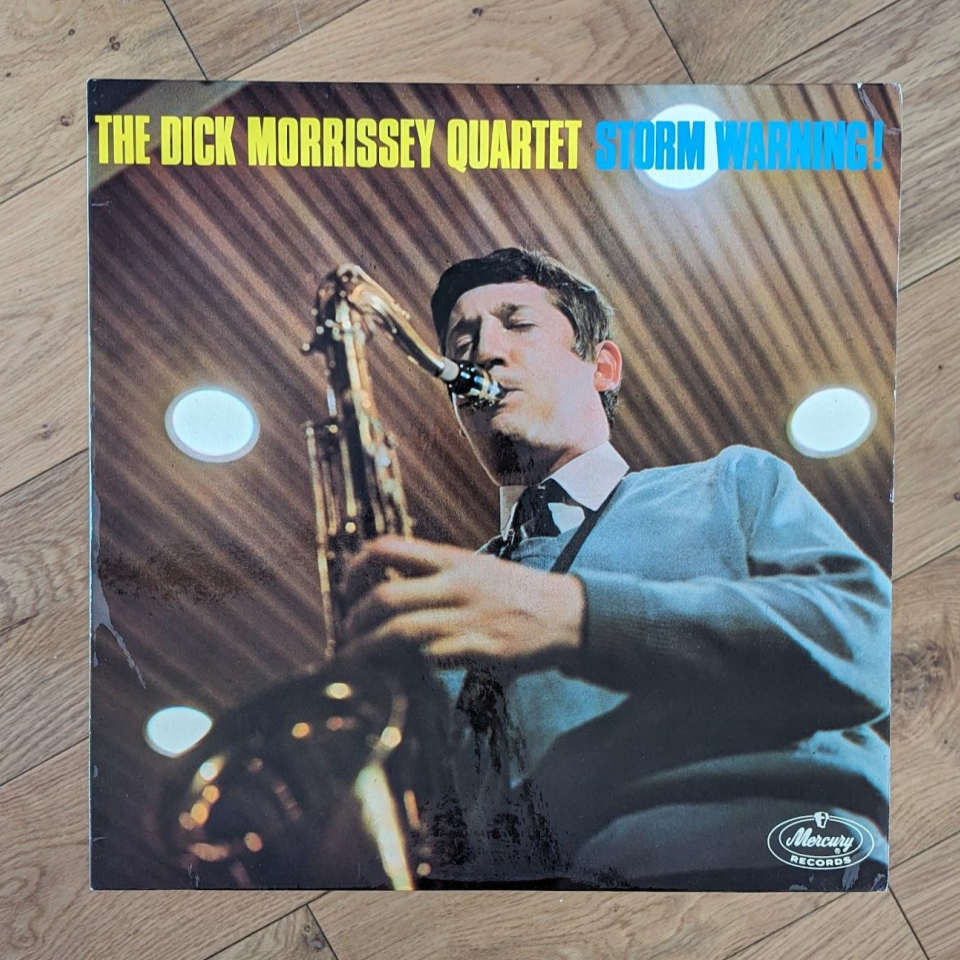
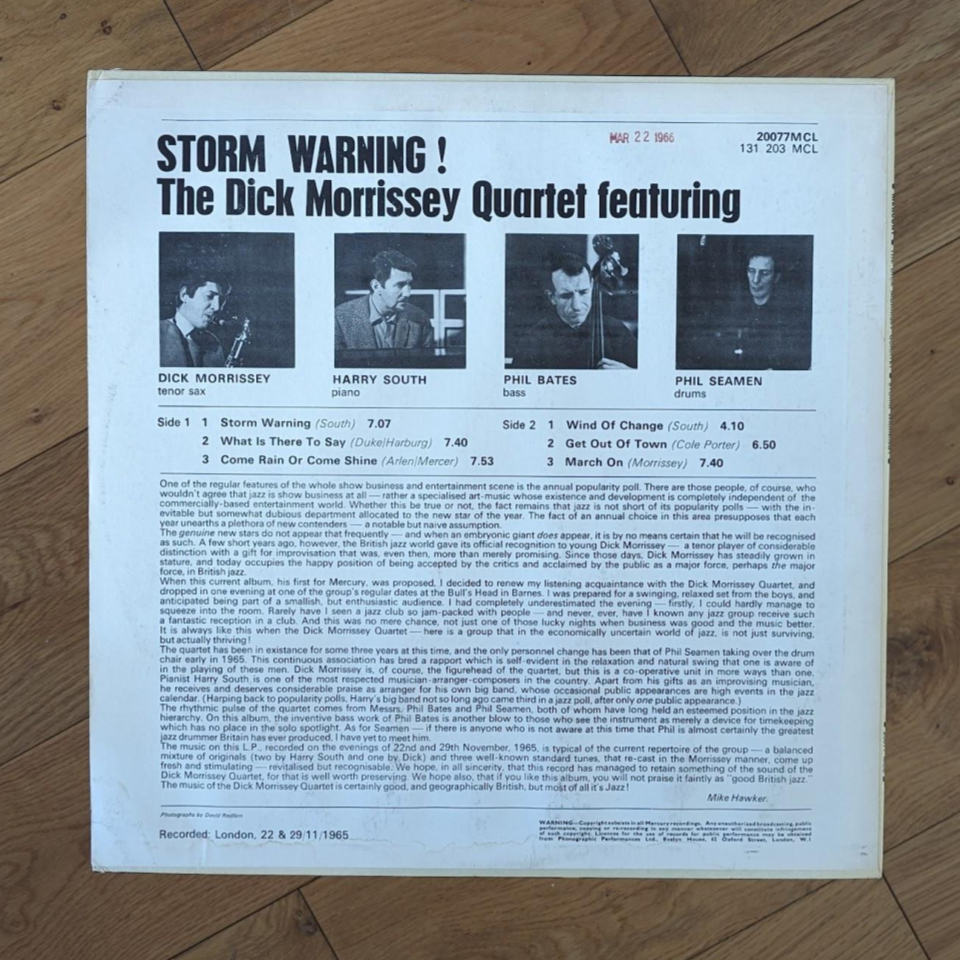
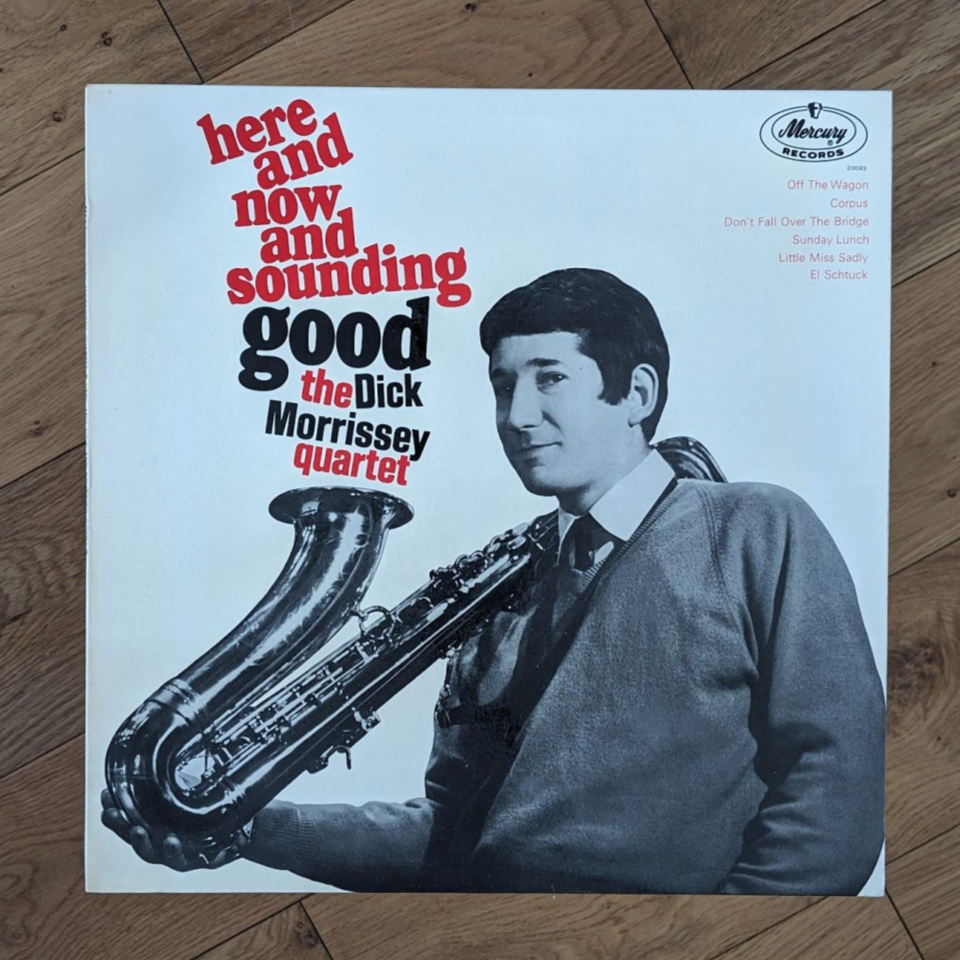
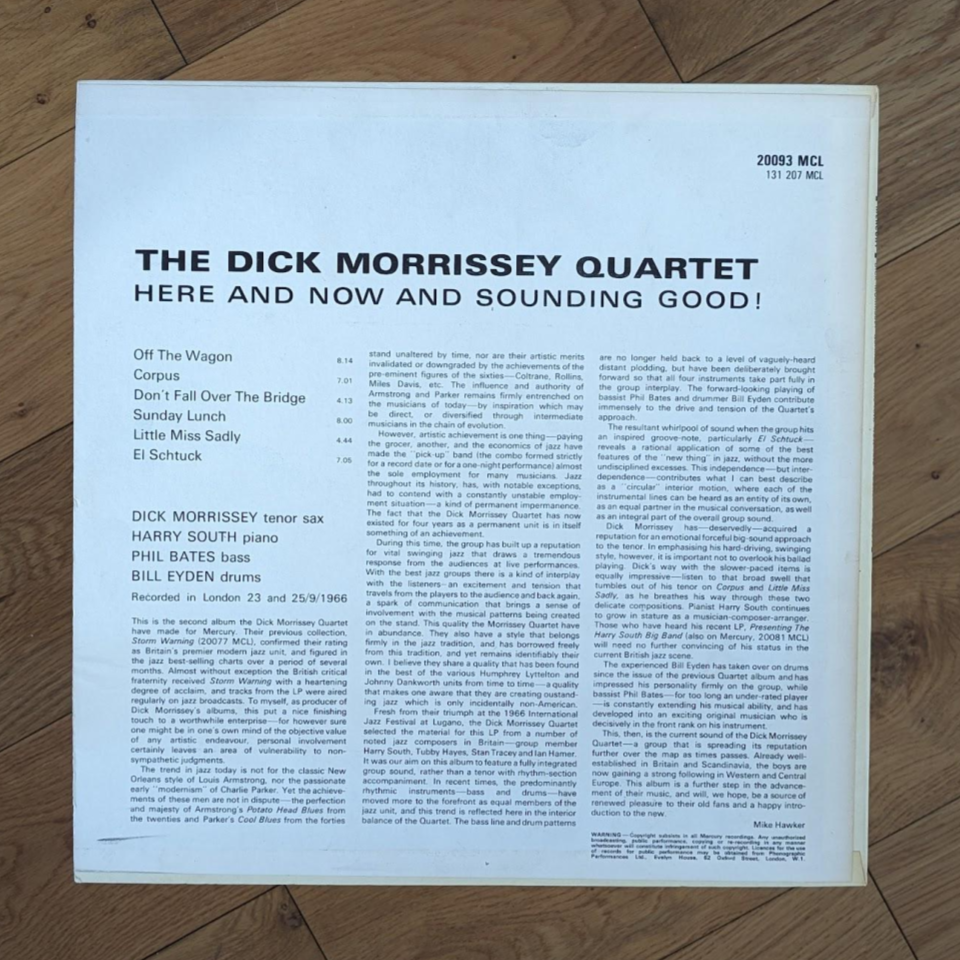
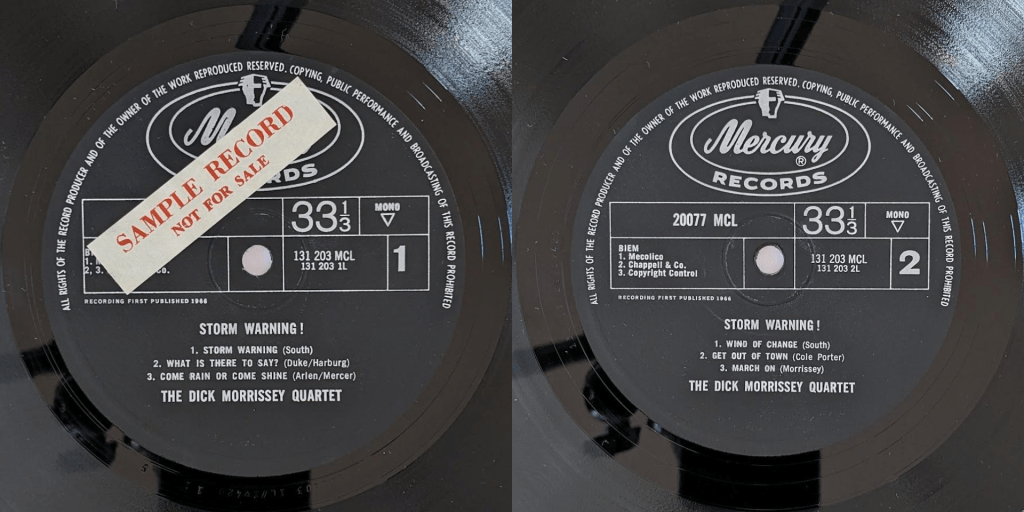
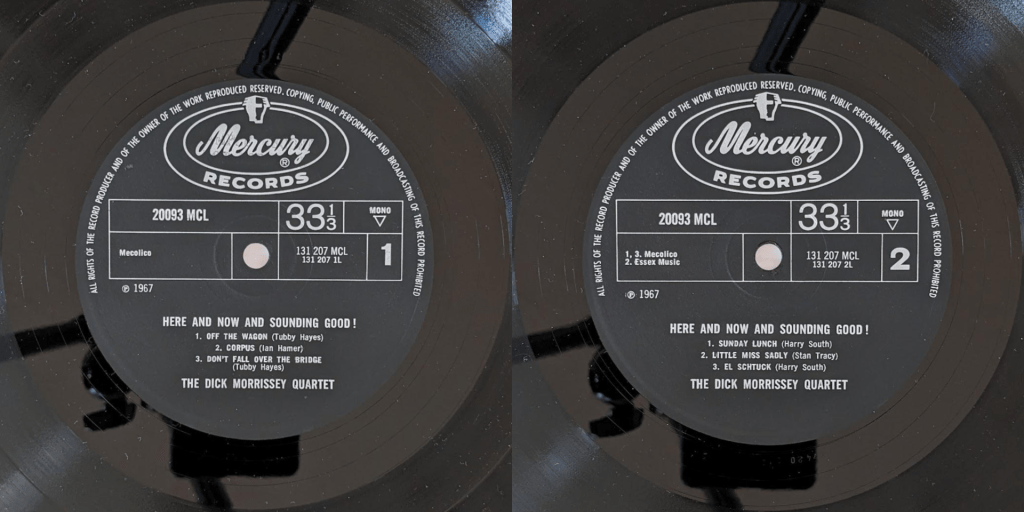


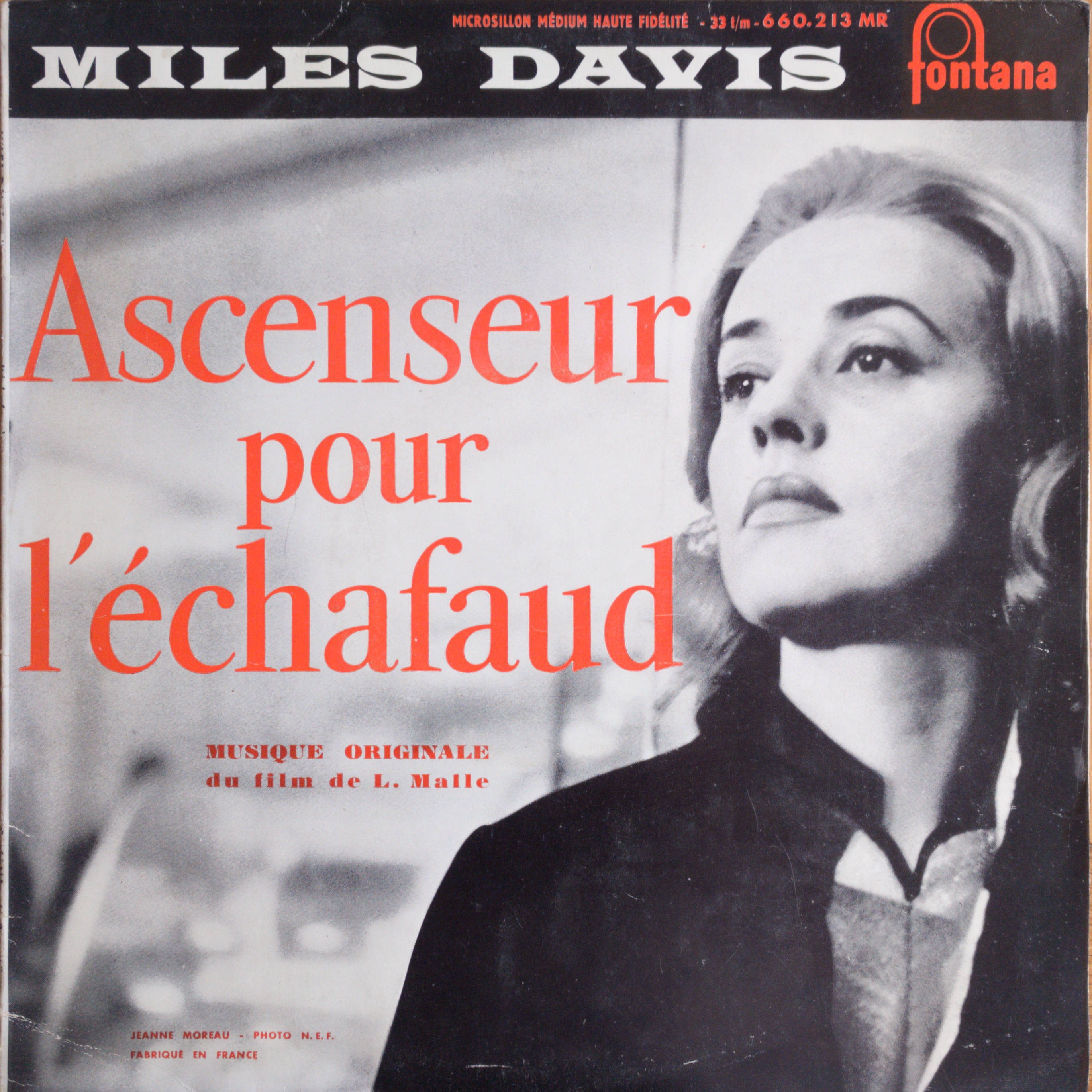
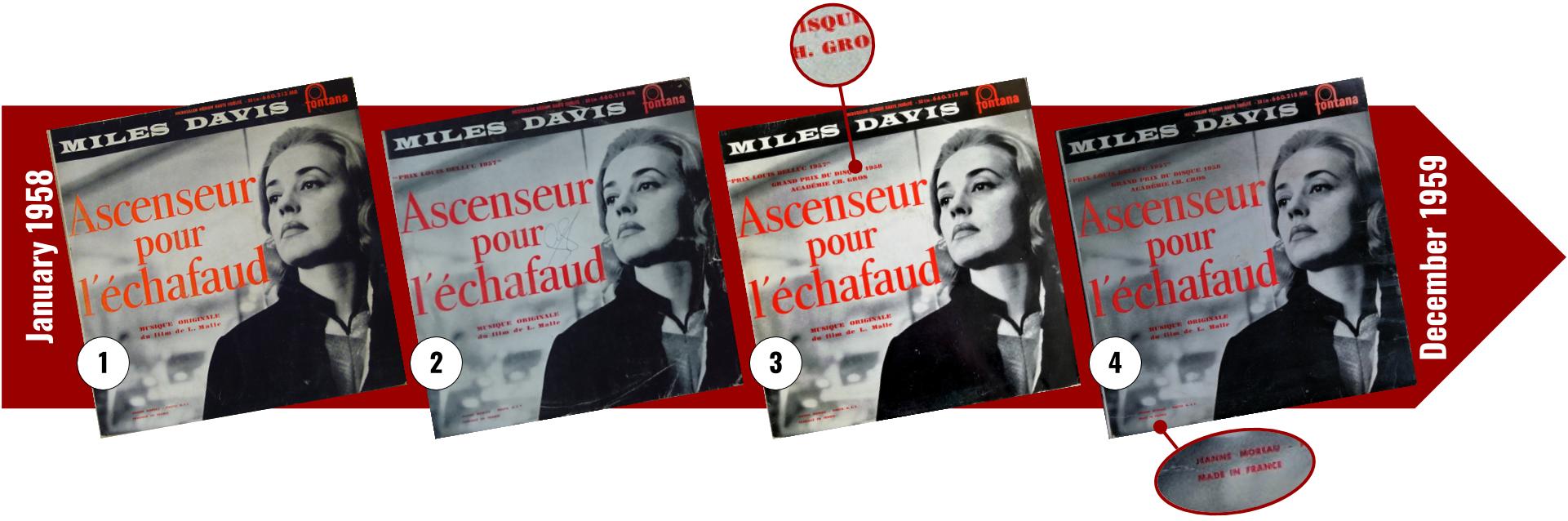
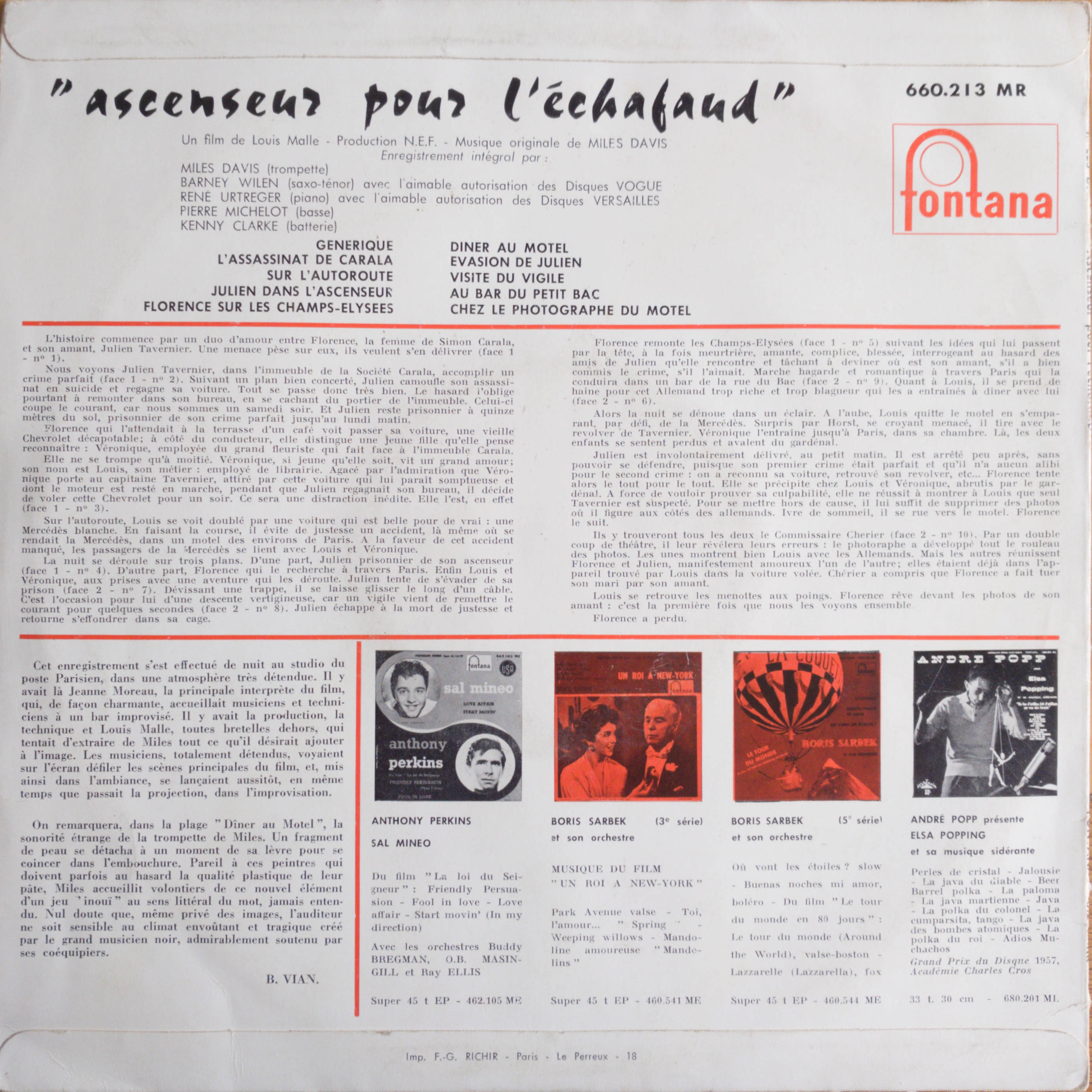

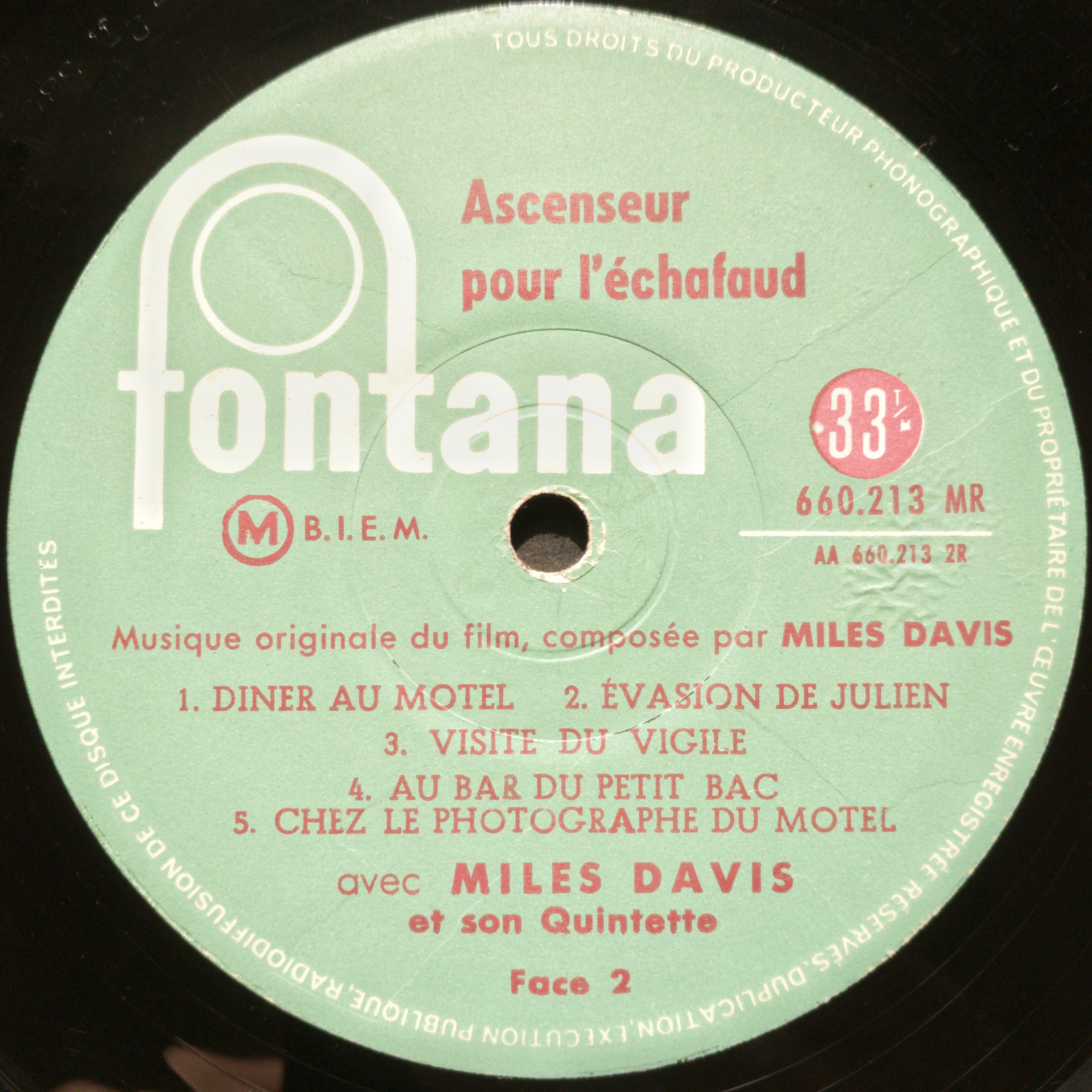
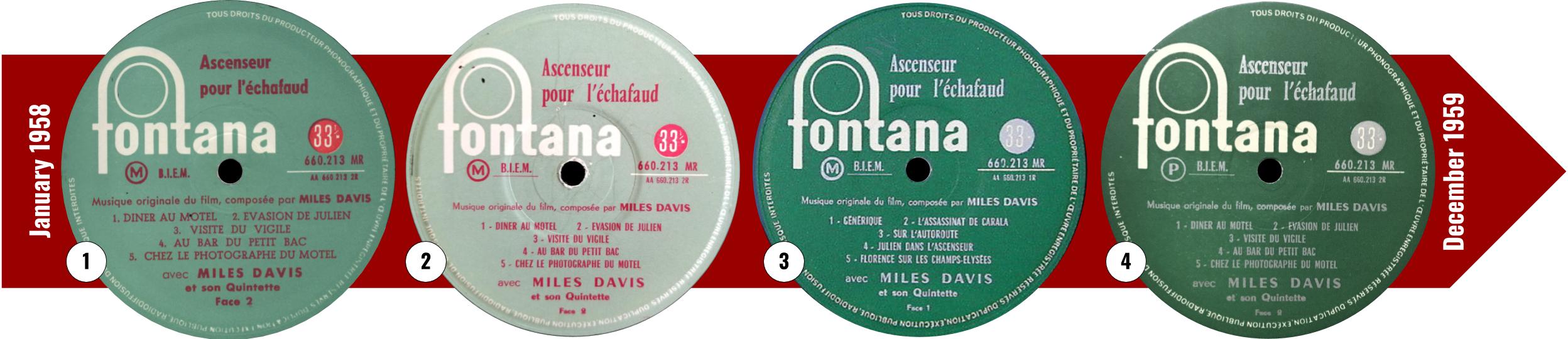
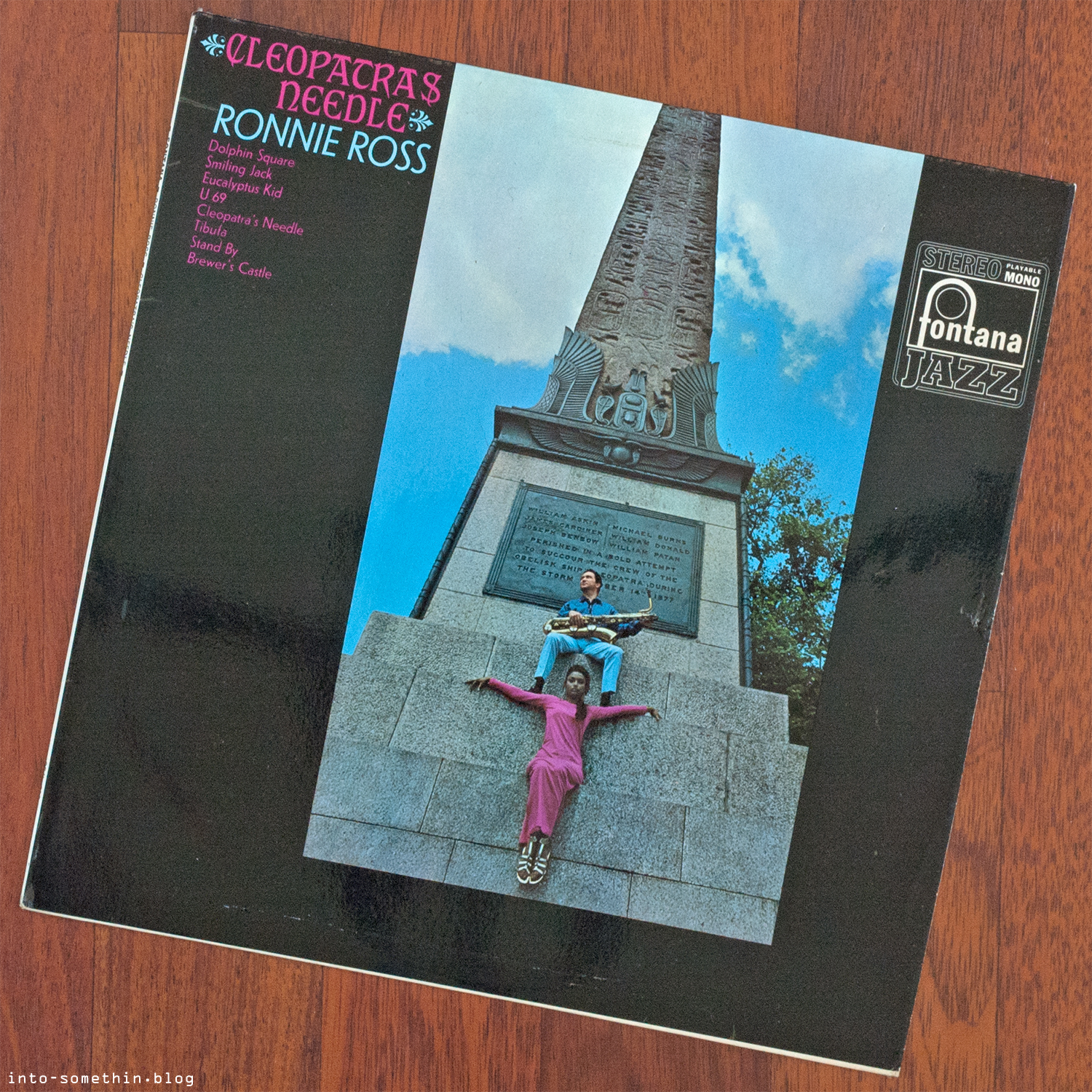


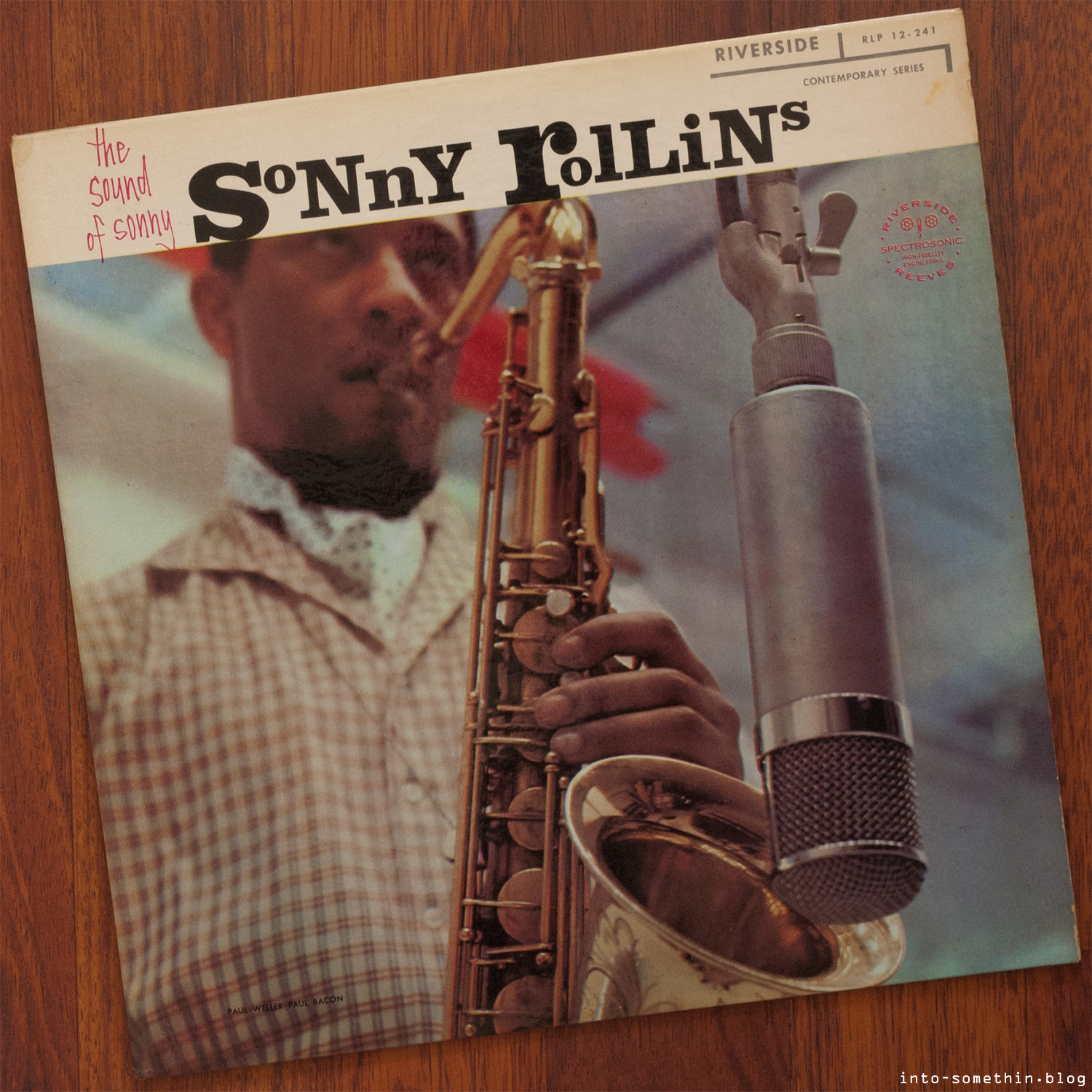
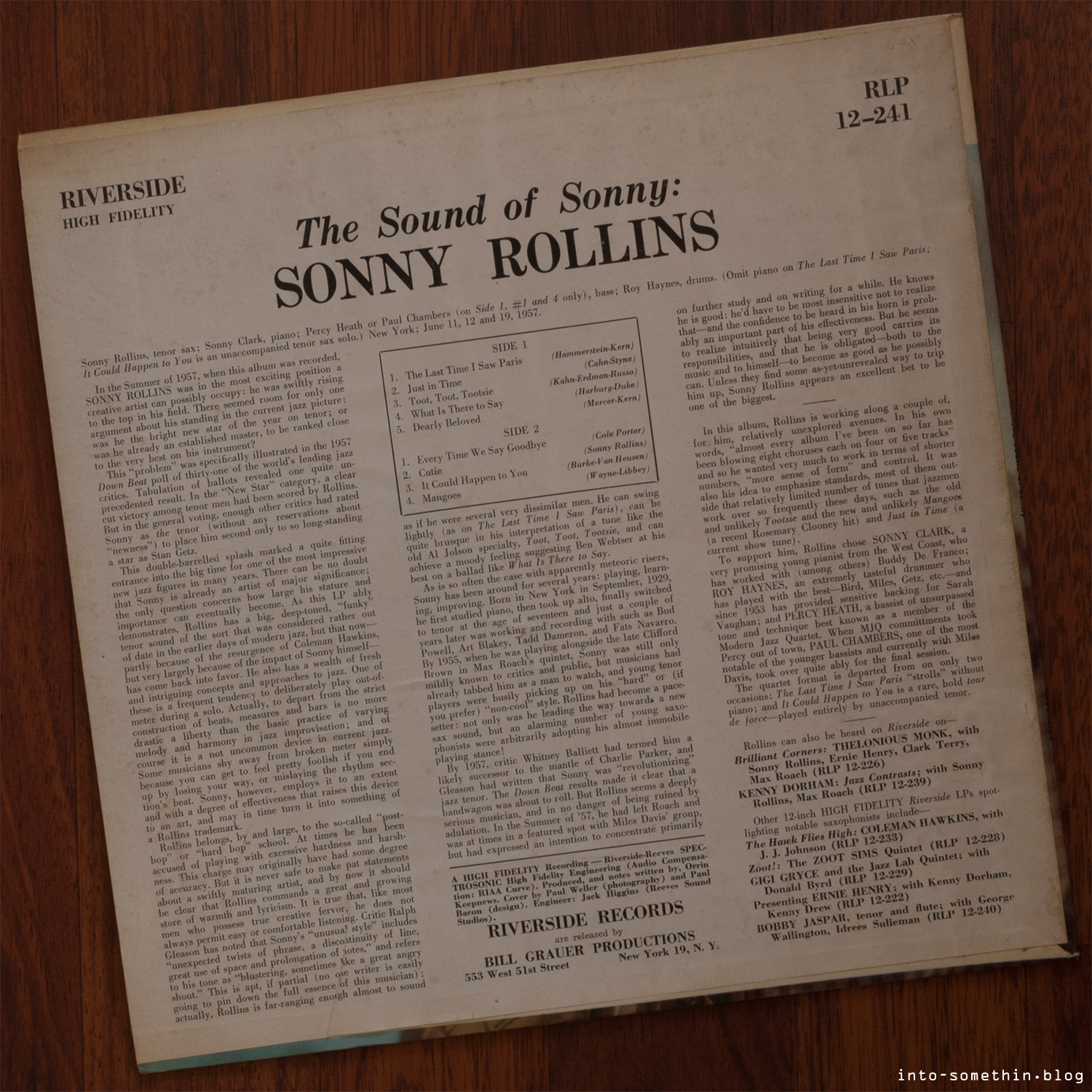


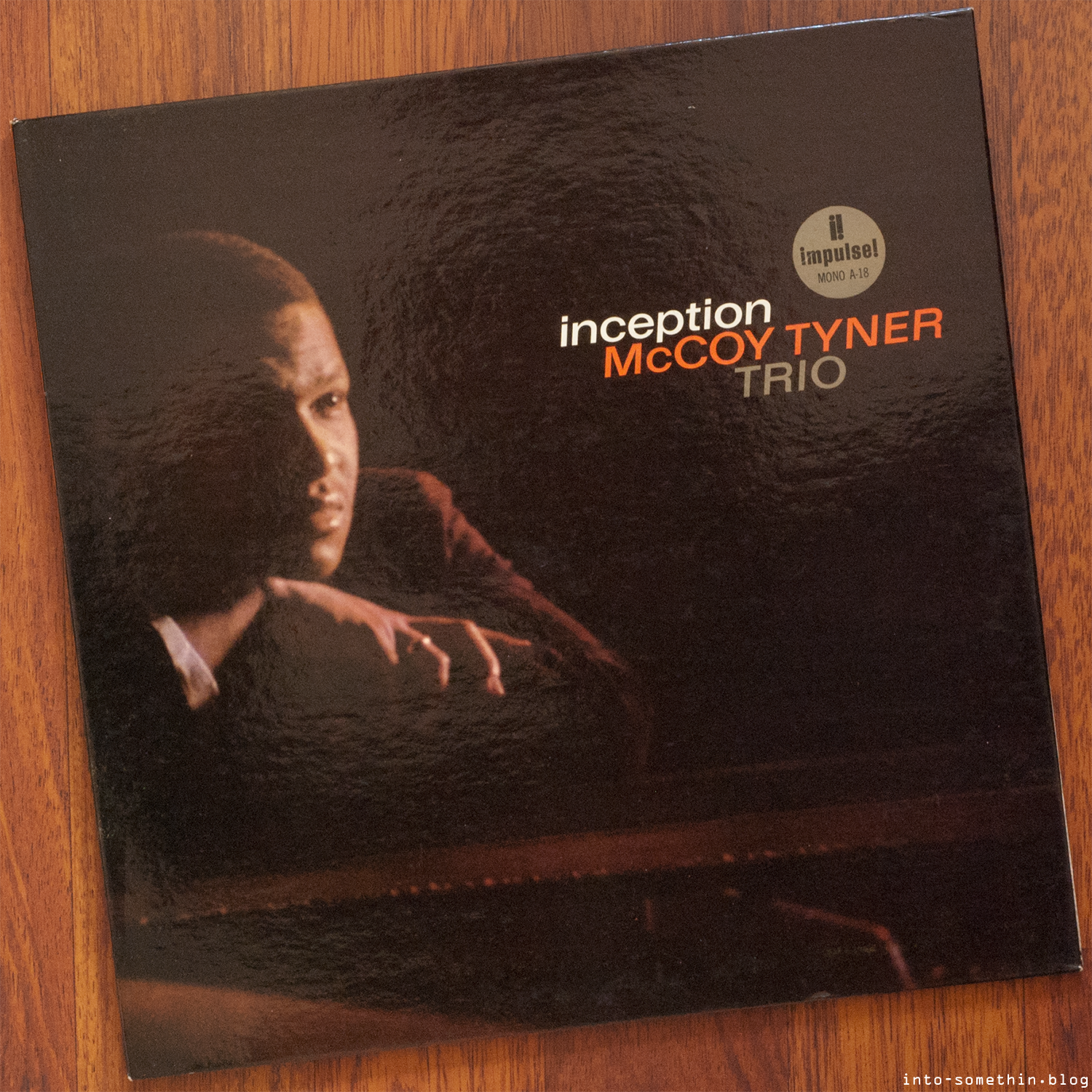
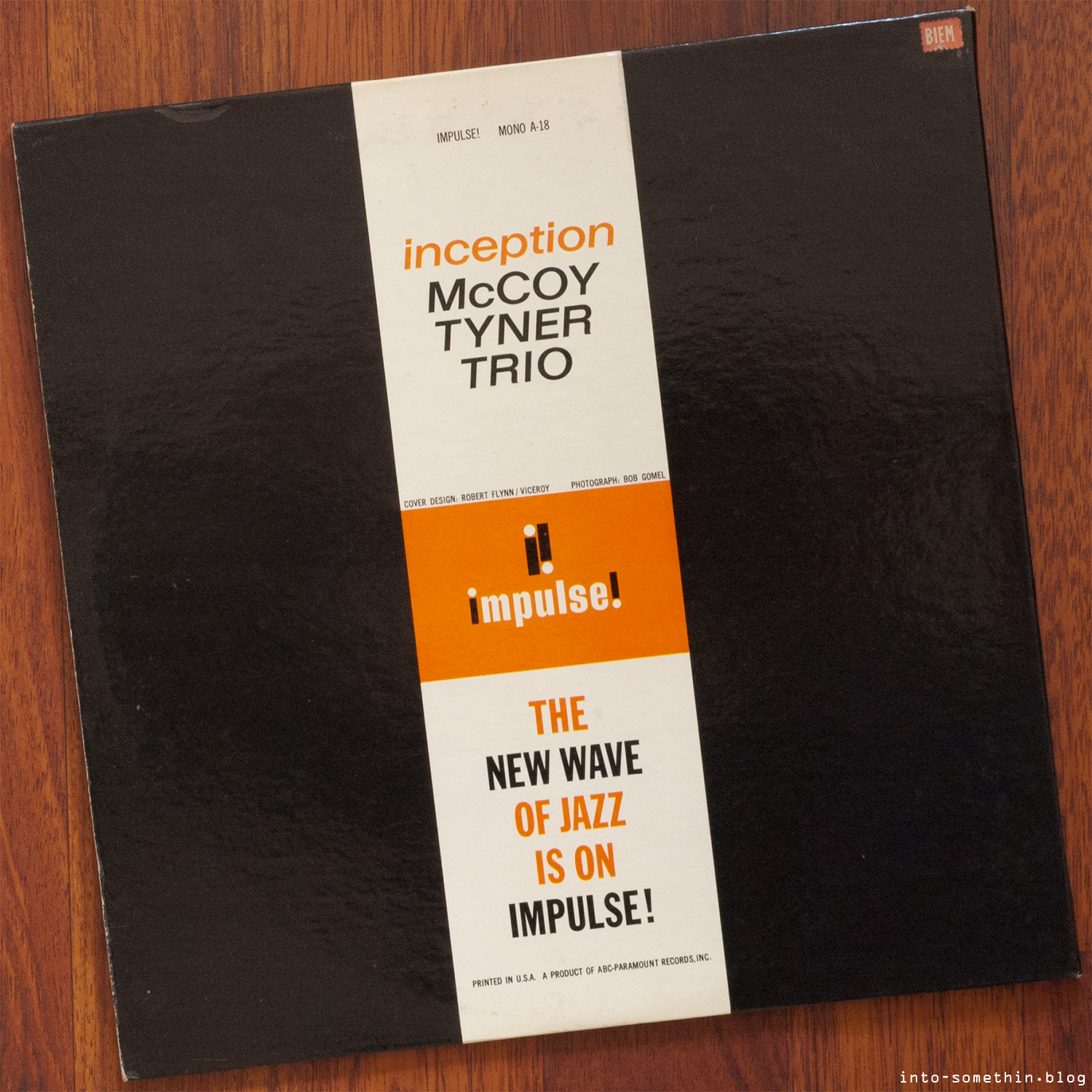
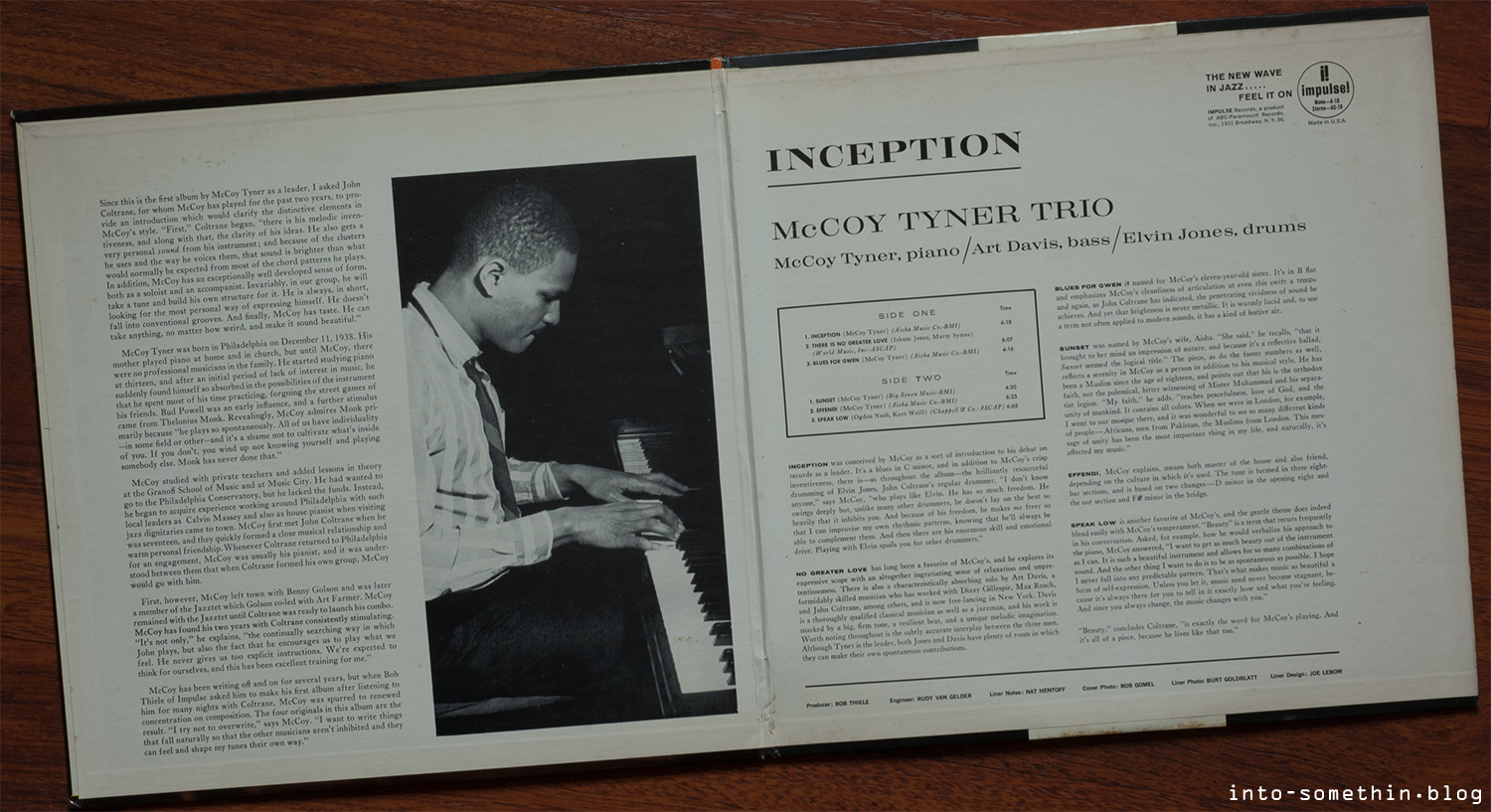
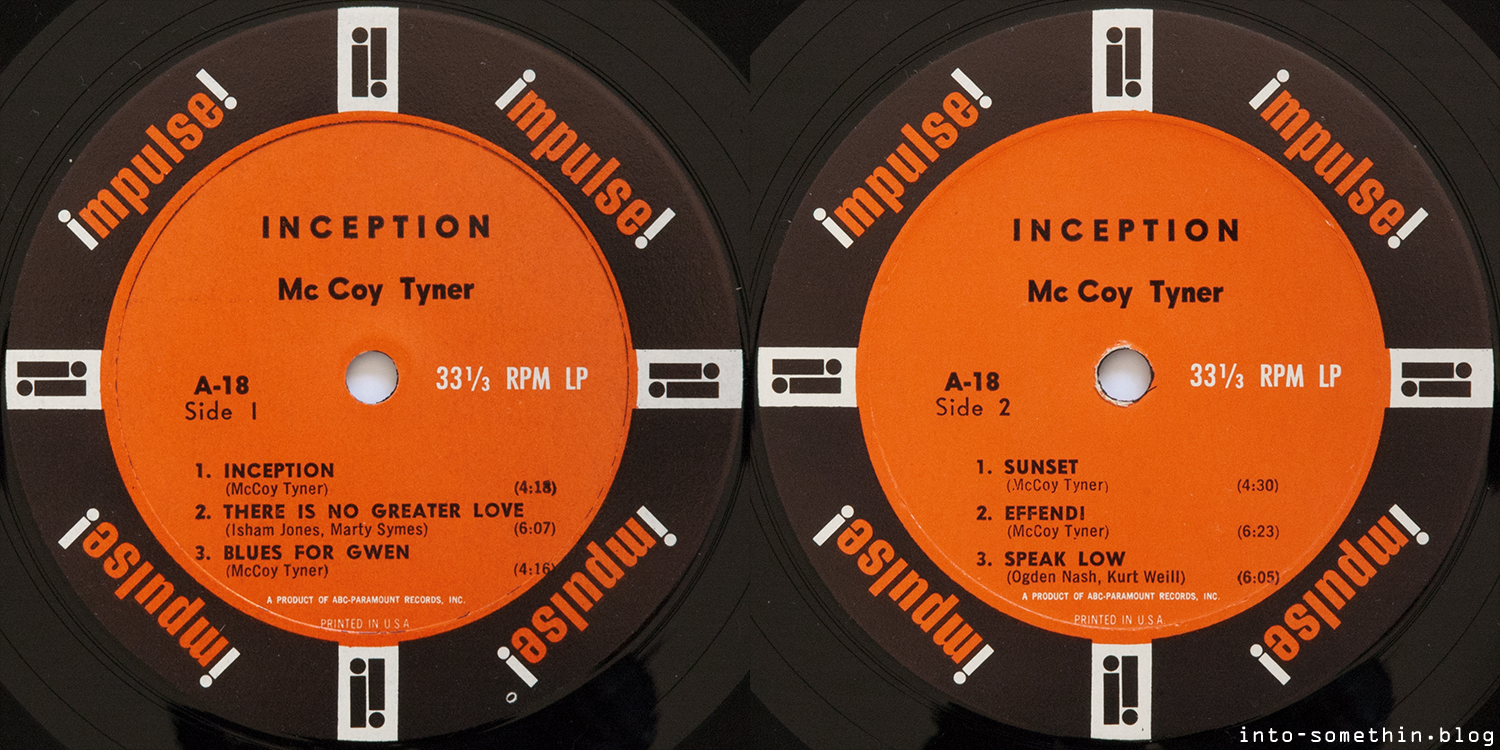
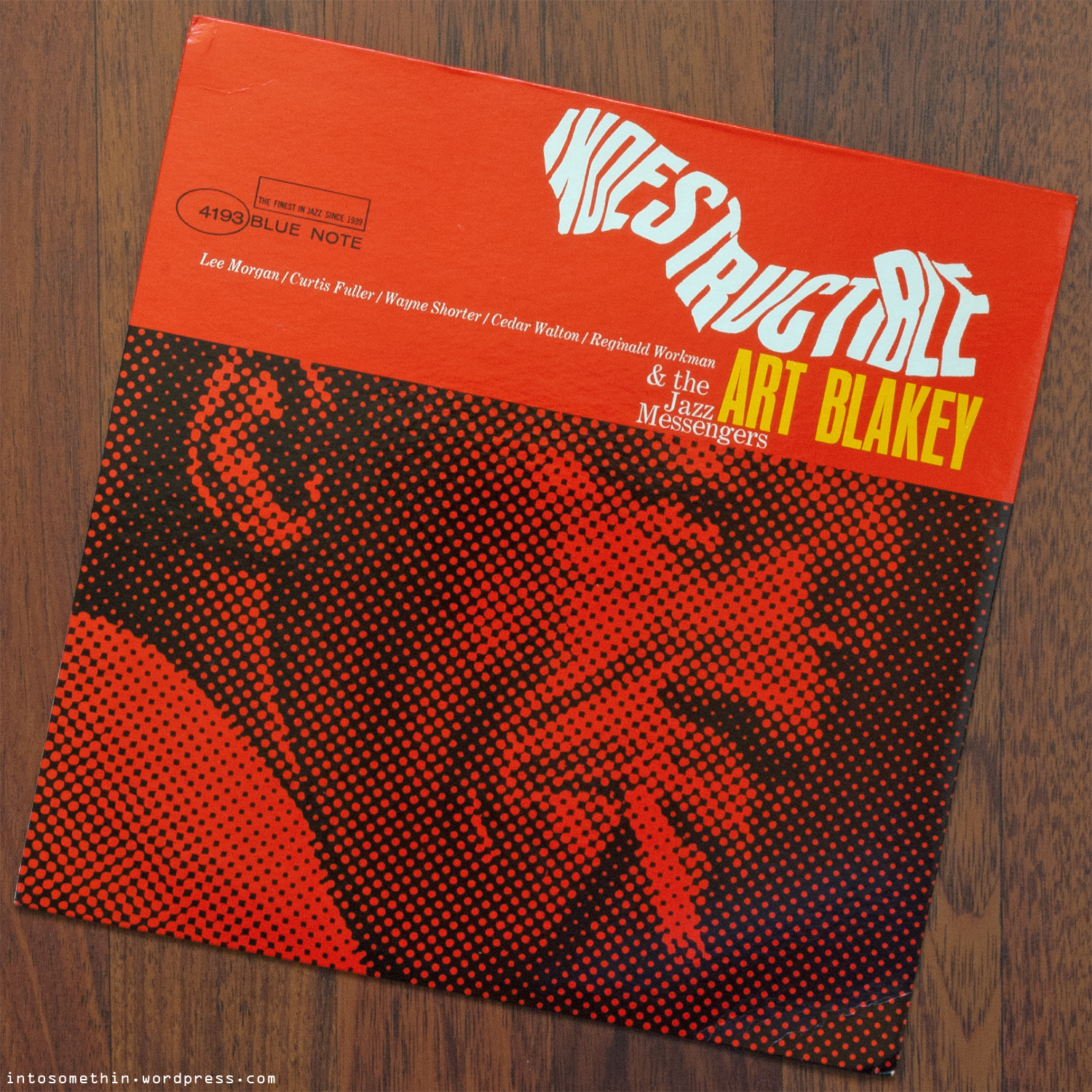

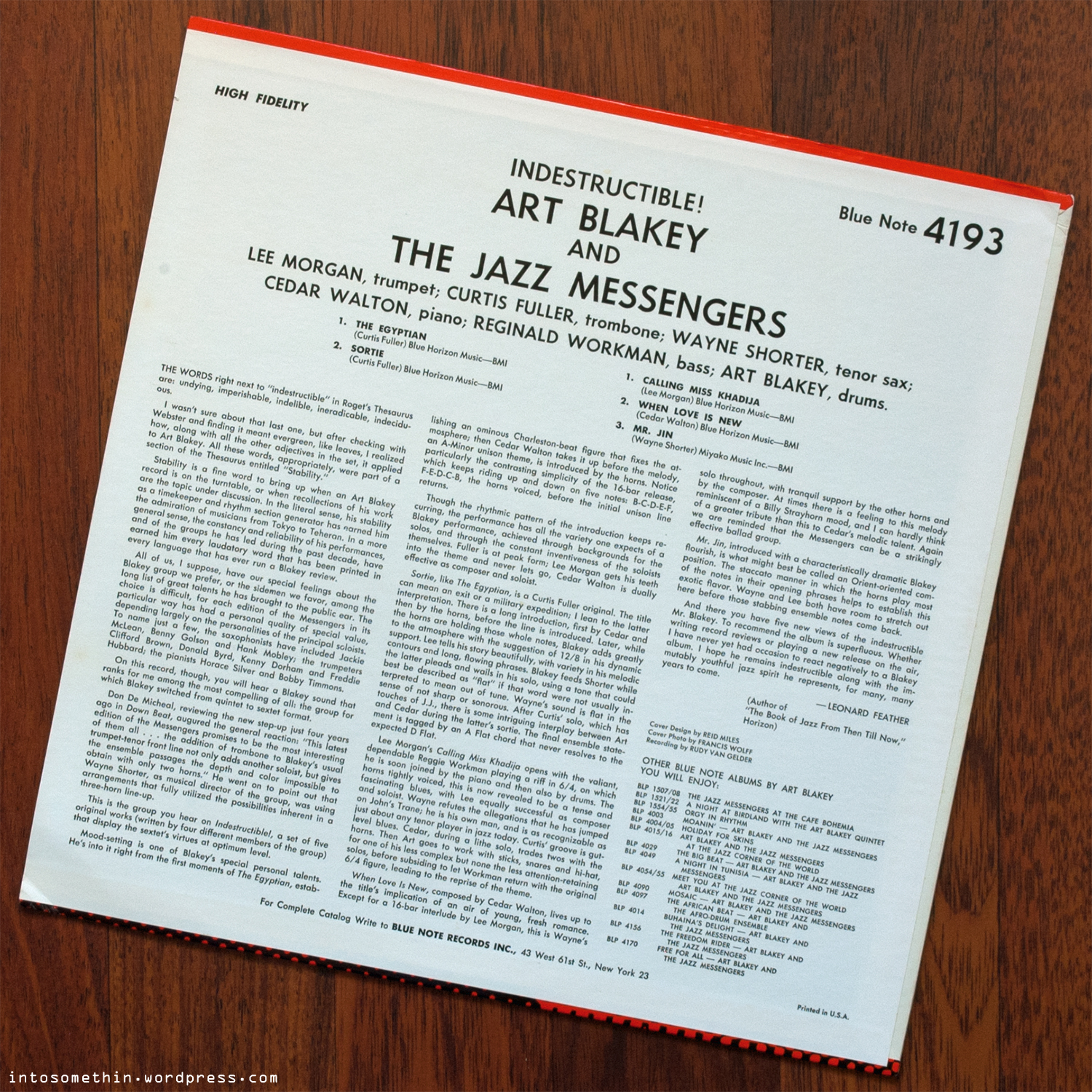
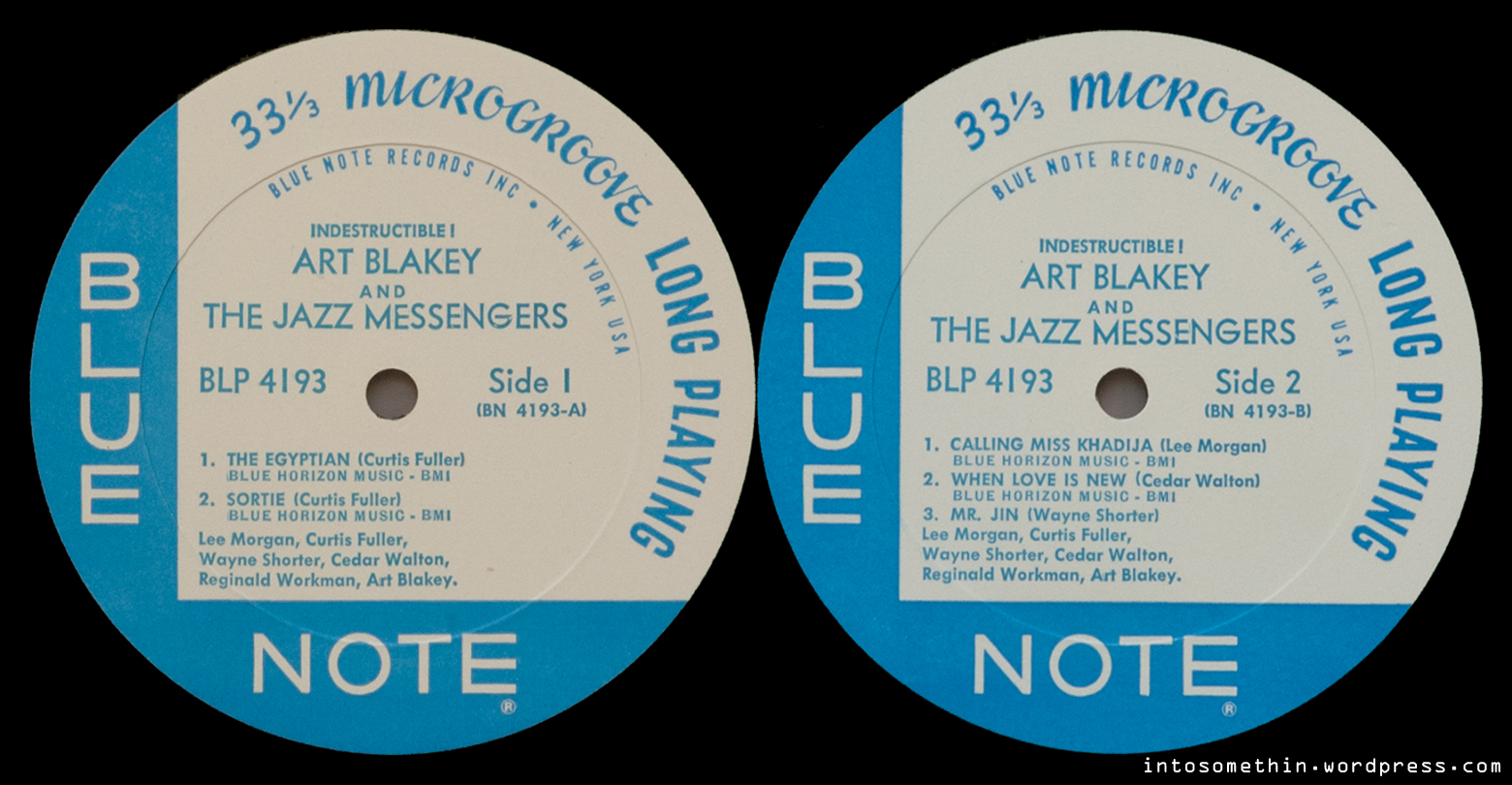


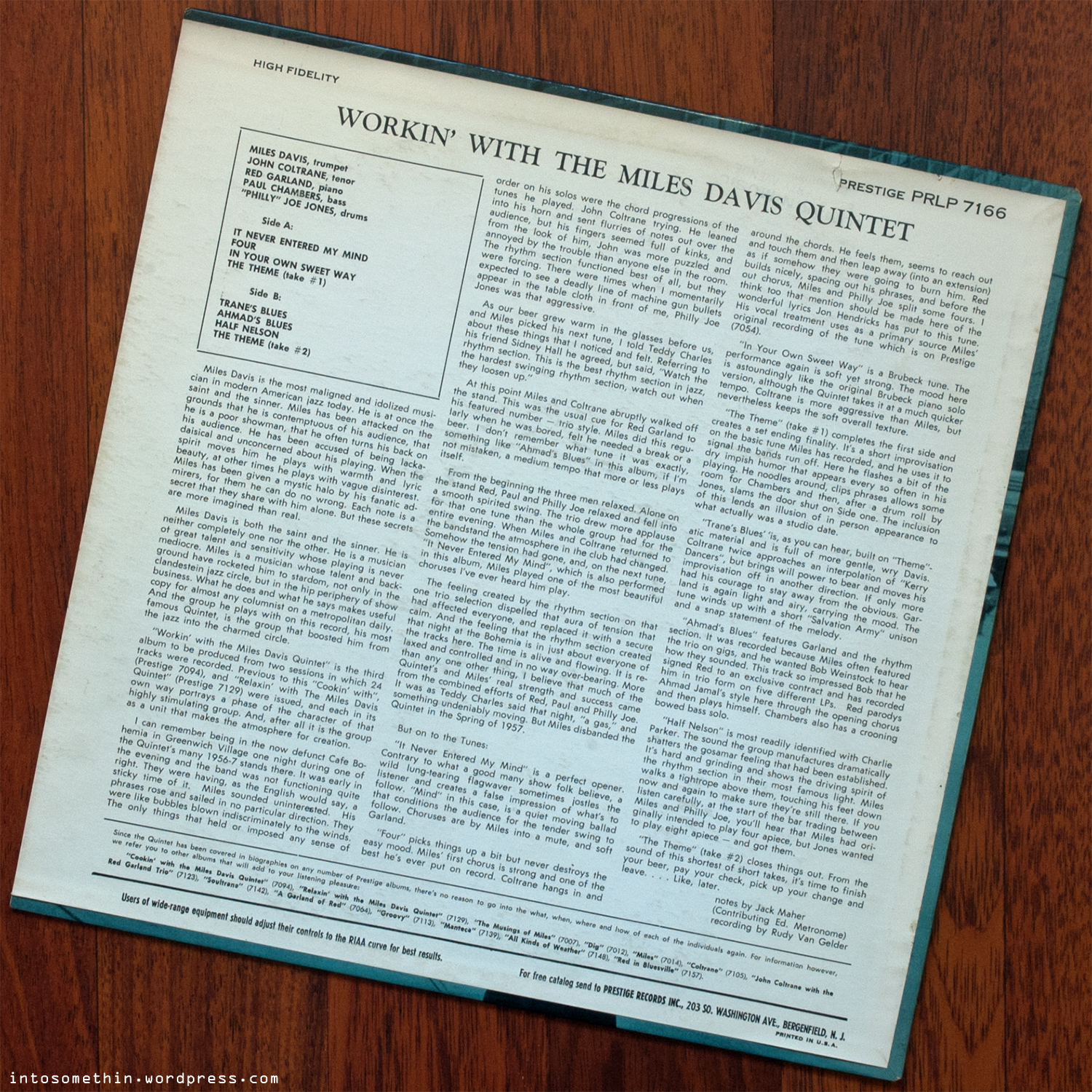
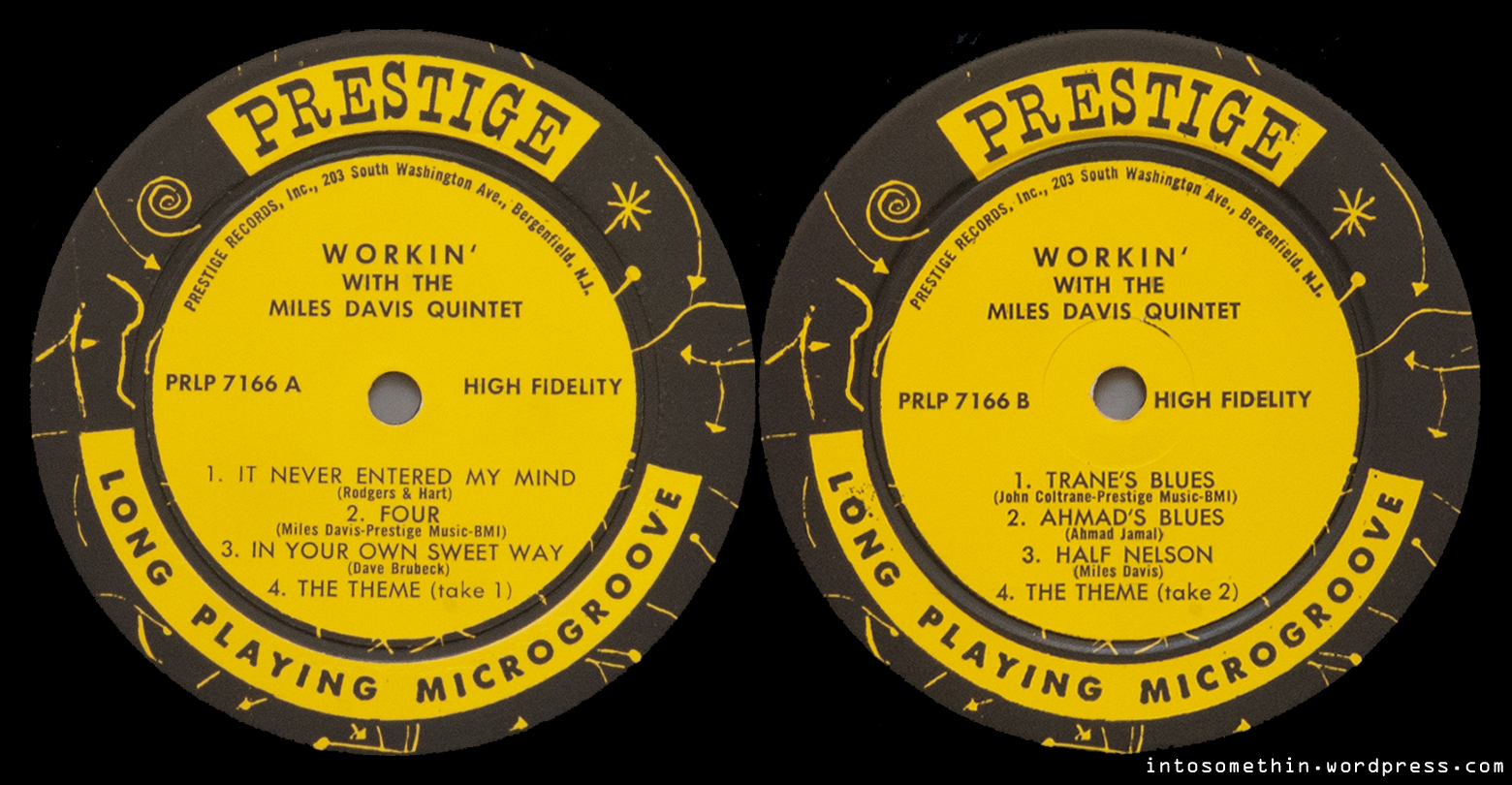
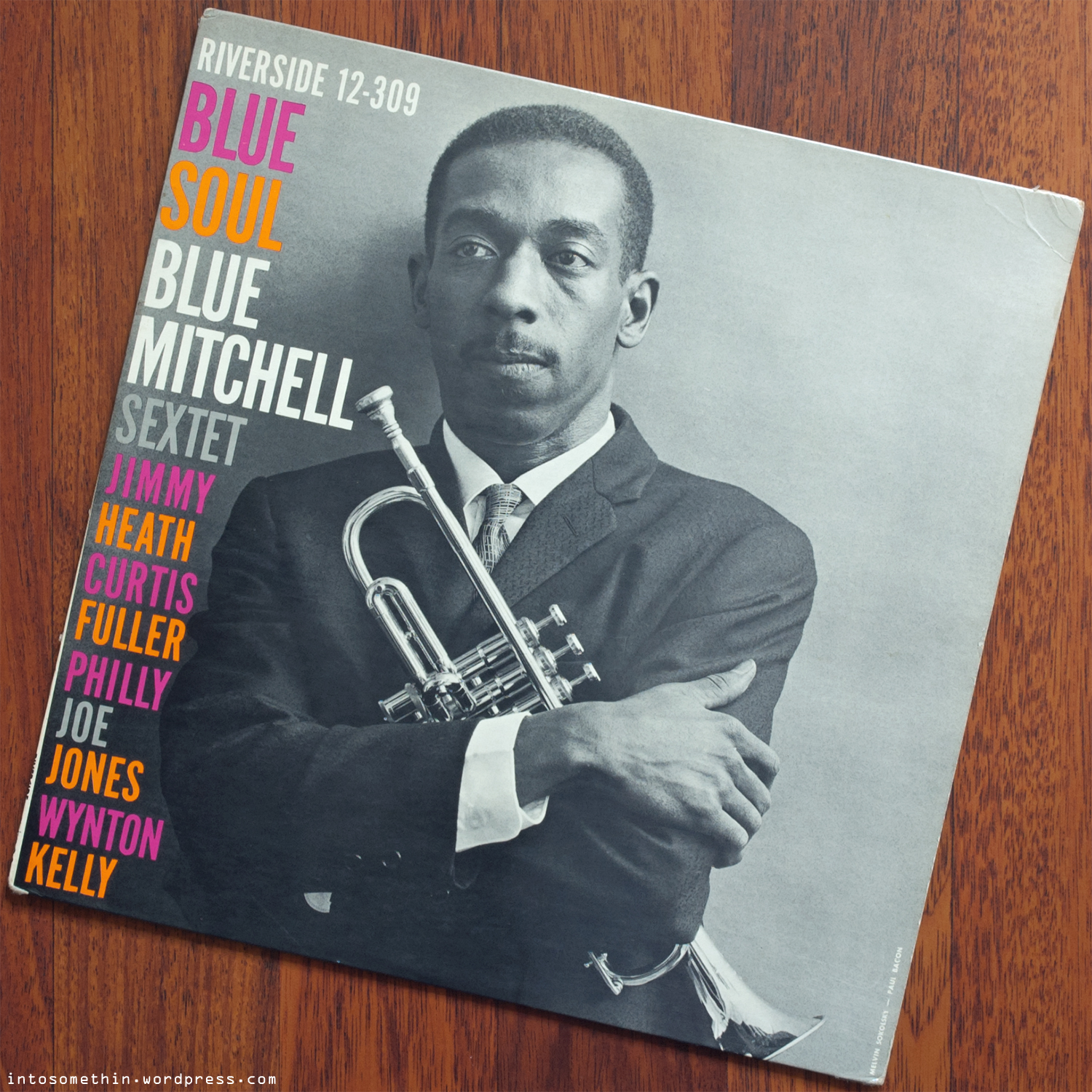
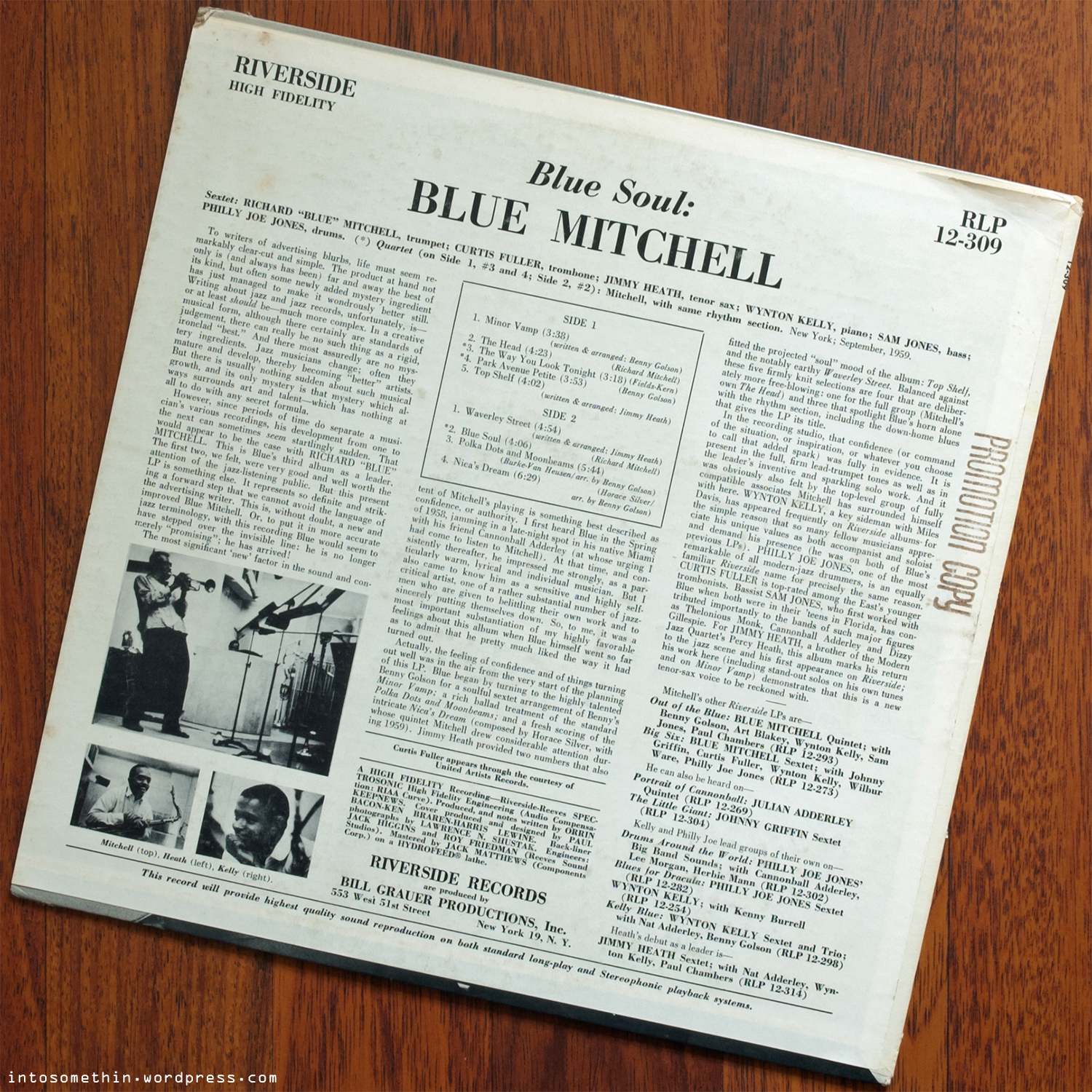
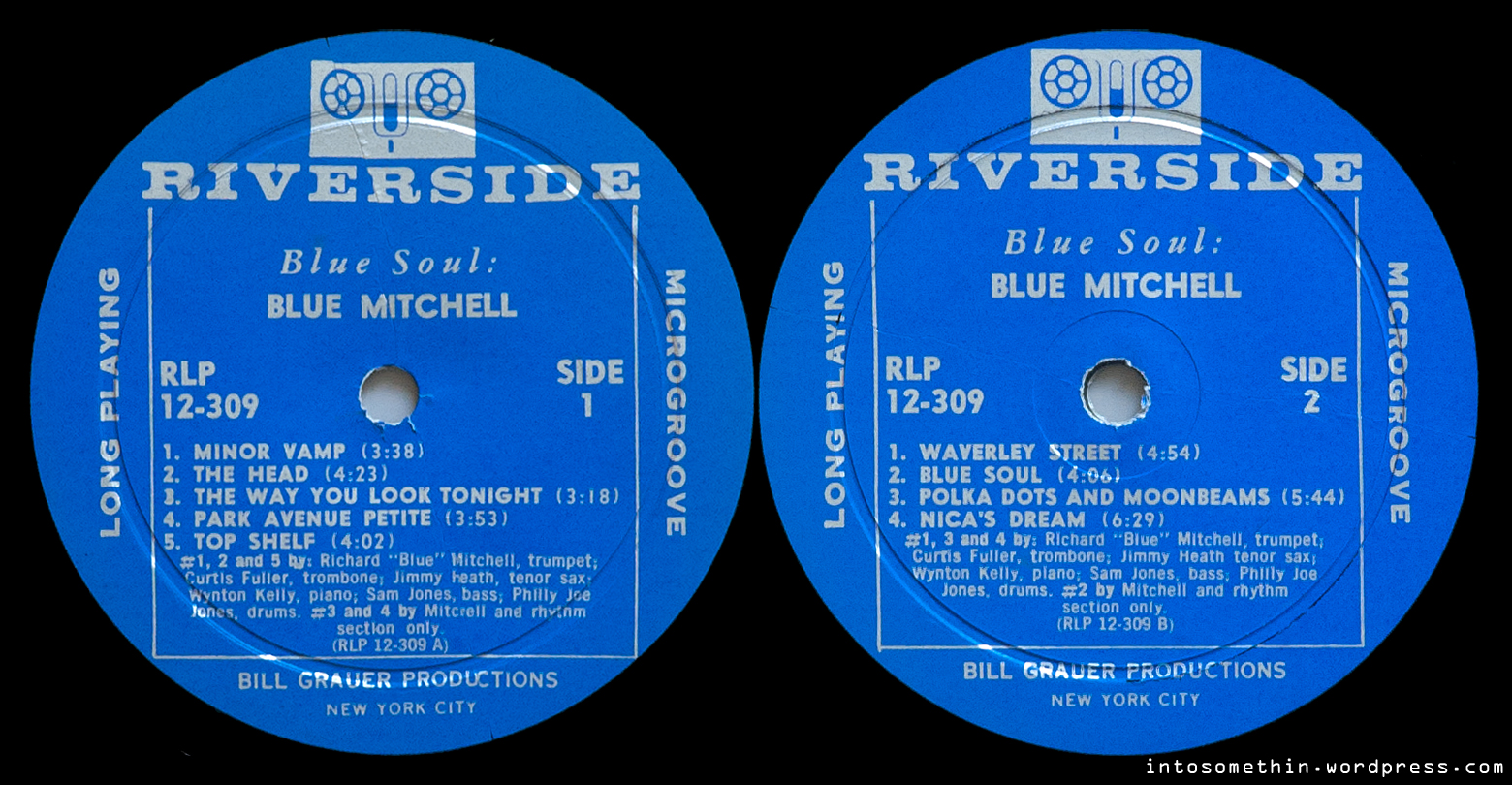
 into somethin'